Summary: The U.S. and Saudi Arabia are negotiating a civil nuclear cooperation agreement that could strengthen ties but risks enabling Riyadh to develop weapons-capable fuel if safeguards are weakened. Saudi negotiators reportedly seek enrichment rights, while Riyadh has not adopted the IAEA’s Additional Protocol. To prevent a regional arms race, the U.S. should demand a UAE-style "gold standard": binding pledges not to enrich or reprocess, perpetual U.S. return rights for U.S.-origin material, permanent IAEA safeguards, and ratification of the Additional Protocol.
A Strong U.S.–Saudi Nuclear Deal Must Keep Riyadh Off Any Path to a Bomb

A Strong U.S.–Saudi Nuclear Deal Must Keep Riyadh Off Any Path to a Bomb
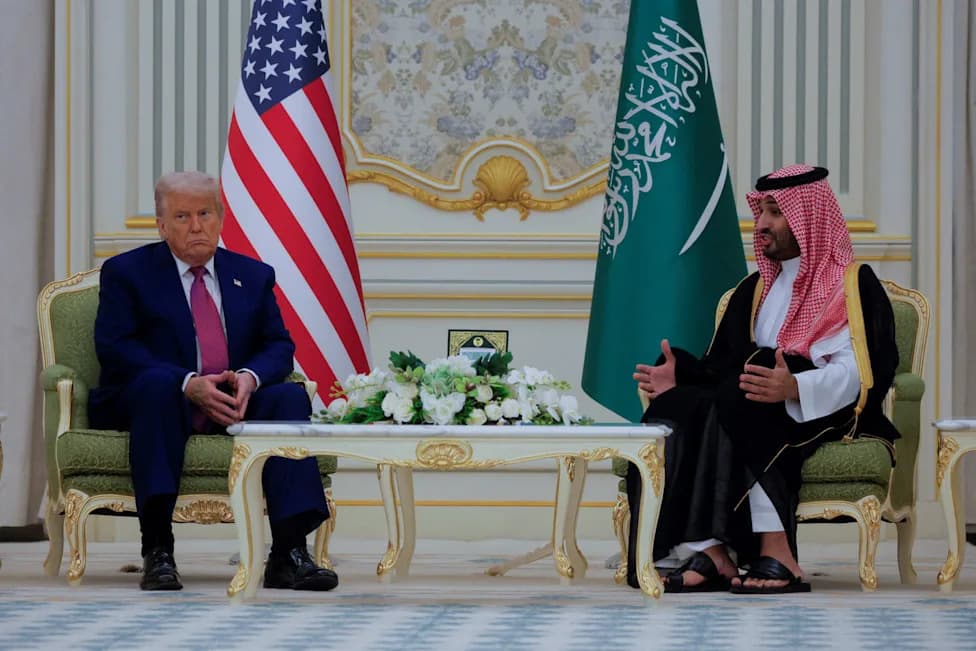
During Crown Prince Mohammed bin Salman’s Washington visit, Saudi Arabia sought a broad U.S. response to its trillion-dollar investment pledge: fighter jets, a defense pact, and potentially U.S. approval that could enable Riyadh to develop infrastructure for producing weapons-capable nuclear fuel.
The United States and Saudi Arabia continue negotiating a binding civil nuclear cooperation agreement. The outcome will hinge on precise legal and technical terms. If the U.S. agrees to a weak or permissive deal, it risks unintentionally igniting a regional nuclear arms race—an outcome no responsible administration should accept.
At the same time, a civilian nuclear accord with Saudi Arabia could advance clear American interests: it would cement ties with a major non-NATO defense partner, strengthen commercial relations, and could help stabilize global oil markets. Those benefits, however, must not come at the expense of nonproliferation norms.
Why enrichment matters. Riyadh is pressing to loosen U.S. and international safeguards on its nascent nuclear program, reportedly seeking Washington’s approval — and possibly active assistance — to enrich uranium. Enrichment is the principal technical route to creating weapons-grade material. Only about 14–15 countries enrich uranium, and roughly 10 reprocess plutonium. Among non-nuclear-weapon states, Argentina, Brazil, Germany, Japan and the Netherlands have enrichment capability; Japan is the only non-nuclear-weapon state that reprocesses plutonium.
By contrast, 23 countries that operate nuclear power forego domestic enrichment and reprocessing. The reasons are practical and political: enrichment and reprocessing are costly compared with buying reactor fuel, and possessing those facilities places a state months — not years — away from a weapons option if it decides to divert material and expertise toward a bomb. Peaceful states generally avoid sending such a sensitive signal to neighbors.
Transparency and inspections. Riyadh has, to date, refused to adopt the IAEA’s Additional Protocol (AP), the agency’s strongest inspection regime. The AP permits short-notice access to undeclared sites and provides broader reporting obligations, making it a key tool for detecting covert weapons-related activity. Resistance to the AP and reduced transparency should set off alarm bells—especially combined with public statements by Saudi leaders suggesting a desire to match Iran’s capabilities if Tehran acquires nuclear weapons.
Gold standard vs. erosion. The 2009 U.S.–UAE nuclear cooperation agreement established a true “gold standard”: a major U.S. defense partner built a civilian nuclear program, accepted the AP, and explicitly renounced enrichment and reprocessing. That model helped prevent a regional arms race. By contrast, Tehran’s decades of clandestine work and near-weapons-grade production left it perilously close to fielding weapons in 2025, illustrating how quickly a latent program can become a regional crisis.
There are encouraging signs: the U.S. Energy Secretary has recently stated that the pending U.S.–Saudi deal would not permit enrichment, and reporting suggests initial talks are focusing on reactors and conventional cooperation rather than fuel-cycle capabilities. Still, Riyadh will likely press for future consent to enrichment, and recent U.S. policy shifts — such as permitting South Korea expanded fuel-cycle rights — may be cited as precedent for changing positions later.
Policy must be clear and binding. If Washington abandons the gold standard, other states (Turkey, Poland, Jordan, Egypt, even the UAE) could seek similar exemptions, rapidly eroding nonproliferation norms.
To prevent such erosion, the White House and Congress should insist on four non-negotiable conditions for any U.S.–Saudi civil nuclear agreement:
- Additional Protocol: Saudi Arabia must ratify and implement the IAEA’s Additional Protocol, granting inspectors timely authority to detect any illicit weapons-related activity.
- Perpetual Return Rights: The agreement must guarantee the United States a perpetual right of return for all U.S.-origin nuclear material and technology, preventing diversion of American-supplied items to weaponization.
- Legally Binding Gold Standard: Riyadh must accept a clear, legally binding, and verifiable pledge — modeled on the UAE agreement — never to enrich uranium or reprocess plutonium on its territory. In exchange, Washington should guarantee a reliable, long-term supply of reactor fuel.
- Permanent Safeguards and Monitoring: Every Saudi nuclear facility — current and future — must remain under permanent IAEA safeguards and real-time monitoring, with no carve-outs or sunset clauses.
The strategic and commercial rewards of anchoring Saudi Arabia as a long-term partner in the Middle East are real. But those rewards must not come at the price of weakened nonproliferation standards. The president and Congress should reinforce, not erode, the gold standard that has kept the region from spiraling into a nuclear scramble.
Conclusion. President Trump and his national-security team have described nuclear weapons as the world’s "biggest problem" and their destructive power as "unthinkable." Now is the time to match rhetoric with policy: secure U.S. interests while preventing Riyadh — or any other regional state — from sliding toward a weapons-capable fuel cycle.
About the authors: Peter B. Doran is an adjunct senior fellow at the Foundation for Defense of Democracies. Andrea Stricker is deputy director of its Nonproliferation Program and a research fellow. The Foundation for Defense of Democracies is a Washington-based, nonpartisan research institute focused on national security and foreign policy.
Help us improve.