Summary: As Iran’s influence recedes, Saudi Arabia is repositioning itself—recalibrating ties with rivals, broadening global partnerships and asserting a more autonomous regional role. Experts disagree: some view Riyadh’s moves as pragmatic efforts to stabilize the region, while others see tactical hedging driven by frustration with U.S. policy. The divergence is most visible in Yemen, where Saudi–Emirati splits over separatists and the Southern Transitional Council have recently intensified, with implications for U.S.-Saudi relations and the regional balance of power.
As Iran’s Influence Fades, Saudi Arabia Seizes a Regional Opening — What It Means for Washington
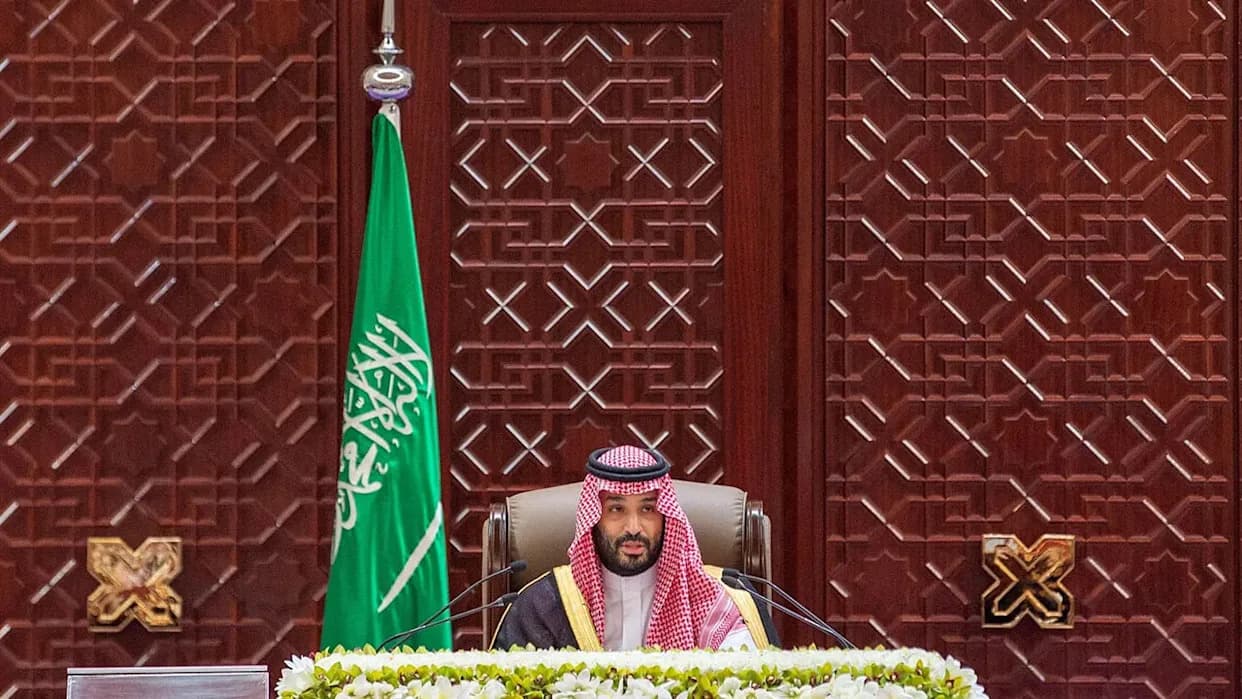
As Iran weakens, questions grow over Mohammed bin Salman’s regional ambitions
With Iran’s regional influence appearing to wane, a power vacuum is opening across the Middle East. Saudi Arabia is repositioning itself to fill that void by recalibrating ties with former rivals, diversifying global partnerships and pursuing a more autonomous foreign policy, several experts tell Fox News Digital.
Shifting Strategy Under Mohammed bin Salman
Analysts say Crown Prince Mohammed bin Salman (MBS), whose consolidation of power has reshaped Saudi decision-making, is pursuing a strategic posture distinct from his predecessors. Javed Ali, a former National Security Council official and current University of Michigan professor, described the long-standing Riyadh–Tehran rivalry and said MBS’s approach reflects a new vision for the kingdom’s regional role.
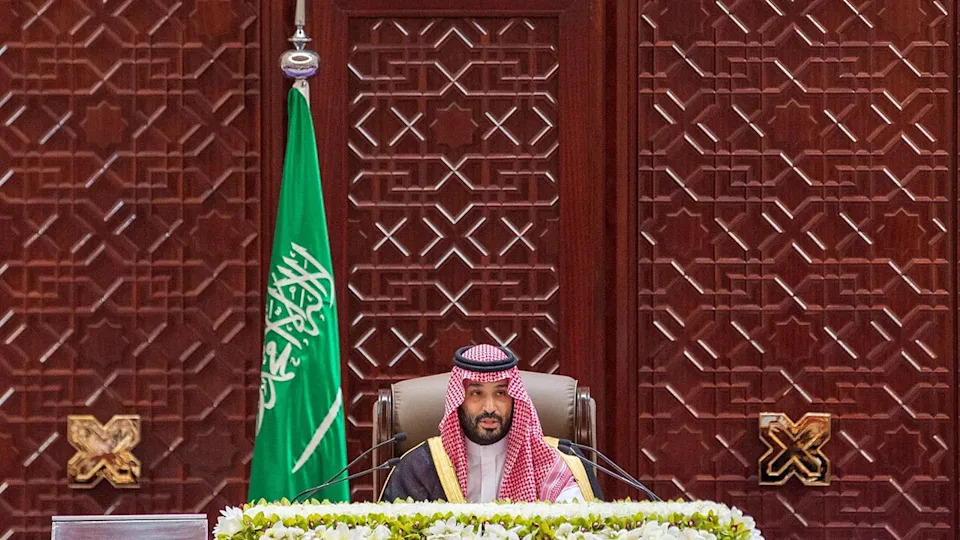
Saudi Crown Prince Mohammed bin Salman chairs the inaugural session of the Shura Council in Riyadh, Saudi Arabia, September 10, 2025.
“Since Iran’s 1979 revolution, both Saudi Arabia and Iran have vied for influence across the broader Muslim world. Mohammed bin Salman’s consolidation of power in the kingdom has also introduced a markedly different vision from that of his predecessors,” Ali told Fox News Digital.
Diplomatic Moves and New Alignments
Riyadh’s recent diplomacy — from Yemen to warmer ties with Turkey — has intensified debate over whether the crown prince’s expanding role still aligns with U.S. interests. Bloomberg reported on Jan. 9 that Turkey has sought entry into the Saudi–Pakistan mutual defense pact signed about four months earlier, according to people familiar with the talks. Observers say such moves reflect broader hedging in a fluid regional environment.
Frustration With Washington
Some critics trace Riyadh’s reorientation to accumulated frustrations with U.S. policy. Michael Rubin, a senior fellow at the American Enterprise Institute, argues that successive U.S. administrations failed to uphold elements of the bilateral bargain — for example, in their responses to repeated Houthi attacks on Saudi territory — and that Washington’s recent decisions have deepened mistrust.
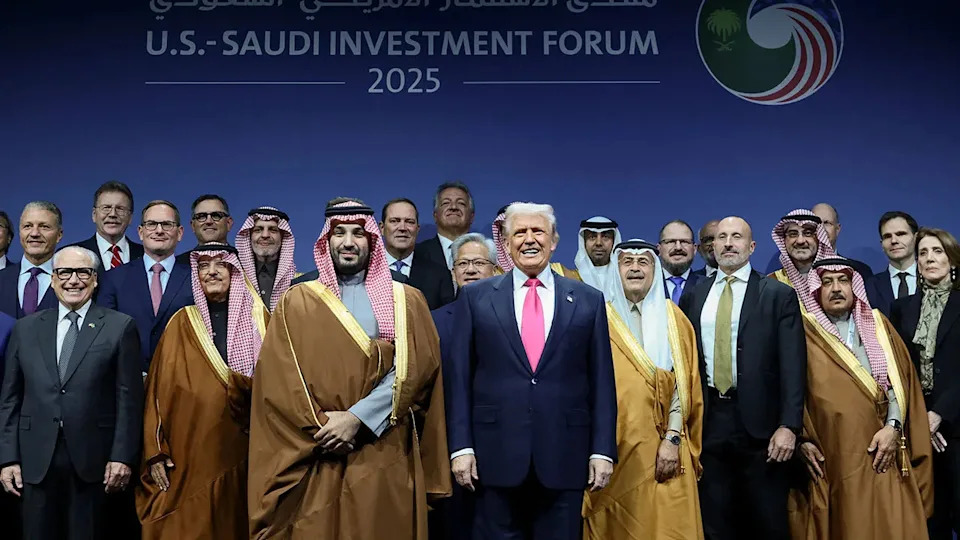
U.S. President Donald Trump poses for a family picture with Saudi Crown Prince and Prime Minister Mohammed bin Salman and other attendees during the U.S.-Saudi Investment Forum in Washington, D.C., U.S., Nov. 19, 2025.
“To be fair to MBS, previous U.S. administrations did not uphold their end of the bargain either,” Rubin told Fox News Digital, citing the Houthi campaign of drones and rockets. He also criticized the Biden administration’s removal of the Houthis’ terror designation, calling it a turning point that pushed Riyadh to develop a Plan B.
Rubin cautions that outreach to Russia and China appears to be tactical signaling rather than an ideological realignment. Still, he warns of potential long-term risks if Riyadh’s regional partnerships empower Islamist actors that could later turn against the kingdom.
Riyadh’s Pragmatic Defense
Saudi geopolitical researcher Salman Al-Ansari rejects the idea that Riyadh is drifting toward ideological alliances. He says Saudi foreign policy is pragmatic, focused on stability and development, and that rapprochement with Ankara seeks to de-escalate rivalries and expand economic cooperation.
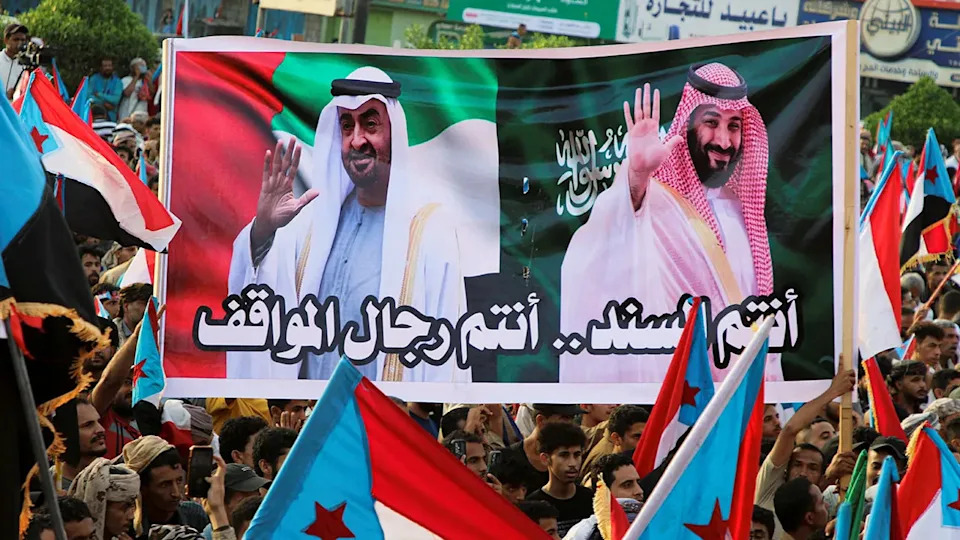
People hold a banner with images of the President of the United Arab Emirates, Sheikh Mohamed bin Zayed Al Nahyan, and Crown Prince and Prime Minister Mohammed bin Salman of Saudi Arabia during a rally organised by Yemen's main separatist group, the Southern Transitional Council (STC), in Aden, Yemen Dec. 21, 2025.
“Saudi Arabia does not base its foreign policy on ideological alignment, but on pragmatic considerations aimed at stability and development,” Al-Ansari said, noting that Riyadh designated the Muslim Brotherhood a terrorist organization in 2014 and maintains that position.
The Flashpoint: Yemen
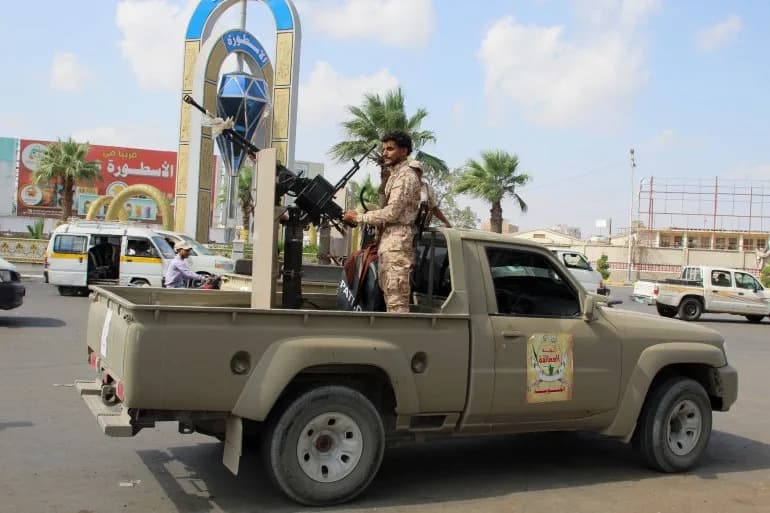
The clearest test of these competing interpretations is Yemen. The Saudi–Emirati coalition originally formed to counter Iran’s Houthi proxy, but Riyadh and Abu Dhabi have pursued diverging approaches. Saudi Arabia backs a unified Yemeni state under the internationally recognized government, arguing that fragmentation benefits Iran, while the UAE has supported southern separatists, notably the Southern Transitional Council (STC), to secure ports and security corridors.
Recent reports say Saudi and Yemeni government forces have retaken much of southern and eastern Yemen from the UAE-backed STC, and that the STC leader reportedly fled to the UAE amid reports of the group’s weakening — a development that underscores a sharp rift between Riyadh and Abu Dhabi.
Observers warn that these moves could reshape local power balances, potentially empowering groups such as Al Qaeda in the Arabian Peninsula (AQAP) or enabling Houthi gains if political reconciliation stalls. Riyadh, however, frames its actions as necessary to reassemble a coherent, centralized Yemeni state and to reduce Iranian influence.
What Washington Faces
With Iran weakened and regional power shifting, Washington faces a strategic choice: support an emboldened Saudi role that may reinforce U.S.-backed stability, or confront adjustments in the regional order that could test the limits of the long-standing U.S.-Saudi partnership. How the kingdom balances pragmatic engagement, hedging toward other powers and its relations with regional partners will shape the Middle East’s trajectory.
Reporting in this article relies on expert commentary and media reports cited above.
Help us improve.