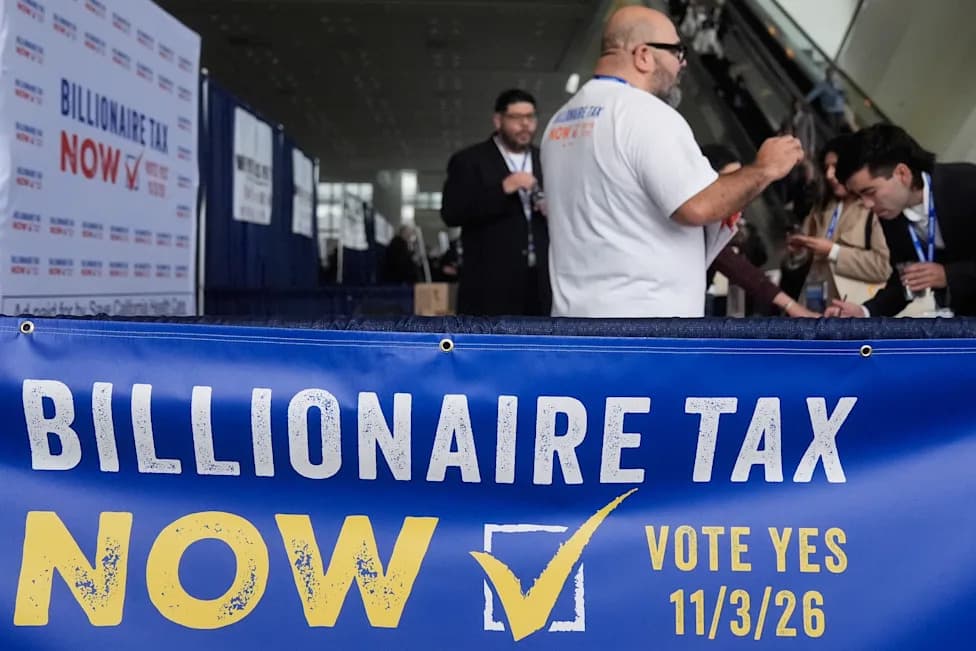
Debate over abolishing billionaires has intensified as private fortunes reach historic highs: roughly 3,028 billionaires hold about $16.1tn, and major pay packages could make individuals historically wealthy. Experts are divided: some warn that removing billionaire incentives could undermine innovation, others argue for taxes and systemic reforms to return wealth to communities and countries that produced it. Proposals include targeted taxation, stronger regulation, international tax cooperation and measures to limit media and political influence.
What If We Abolished Billionaires? How Capping Extreme Wealth Could Reshape Society

Calls to eliminate or substantially limit the growth of billionaires have gained traction as private fortunes reach historic highs. The debate pits concerns about political influence, media control and global justice against arguments that very large fortunes finance innovation and risky ventures.
Key figures underscore the scale of the issue: a record 3,028 billionaires hold roughly $16.1 trillion in combined wealth, and Elon Musk’s November pay package — potentially worth up to $1 trillion — would, if realized, place him among the wealthiest individuals in history. At the same time, roughly 800–850 million people live in extreme poverty (commonly estimated at about $2–3 a day after purchasing-power adjustments), and analysts note that reducing each billionaire’s holdings to $1 billion could free enough resources, by some UN-based estimates, to eliminate extreme poverty for many decades.
What are the arguments for keeping billionaires?
Incentives for innovation. Proponents argue that the prospect of large personal gains motivates entrepreneurs and investors to build new companies, fund cutting-edge research and take risks that benefit many people. Maxwell Marlow of the Adam Smith Institute stresses that much billionaire wealth is held in company shares or intellectual property and that founders have incentives to grow productive firms that provide services and jobs. Examples often cited include firms advancing artificial intelligence, satellite communications and other technologies.
What are the arguments for taxing or abolishing them?
Global justice and where wealth is created. Dereje Alemayehu of the Global Alliance for Tax Justice emphasizes that wealth is built on labour and natural resources across the globe, often in the Global South, and questions whether taxes collected in billionaires’ countries of residence reflect where value was created. He argues for structural reforms that direct revenue back to communities that produced the wealth, not just one-off redistributions.
Systemic change over reliance on taxes. Fadhel Kaboub and other critics say billionaires are a symptom of policy failure: the system is structured to concentrate wealth. Relying on taxes from billionaires can create perverse incentives and political dependence. Instead, they call for modern regulation, updated antitrust enforcement and policies that prevent extreme concentrations of economic and political power.
Concerns about media and political power
Experts such as Des Freedman point to the influence that wealthy owners can exert over information and public discourse when they acquire major media platforms. Ownership stakes in news outlets or social media can shape which stories get attention and how issues are framed, raising questions about independent scrutiny and democratic accountability.
Historical context and the politics of reform
Observers like Lucas Chancel of the World Inequality Lab note historical precedents for curbing extreme concentrations of wealth: the early 20th century saw trust-busting and very high top tax rates in many countries. Recent transparency initiatives — Panama Papers, LuxLeaks and similar revelations — have increased pressure to tax and regulate the super-rich. Several national and international proposals now aim to raise revenues from the ultra-wealthy or to close loopholes that enable wealth concealment.
What would abolition or a cap look like in practice?
Practical proposals range from higher marginal taxes and wealth taxes to limits on individual holdings or earnings. Other ideas include stronger corporate governance rules, more rigorous antitrust enforcement, public financing of key industries, and international tax agreements tying revenue to the location of economic activity. Each option balances trade-offs: potential effects on innovation and investment, administrative complexity, and the political feasibility of implementation.
Ultimately, the debate is less about a single policy and more about what kind of economic and political systems societies want: ones that tolerate large private concentrations of power or ones that constrain them in favor of broader public welfare.
Experts cited: Maxwell Marlow; Dereje Alemayehu; Fadhel Kaboub; Des Freedman; Lucas Chancel.
Help us improve.