The Bill & Melinda Gates Foundation approved a record $9 billion budget for 2026 and a new operating-cost cap of $1.25 billion, prompting plans to reduce up to 500 jobs by 2030. Leadership says the phased staffing changes and cost cap are intended to direct more funds to programs amid shrinking global aid. The foundation will increase investments in maternal and child health, infectious-disease prevention, poverty reduction, and expand work in India and Africa while continuing to grow its AI portfolio.
Gates Foundation Approves Record $9B 2026 Budget, Plans Gradual Staff Reductions to Cap Costs
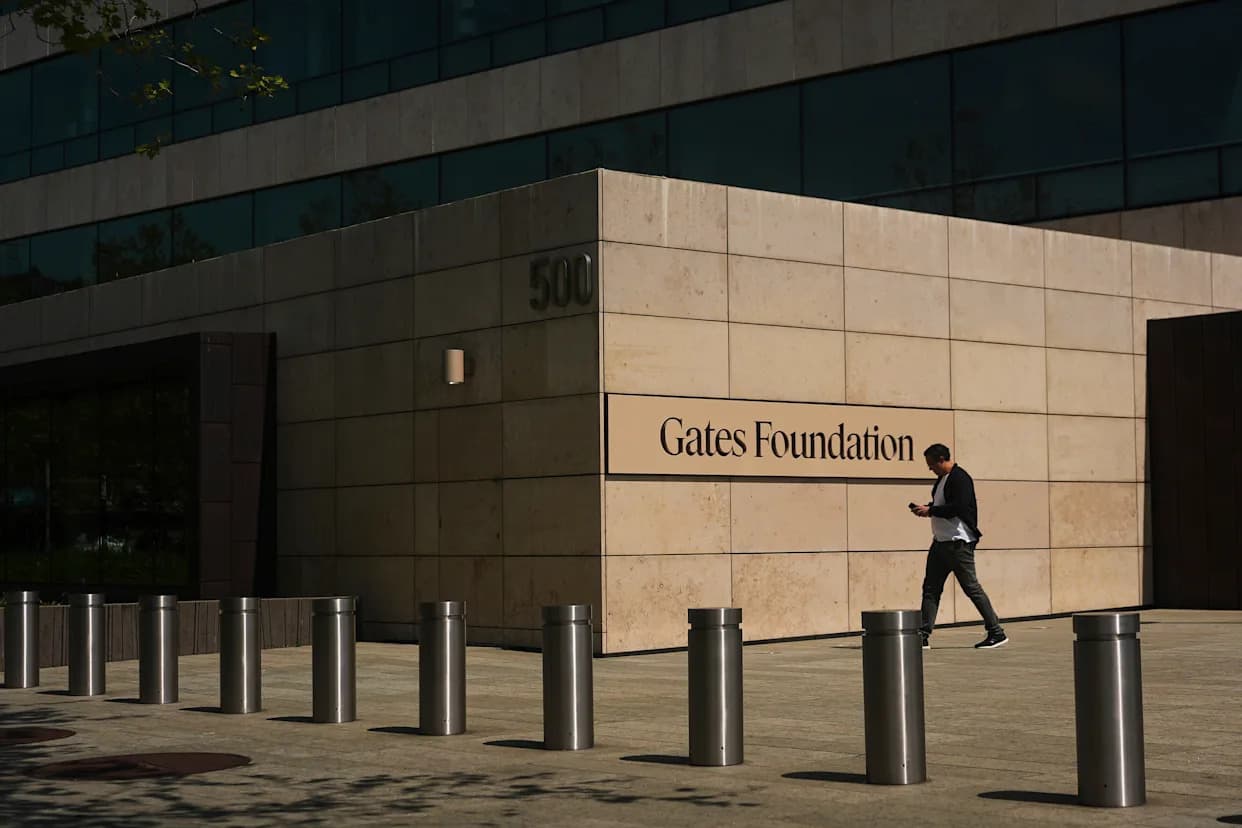
FILE - A person walks outside of the Gates Foundation campus Wednesday, April 30, 2025, in Seattle. (AP Photo/Lindsey Wasson, File)
The Bill & Melinda Gates Foundation on Wednesday approved a record $9 billion budget for 2026 and announced plans to reduce its workforce by up to 500 positions over the next five years as part of a new effort to cap operating costs at $1.25 billion, roughly 14% of the foundation's budget.
Context and Strategy
The moves follow last year’s announcement that the foundation plans to spend roughly $200 billion over the next 20 years and wind down operations by 2045. The board said the larger program budget and the operating-cost cap are intended to maximize dollars flowing to grantees and communities as public humanitarian aid declined in recent years.
Budget Priorities
The new funding level tops last year’s $8.74 billion and will boost resources for several priority areas, including women's and maternal health, vaccine research and development, polio eradication, infectious-disease prevention, poverty reduction, artificial intelligence, and education in the United States.
Operating-Cost Cap And Workforce Changes
The board approved a plan to limit operating costs — including staff compensation, infrastructure, facilities, and travel — to no more than $1.25 billion. To meet that cap, the foundation said it may reduce up to 500 of its roughly 2,375 positions by 2030, combining layoffs with decisions not to fill some open roles. Leadership emphasized the reductions will be phased in, reviewed annually, and implemented carefully.
We will do this thoughtfully, carefully, and systematically, said CEO Mark Suzman, noting that the 500-person figure is a maximum target.
Why The Cap?
Suzman and the board argued that without restraint, operating expenses — now about 13% of the budget — could rise toward 18% by the end of the decade. The cap is designed to ensure a larger share of the foundation's resources go directly to programs and partners serving vulnerable communities.
Program Shifts And Global Footprint
The foundation said it will accelerate investments in three core priorities over the coming decades: maternal and child health, infectious-disease prevention, and poverty reduction. The organization is also expanding its presence in India and Africa, creating a new Africa and India Offices Division. As part of that shift, some functions based at headquarters in Seattle — notably portions of HIV and tuberculosis teams — will be reduced as work moves closer to program sites in Africa.
AI And Partnerships
Bill Gates has warned about the societal risks posed by artificial intelligence even as he champions its potential for public good. The foundation was part of a coalition that pledged $1 billion in grants and investments to develop AI tools for public defenders, social workers, and other frontline workers over the next 15 years. Leadership said AI will remain a growing area in the foundation's portfolio.
Outlook
While the foundation has set a closure date two decades away, Suzman stressed that the next 20 years represent a substantial and potentially highly impactful window to advance the foundation's goals. The board and staff say they intend to use lessons from past work, strengthen partnerships, and focus resources more deliberately to deliver measurable results.
Reporting note: This summary is based on coverage from the Chronicle of Philanthropy and the Associated Press.
Help us improve.