Key findings: Analysis of OSIRIS‑REx samples from asteroid Bennu reveals simple sugars and a previously unknown sticky organic material dubbed "space gum." Researchers say these molecules are not evidence of life but are important chemical building blocks related to DNA/RNA chemistry. A separate study also finds high concentrations of presolar dust, suggesting Bennu formed in a region enriched by stellar remnants. Together, the results shed light on the distribution of life's raw ingredients in the early solar system.
Sugars and a Mysterious 'Space Gum' Discovered in Asteroid Bennu — New Clues to Life's Origins

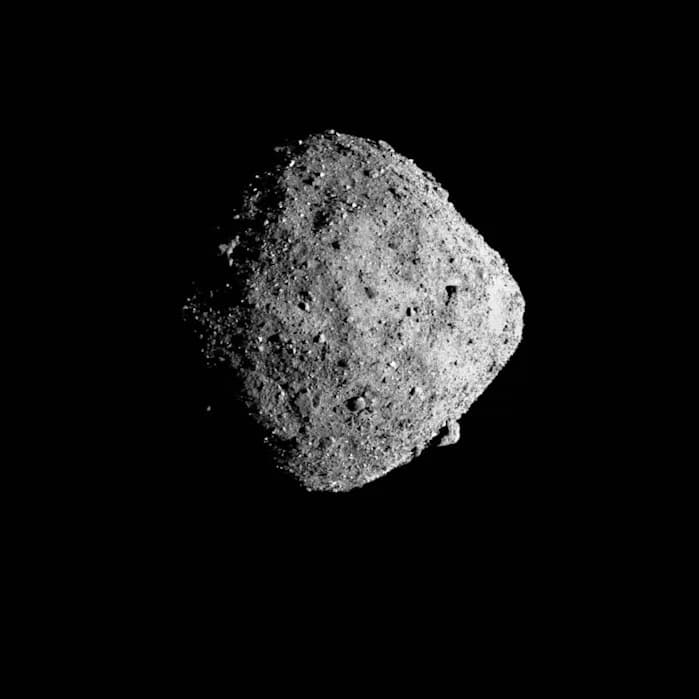
Samples returned to Earth by the OSIRIS‑REx spacecraft in 2020 are continuing to transform our understanding of the early solar system. Detailed analyses published in three new papers reveal that the asteroid Bennu contains simple sugars, complex organic material described as a sticky "space gum," and unusually high concentrations of presolar dust.
Researchers led by Yoshihiro Furukawa of Tohoku University identified a variety of sugars in the Bennu material. While the presence of these molecules — alongside previously detected amino acids — does not constitute evidence of past life on Bennu, it demonstrates that fundamental chemical building blocks related to DNA and RNA chemistry were present and widespread in the early solar system.
“Present day life is based on a complex system,” Furukawa said. “However, early life may have been simpler.”
The second study, led by Scott Sandford (NASA Ames Research Center) and Zack Gainsforth (University of California, Berkeley), reports an unexpected sticky organic substance the teams nickname "space gum." This novel material appears to have formed during the infancy of the solar system and contains molecules that could have acted as chemical precursors for prebiotic chemistry on early Earth.
“With this strange substance, we're looking at, quite possibly, one of the earliest alterations of materials that occurred in this rock,” Sandford said. “On this primitive asteroid that formed in the early days of the solar system, we're looking at events near the beginning of the beginning.”
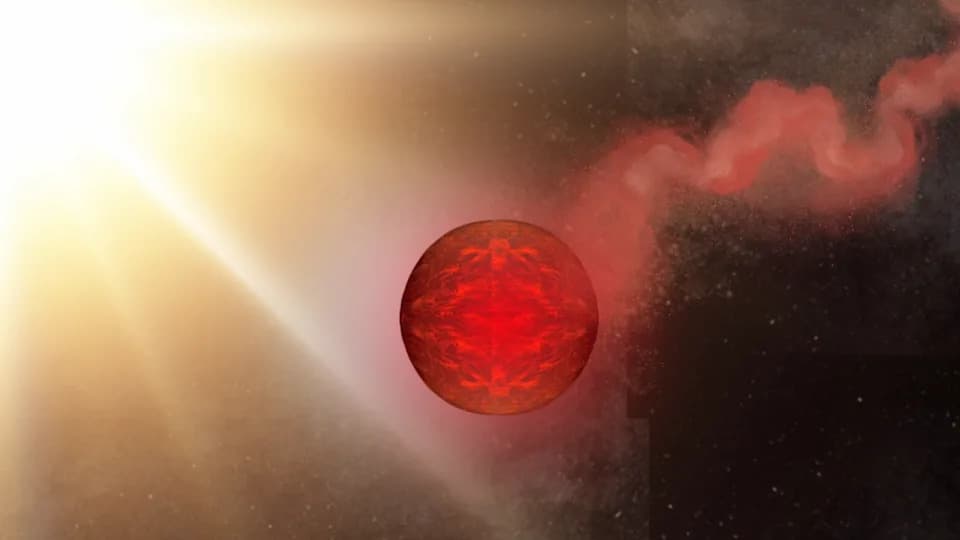
The third paper, led by Ann Nguyen of NASA's Johnson Space Center, examined dust grains from two distinct rock types collected from Bennu. Many of these grains are presolar — formed around stars that predate the Sun — and appear to have been well mixed into the cloud that built the solar system. The unusually high concentration of presolar dust suggests Bennu may have accreted in a region of the protoplanetary disk enriched by remnants of dying stars.
Why this matters
Together, these findings paint a picture of a primitive asteroid carrying both ancient stardust and diverse organic chemistry. The discovery of sugars and sticky organics helps researchers piece together which molecular ingredients were available on early Earth and how such compounds might have concentrated or reacted to support the emergence of life. Bennu thus offers a valuable, minimally altered record of the materials that circulated in the young solar system.
Future laboratory experiments and continued study of the returned samples will test how the newly identified molecules form and interact, and whether materials like the "space gum" could plausibly have contributed to prebiotic chemistry on Earth or elsewhere. For now, Bennu's returned rocks provide fresh, direct evidence that the raw ingredients for biology were present long before life arose on our planet.
Help us improve.