Researchers report that RNA’s building blocks can form through simple, rock-hosted chemistry involving borate minerals, activated phosphate and basalt surfaces. Borate stabilizes ribose, the fragile sugar backbone of RNA, while basalt-hosted, intermittently hydrated aquifers could concentrate reactants. Detections of ribose and glucose in asteroid-related samples support the idea that space rocks delivered key sugars. Important questions—such as how one molecular handedness came to dominate—remain unresolved.
Same Simple Chemistry That May Have Created Life on Earth Could Have Operated on Mars, Scientists Say
The Recipe for Life on Earth May Exist on MarsSinhyu - Getty Images
New research suggests that the same straightforward, rock-hosted chemistry that could have produced RNA on early Earth may also have been possible on ancient Mars. RNA (ribonucleic acid) is widely regarded as a central molecule in the origin of life because it can store information, catalyze reactions, regulate other molecules and assist in replication.
Steven Benner of the Foundation for Applied Molecular Evolution (FfAME) and colleagues report in PNAS that RNA’s building blocks could form when small organic precursors combined on mineral surfaces during the Hadean epoch on Earth. Key ingredients include volcanic basalt, activated phosphates and borate-bearing minerals, which together create environments capable of stabilizing fragile sugars and concentrating reactants.
Borate Stabilizes Ribose. Ribose is the sugar that forms RNA’s backbone but is chemically fragile and prone to decomposition. The team shows that borate minerals—minerals containing compounds such as sodium tetraborate (borax)—can stabilize ribose by forming borate complexes, helping it survive long enough to link with phosphate groups and build RNA strands.
Basalt-Hosted, Intermittently Hydrated Aquifers. The researchers propose that basalt-constrained aquifers that were intermittently hydrated (wet-dry cycles) could concentrate organic molecules, permit atmospheric inputs, and promote polymerization of RNA components. Basalt glass, produced by rapid cooling of lava or impact melting, likely provided surfaces that encouraged components to link into longer chains.
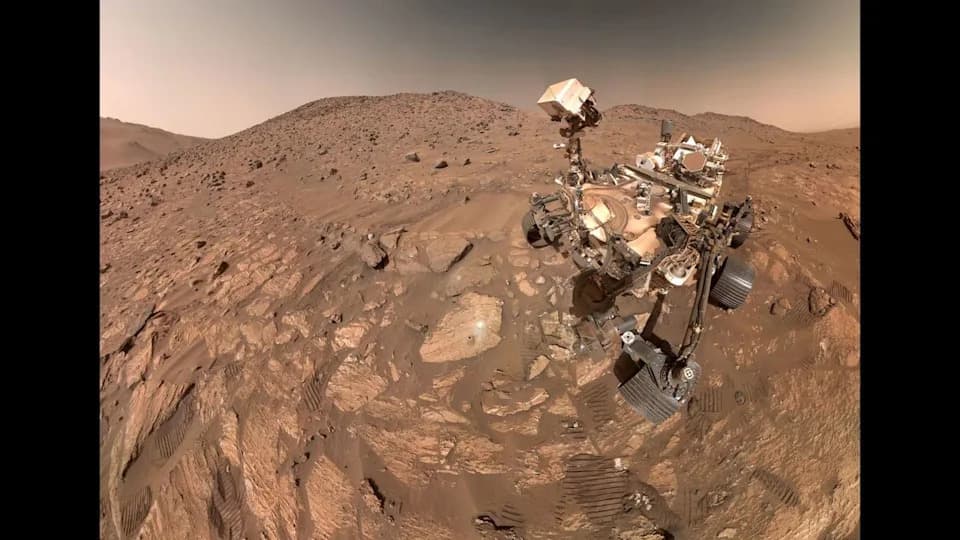
Mars as an Analogue. The Noachian-era Mars (about 4.1–4.3 billion years ago) appears to have had many of the same rock types—basalts, dehydrated phosphates and borate minerals—making it a plausible environment for the same chemistry. Benner and colleagues suggest that Martian aquifers may have been more open to the atmosphere than those on Hadean Earth, which would reduce dilution of reactants and help preserve prebiotic molecules.
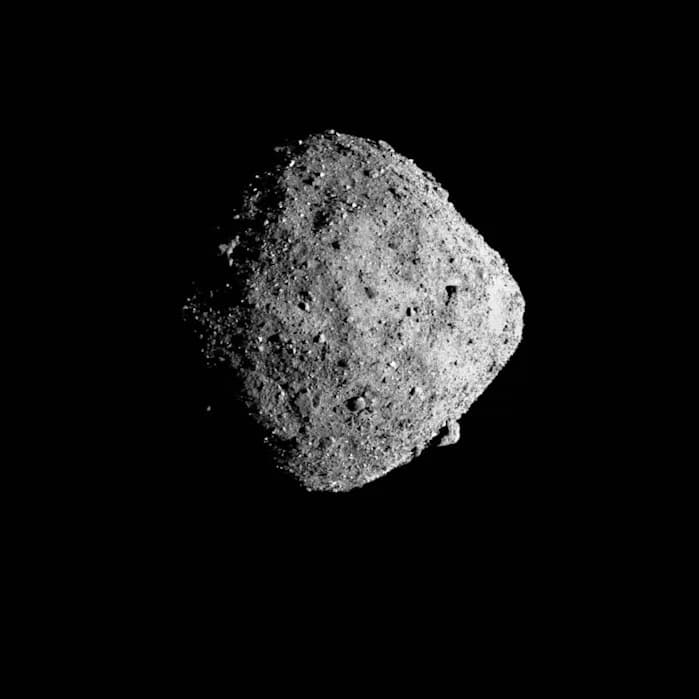
Extraterrestrial Delivery of Sugars. Independent laboratory analyses of samples related to asteroid Bennu and preliminary findings from NASA’s OSIRIS-REx mission have reported detection of ribose and glucose. These findings support the idea that asteroids and meteorites could have delivered essential sugars and organics to early Earth (and possibly Mars), seeding local prebiotic chemistry.
“[RNA synthesis] could occur in the Hadean (Earth) and Noachian (Mars) in a single geologic environment with borate, activated phosphate, and organic carbohydrates stabilized either as their sulfonate adducts or their borate complexes, within basalt-constrained and intermittently hydrated aquifers…,” the authors write in PNAS.
Remaining Questions. The work narrows plausible prebiotic pathways but does not complete the story. A major unresolved issue is chirality: RNA building blocks (nucleotides and sugars) can exist as left- or right-handed isomers, and life on Earth uses a single handedness. How a homochiral set of molecules emerged remains a key open problem.
Overall, these findings strengthen the view that relatively simple geochemical settings—common on rocky planets—could produce RNA’s essential components. That raises the intriguing possibility that the same basic recipe for life might operate on multiple rocky worlds in the Solar System.
Help us improve.