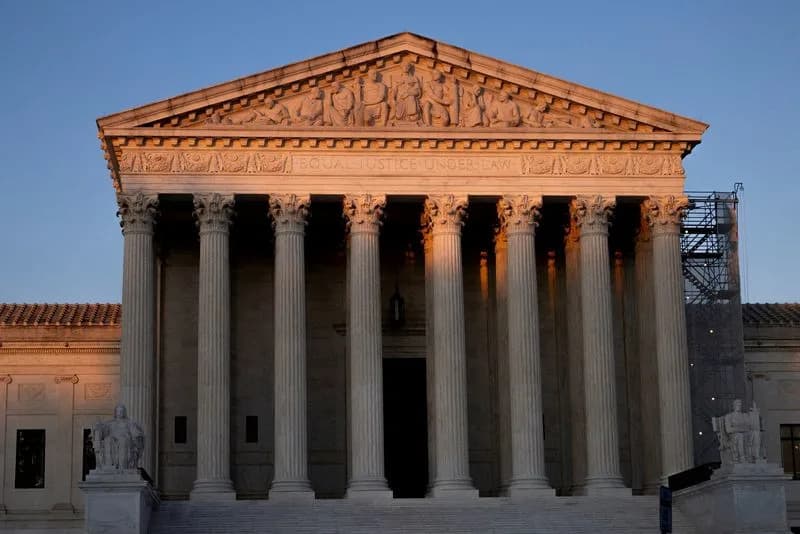
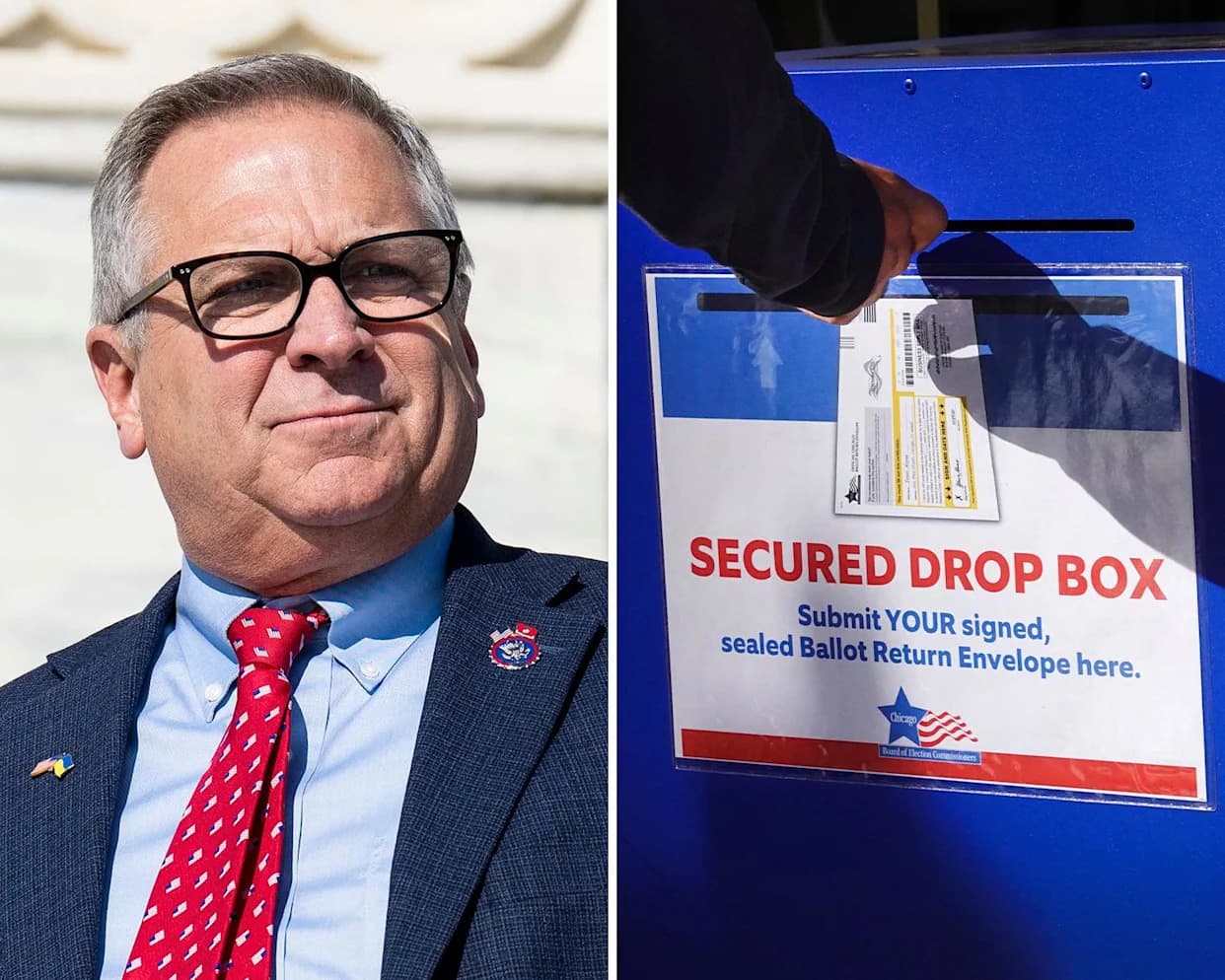
The Supreme Court will hear NRSC v. FEC on December 9, a case challenging federal limits on party spending that is coordinated with candidates. The rule aims to stop wealthy donors from evading direct contribution caps by funneling money through party committees. Given precedents such as Citizens United and McCutcheon and the Court’s current composition, the coordinated-spending caps face long odds. Even if overturned, critics note Super PACs already permit unlimited giving, so the practical effect may be to cement the influence of wealthy donors.
Supreme Court to Hear Case That Could Eliminate One of the Last Limits on Party-Coordinated Political Spending

There is a strong sense that the Supreme Court’s current term will deliver predictable outcomes on major political questions. With a 6-3 conservative majority, legal arguments that conflict with the Republican bloc’s views face long odds — whether the dispute concerns bans on anti-LGBTQ+ conversion therapy or protections in the Voting Rights Act.
That sense of inevitability is particularly acute in National Republican Senatorial Committee (NRSC) v. Federal Election Commission, scheduled for oral argument on Tuesday, December 9. The NRSC asks the Court to invalidate a campaign-finance rule that limits how much party organizations can spend in coordination with federal candidates — a rule intended to prevent wealthy donors from evading contribution limits by routing large sums through party committees.
What the law does
The statute at issue restricts the amount national and state party committees may spend in coordination with a candidate’s campaign. It aims to prevent donors who are subject to direct contribution limits from circumventing those limits by giving large amounts to a party that then uses the funds to benefit a specific candidate. The law operates alongside a separate annual limit on donations to national party committees (currently cited at about $44,300), which is not the focus of this challenge.
Why parties and donors care
Federal election law distinguishes between two types of spending: independent expenditures (unlimited spending that is not coordinated with a candidate) and coordinated expenditures (spending that is coordinated with a campaign and therefore capped). The challenged limits cap how much a party may coordinate with a campaign; the amount varies by race and electorate size — from roughly $63,600 in the smallest House contests to millions in large Senate contests.
The legal fault lines
Campaign-finance regulation is one of the clearest splits on the Court. Democratic-leaning justices have long viewed large political contributions as corrosive to democratic equality and responsive government. By contrast, the conservative majority accepts limits only in narrow circumstances: notably, to prevent direct "quid pro quo" corruption — explicit exchanges of money for official acts.
As the Court held in Citizens United and reiterated in later decisions, the government may regulate political spending only to guard against direct corruption or its appearance, not to limit the general influence donors acquire by supporting preferred policies or candidates.
That framework explains why the NRSC’s challenge looks favorable to the conservative justices. In McCutcheon v. FEC (2014), the Court struck down aggregate donor limits and expressed skepticism that party organizations would systematically funnel funds to benefit candidates in other states — a key anti-laundering concern that underpins the law now before the Court.
Arguments for and against the limits
Supporters of the law argue it prevents straightforward circumvention of direct contribution caps (for example, the widely cited $3,500 per-election figure for direct contributions referenced in some briefs) by stopping donors from using party committees as pass-throughs. If Congress can cap direct donations to reduce the risk of quid pro quo corruption, supporters say, it can also cap indirect mechanisms that produce the same effect.
Opponents contend that the limits impermissibly restrict political speech and association, and that donors and parties have alternative legal channels — notably Super PACs — to support candidates with large sums. McCutcheon also cast doubt on the premise that party subunits would routinely conspire to launder funds to a targeted candidate, weakening deference to Congress on this anti-money-laundering rationale.
Broader implications
Even if the coordinated-spending caps fall, the practical landscape of campaign finance was already transformed after Citizens United. Super PACs can accept unlimited donations and spend without aggregate limits, provided coordination rules are observed in theory; critics argue those rules are porous in practice. A ruling striking the limits in NRSC would likely expand lawful, coordinated flows of party money to candidates, further empowering wealthy donors and party strategists.
Ultimately, the case will test how far the Roberts Court will go in narrowing permissible regulation of political spending. For advocates of tighter campaign-finance rules, the decision could mark another setback; for supporters of broader political speech protections, it could be viewed as restoring First Amendment guarantees as they interpret them.
Help us improve.