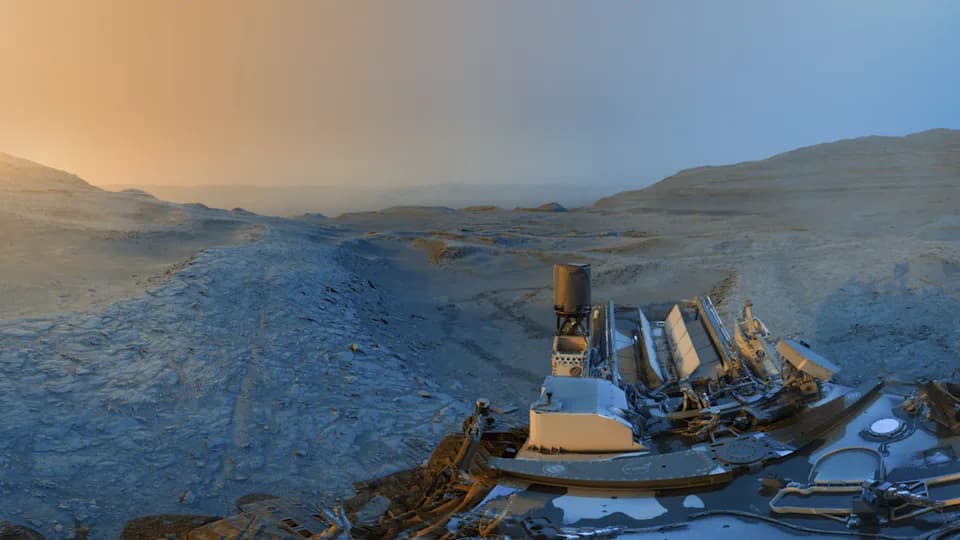
Curiosity accidentally fractured a rock in Gediz Vallis last May and revealed yellow crystals of elemental sulfur — the first confirmed detection of native sulfur on Mars. Nearby stones that look similar before being broken suggest this material could be locally abundant. The find points to a previously unknown geological process, prompting further modeling and investigation, though it is not evidence of life.
Curiosity Cracked a Martian Rock and Exposed Unexpected Native Sulfur

In May of last year, NASA's Curiosity rover accidentally rolled over and fractured a brittle rock in the Gediz Vallis channel, revealing bright yellow crystals of elemental sulfur (brimstone) beneath an otherwise nondescript surface. Instrument data confirmed this was native, or elemental, sulfur — the first clear in situ detection of sulfur in its pure form on Mars.
Why this matters
Sulfate minerals are common on Mars and form when sulfur compounds interact with water and other minerals, then dry into salts. By contrast, native sulfur forms only under a narrow range of chemical and environmental conditions that are not currently expected in the region where Curiosity made this discovery. Finding exposed pockets — and other nearby rocks that look similar before being crushed — suggests a local process or set of conditions that concentrated or produced elemental sulfur.
"Finding a field of stones made of pure sulfur is like finding an oasis in the desert," said Ashwin Vasavada, Curiosity project scientist at JPL. "It shouldn't be there, so now we have to explain it. Discovering strange and unexpected things is what makes planetary exploration so exciting."
Scientific implications
The presence of native sulfur raises new geological questions: How did it form? Was it deposited by volcanic gases, produced by chemical reactions in a subsurface environment, or concentrated through processes we don't yet understand on the surface? Researchers will combine Curiosity's observations with geological modeling and further measurements to test hypotheses about the sulfur's origin and distribution.
Sulfur is also an essential element for life on Earth, incorporated into amino acids and other biomolecules. While this discovery highlights the availability of biologically useful elements on Mars, it does not constitute evidence of past or present life; no biosignatures have been found in association with these sulfur deposits.
Ongoing exploration
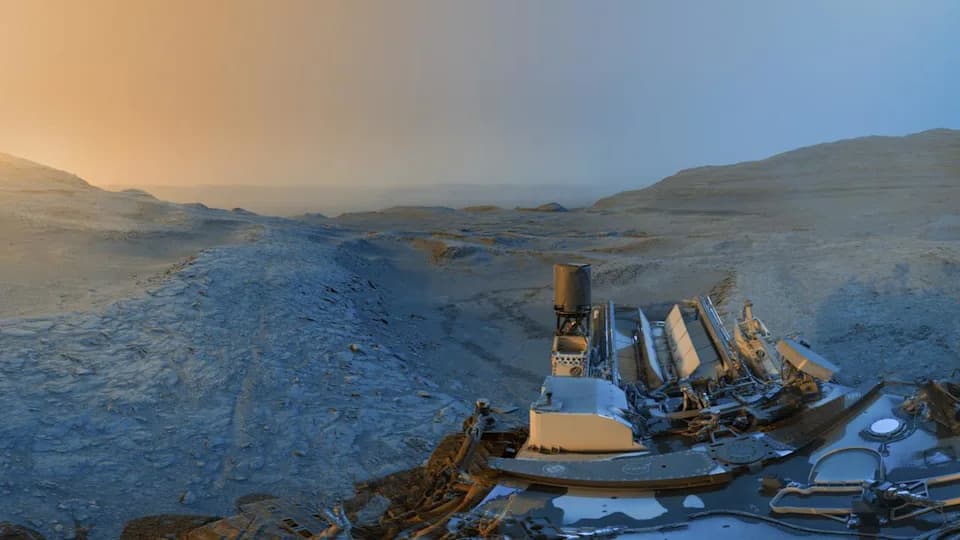
Curiosity continues to traverse Gediz Vallis, sampling and imaging rocks that record the area's ancient river activity. The discovery demonstrates how unexpected findings can result from routine rover operations — in this case, a fortunate crushing of a rock that exposed its hidden interior. Elsewhere, NASA's Perseverance rover is also active and recently set a record for the longest single drive by a robotic vehicle on another planet, underscoring the productive era of Mars surface exploration.
Researchers will publish detailed analyses as they refine models and collect additional data. An earlier version of this article was published in July 2024.
Help us improve.