A laboratory experiment using a dimensionless model and frozen soil blocks reproduced Arctic coastal permafrost under wave action to identify what drives erosion. Large waves produced more than twice the erosion of smaller waves, while ice-rich soils warmed and eroded more slowly because melting consumes heat. The team warns that ice-rich coasts can still fail suddenly as temperatures rise, threatening infrastructure, habitats and carbon stores. Better monitoring and local adaptation can reduce damage, but cutting greenhouse gas emissions is essential to limit long-term loss.
Lab Study Shows Arctic Coastal Cliffs Can Collapse Suddenly as Waves and Warming Accelerate Erosion
A new laboratory study reproducing Arctic coastal conditions shows how warming temperatures and stronger waves can trigger rapid erosion of permafrost cliffs. The experiments clarify which combinations of wave energy and ground ice content make shorelines most vulnerable to sudden failure.
Using a dimensionless physical model, researchers built frozen soil blocks to represent coastal permafrost and subjected them to a range of wave conditions in a wave tank. High-resolution cameras recorded changes in cliff geometry and mass loss, allowing precise measurement of erosion rates under controlled conditions.
Key findings
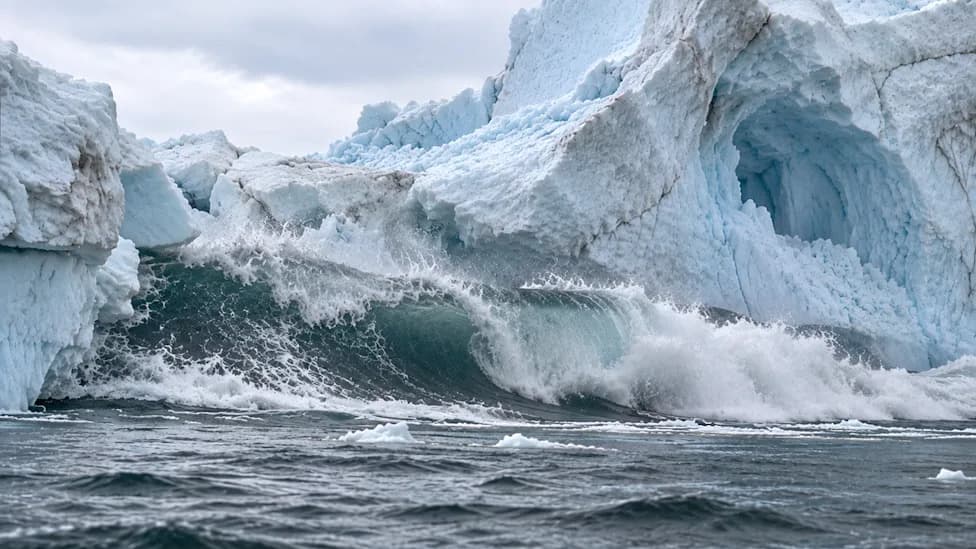
Researchers report that large waves produced more than twice the erosion of smaller waves, demonstrating the outsized role of storm-driven wave energy in cliff retreat. They also found that ice-rich soils warmed and eroded more slowly because melting the ice consumes substantial heat (latent heat), delaying material removal. Despite that apparent short-term stability, the team warns that ice-rich coasts can still fail abruptly once sufficient warming or intense wave action overcomes that thermal buffer.
"Arctic coastal erosion has intensified at unprecedented rates due to climate change, creating new challenges for coastal communities, infrastructure, and ecosystems," the researchers wrote.
Consequences for people and ecosystems
Accelerating coastal erosion threatens roads, buildings, pipelines and other infrastructure built on permafrost. As cliffs collapse, terrestrial soils and stored organic carbon enter nearshore waters, altering habitats, increasing sediment loads, and potentially releasing greenhouse gases as permafrost thaws.
What scientists and communities can do
Improved monitoring, mapping and early-warning systems can help identify high-risk stretches of coastline and guide mitigation: reinforcing critical infrastructure, restricting development in vulnerable zones, and planning relocations or evacuations where needed. At larger scales, reducing greenhouse gas emissions and limiting warming remains essential to slow the processes that drive long-term shoreline loss.
Continued laboratory experiments, field observations and modeling will refine predictions of where rapid coastline failures are most likely to occur and how to reduce harm to Arctic communities and ecosystems.
Help us improve.