Key points: At the ESA Ministerial Council in Bremen, Director General Josef Aschbacher announced that a German astronaut will become the first European to travel to the Moon on a future NASA-led Artemis mission. Germany’s contribution of the European Service Module and other Gateway hardware secured ESA seats on upcoming Artemis flights. Alexander Gerst and Matthias Maurer are the leading German candidates for the Artemis 4 seat; French and Italian astronauts are front-runners to be the first Europeans to walk on the lunar surface. ESA is contracted to supply Orion service modules for six Artemis missions, but the program’s long-term path remains uncertain.
German Astronaut to Be First European to Travel to the Moon on NASA’s Artemis

BREMEN, Germany — At the European Space Agency (ESA) Ministerial Council in Bremen, ESA Director General Josef Aschbacher announced that a German astronaut will become the first European to travel to the Moon aboard a future NASA-led Artemis mission.
Why Germany is central to Artemis
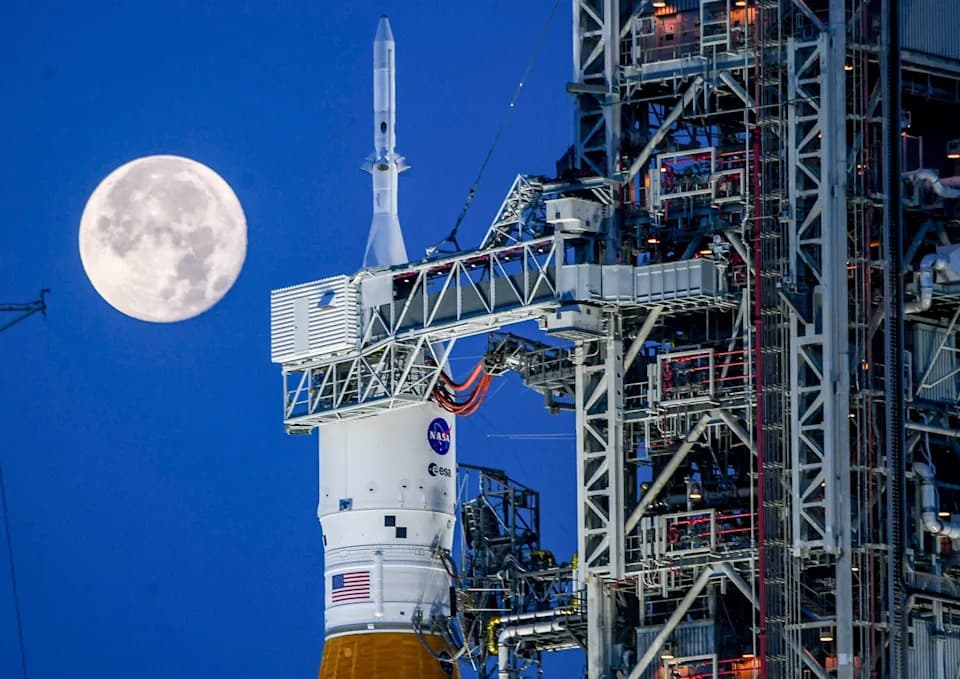
Germany is ESA’s largest financial contributor and hosts an Airbus facility in Bremen that assembles the European Service Module (ESM). The ESM provides propulsion, electrical power and life-support functions for NASA’s Orion crew capsule, which will carry astronauts on Artemis lunar missions. In addition, European industry is supplying elements for the Lunar Gateway, a planned lunar-orbit space station expected to begin assembly around 2027. In return for these contributions, ESA secured three crew seats on upcoming Artemis missions.
Leading candidates and astronaut experience
Among Germany’s astronaut corps, Alexander Gerst (49) and Matthias Maurer (55) stand out as the most likely contenders for the Artemis assignment. Gerst has logged 362 days in space across two long-duration International Space Station (ISS) missions and has served as ISS commander. Maurer spent 176 days on the ISS in 2021 and performed an extravehicular activity during that mission. Two German reserve astronauts, Amelie Schoenenwald (36) and Nicola Winter (40), have not yet flown to space.
Where this fits in the Artemis timeline
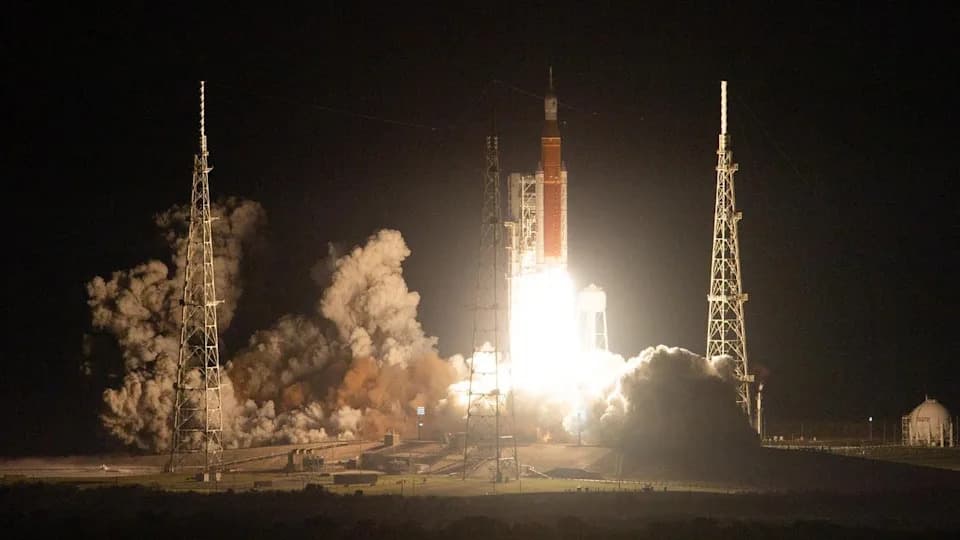
NASA has already named the crew for Artemis 2, which will return humans to lunar orbit next year: Reid Wiseman, Victor Glover and Christina Koch, joined by Canadian astronaut Jeremy Hansen. Artemis 3 aims to attempt a lunar landing (currently targeted for 2027) but is not expected to include a European crew member. ESA has said it secured seats on Artemis 4 and Artemis 5, with Artemis 4 currently planned for the second half of 2028 and Artemis 5 expected around 2030.
Who might walk on the Moon first from Europe
While a German astronaut is likely to be the first European to travel to the Moon (in lunar orbit), the first European to set foot on the lunar surface will likely be French or Italian. French astronaut Thomas Pesquet, who has 397 days in space and has served as ISS commander, is widely regarded as a strong candidate. Italian astronauts Luca Parmitano and Samantha Cristoforetti are also leading contenders, both with multiple long-duration ISS missions and extensive EVA experience between them.
Program outlook and Europe’s role
ESA currently has contracts to produce Orion European Service Modules for six Artemis missions. The program’s long-term shape beyond those commitments remains uncertain amid shifts in U.S. space policy and evolving plans to transition toward commercial spacecraft for crewed deep-space missions. ESA is exploring options to remain a partner, and Europe is developing a lunar cargo lander, Argonaut, which could expand the continent’s contributions to future lunar operations.
“An ESA astronaut traveling beyond low Earth orbit for the first time will be a huge inspiration and source of pride for their country and for Europe at large,” Josef Aschbacher said at the ministerial meeting.
This announcement marks a major milestone for European human spaceflight: if confirmed for Artemis 4, the German astronaut will travel roughly 360,000 kilometers to lunar orbit and, for the first time for a European, view Earth as a single, whole disk from deep space.
Help us improve.