
In December 1968, Apollo 8’s crew — Frank Borman, James Lovell and William Anders — became the first humans to leave Earth and orbit the moon, delivering the iconic "Earthrise" image and a Christmas Eve broadcast that uplifted a fractured nation. Artemis 2, planned for early 2026, will send Reid Wiseman, Victor Glover, Christina Koch and Jeremy Hansen around the moon to test Orion and the SLS rocket. While the mission could inspire and reaffirm leadership in space, NASA faces budgetary, leadership and morale challenges that complicate the agency’s path forward.
How Apollo 8 "Saved" 1968 — Can Artemis 2 Rekindle That Hope in 2026?

This iconic view of the Earth rising over the moon was taken by astronaut Bill Anders on Dec. 24, 1968 during NASA's Apollo 8 lunar orbiting mission. | Credit: NASA/Bill Anders
Fifty-seven years ago, three American astronauts set off on one of the most daring and unexpectedly uplifting journeys in human history. In late December 1968, Frank Borman, James Lovell and William Anders launched on Apollo 8 and became the first humans to leave Earth orbit and travel to another world.
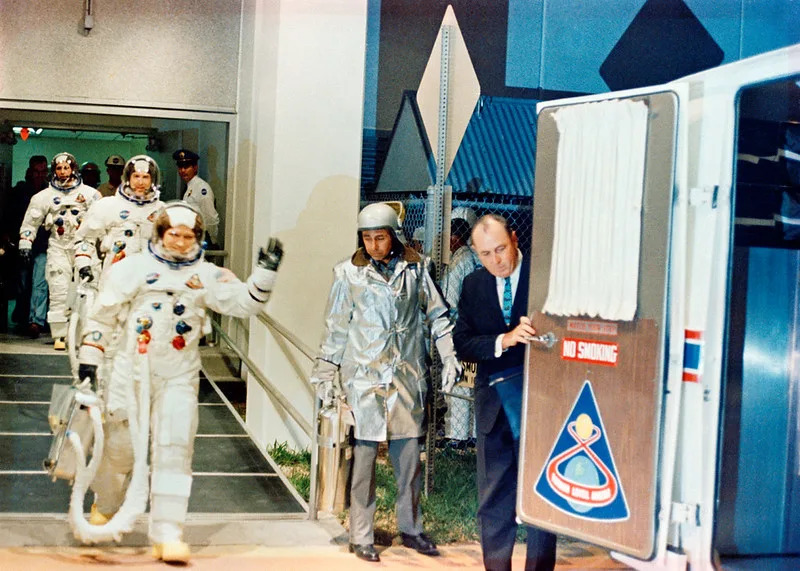
The crew of NASA's Apollo 8 mission, commander Frank Borman (right, waving), common module pilot Jim Lovell and lunar module pilot William Anders walk out to the transfer van on the way to the launch pad on Dec. 21, 1968. | Credit: NASA
Why Apollo 8 Mattered
1968 was a year of national trauma — assassinations, civil unrest and a divisive war overseas. For many, Apollo 8 transformed the moon from a distant celestial body into a symbol of hope and national purpose. NASA made a bold, high-risk decision to accelerate its timetable after the Apollo 1 tragedy in 1967 and fly the first crewed Saturn V to send humans toward the moon. The mission’s single, clear objective and its striking success captured the public imagination.

New Yorkers honors Apollo 8 astronauts. Crowd line Apollo Way (it used to be Broadway) to welcome the spacemen with a ticker tape parade on Jan. 10, 1969. | Credit: Tom Middlemiss/New York Daily News Archive /Getty Images
Moments That Lasted
After a three-day transit, the crew fired the Service Propulsion System to brake into lunar orbit. From roughly 60 miles above the surface they became the first humans to see the moon’s stark mountains and cratered plains up close. The unexpected sight of the Earth rising over the lunar horizon produced the famous photograph Earthrise — a new and fragile perspective of our planet.
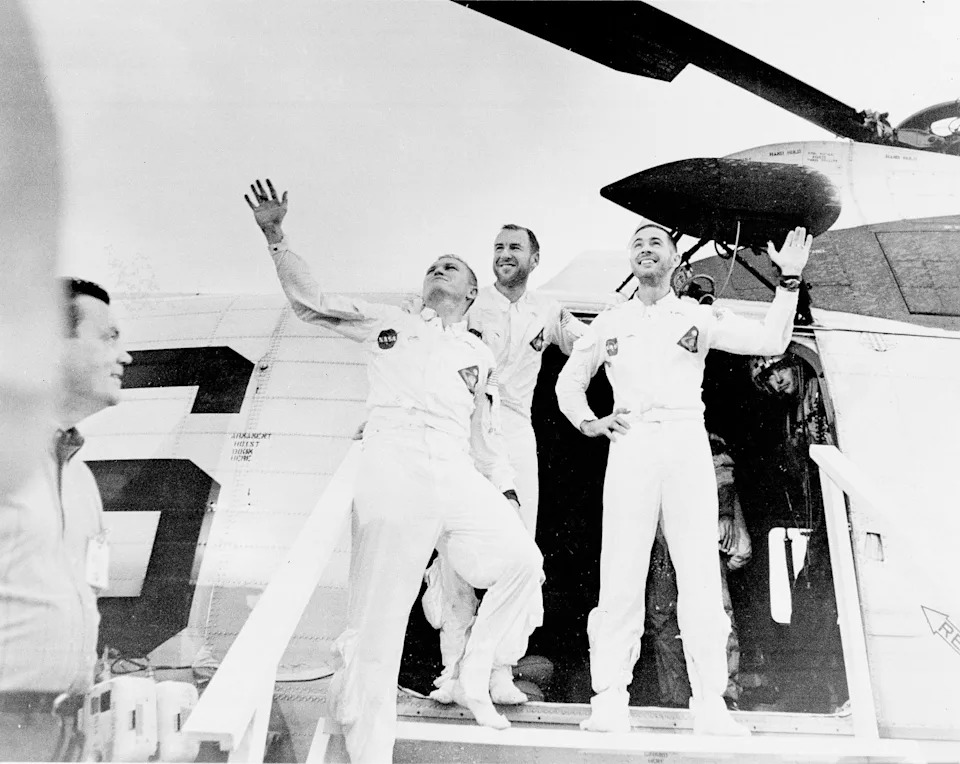
The astronauts of Apollo 8 wave after leaving their recovery helicopter on Dec. 27, 1968. From left, they are: William Anders, Jim Lovell and Frank Borman. | Credit: NASA
On Christmas Eve, the crew broadcast images of the lunar surface and read passages from the Book of Genesis, creating a broadcast that millions remember as the "lunar Christmas." A telegram that captured public feeling read simply: "You saved 1968."
From Apollo To Artemis
More than half a century later, NASA is preparing for a new lunar chapter. Artemis 2 is scheduled for early 2026 as the first crewed test flight of the Artemis program. The roughly 10-day mission will carry astronauts around the moon to validate the Orion spacecraft and the Space Launch System (SLS) rocket in deep space.
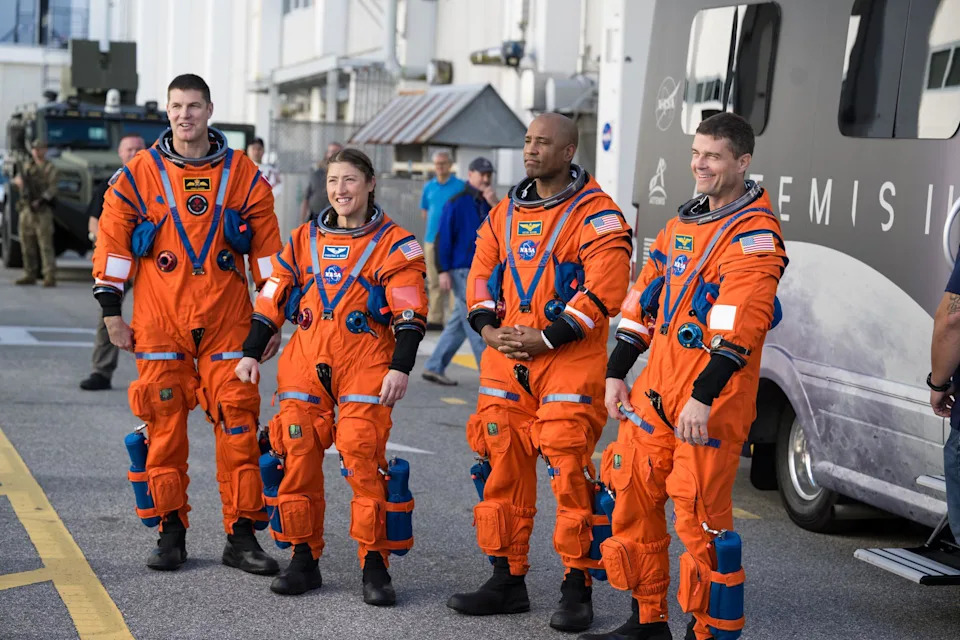
NASA's Artemis 2 astronauts walk out for a launch countdown test on Dec. 20, 2025 at the Kennedy Space Center in Florida. They are (from right to left): NASA astronauts Reid Wiseman, commander; Victor Glover, pilot; Christina Koch, mission specialist; and Canadian Space Agency astronaut Jeremy Hansen, mission specialist. | Credit: NASA/Aubrey Gemignani
The Artemis 2 crew — Reid Wiseman, Victor Glover, Christina Koch and Canadian astronaut Jeremy Hansen — will fly aboard the Orion capsule nicknamed "Integrity," becoming the first people to travel to the moon’s vicinity since 1972.
Why It Still Matters
Historians note both similarities and differences between Apollo 8 and Artemis 2. Apollo 8 was a politically charged, morale-restoring act at a very specific moment; Artemis 2 arrives in a more complex technological and geopolitical landscape. A successful Artemis 2 could reaffirm U.S. leadership in human deep-space exploration, demonstrate key technologies for future landings, and provide an inspirational moment in a time of institutional strain.
Institutional Challenges
NASA faces real hurdles: budget pressures, leadership transitions, workforce morale and programmatic complexity. These issues complicate the path ahead and raise important questions about how the agency will sustain long-term human exploration goals. Still, Apollo 8’s legacy is a reminder that bold, well-executed missions can have outsized cultural impact.
Looking Ahead
Apollo 8 showed that missions can resonate far beyond technical achievement to shape national mood and perspective. Artemis 2 will not be a repeat of 1968, but it could be another moment that rekindles public imagination about the possibilities of spaceflight. Whether it will have the same unifying cultural effect depends as much on leadership, communication and follow-through as on the mission’s technical success.
Note: This article preserves the historical facts of Apollo 8 while summarizing current plans and challenges for Artemis 2. Specific program dates and administrative details may evolve as NASA's plans and budgets are finalized.


