The Washington Monument was illuminated with a Saturn V rocket projection from Dec. 31–Jan. 5 as a public nod to NASA’s Artemis program. Artemis 2, targeted to launch as soon as Feb. 6, will be the first crewed flight of the Space Launch System and the first human mission beyond low Earth orbit since 1972. The four-person crew includes milestones for diversity and international partnership, and a successful Artemis 2 would set the stage for a future crewed lunar landing and sustained lunar exploration.
Moon Fever in DC: Saturn V Projection Lights Up Washington Monument Ahead of Artemis 2
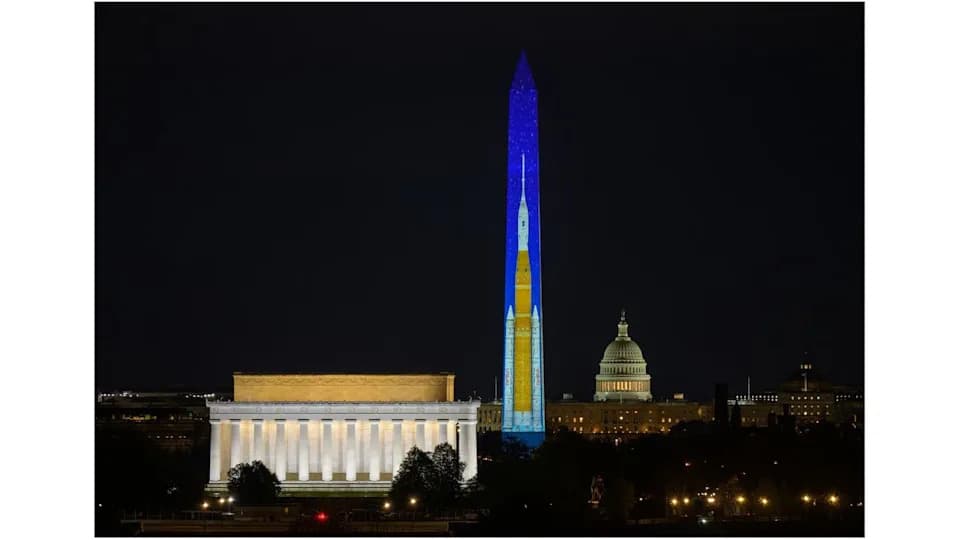
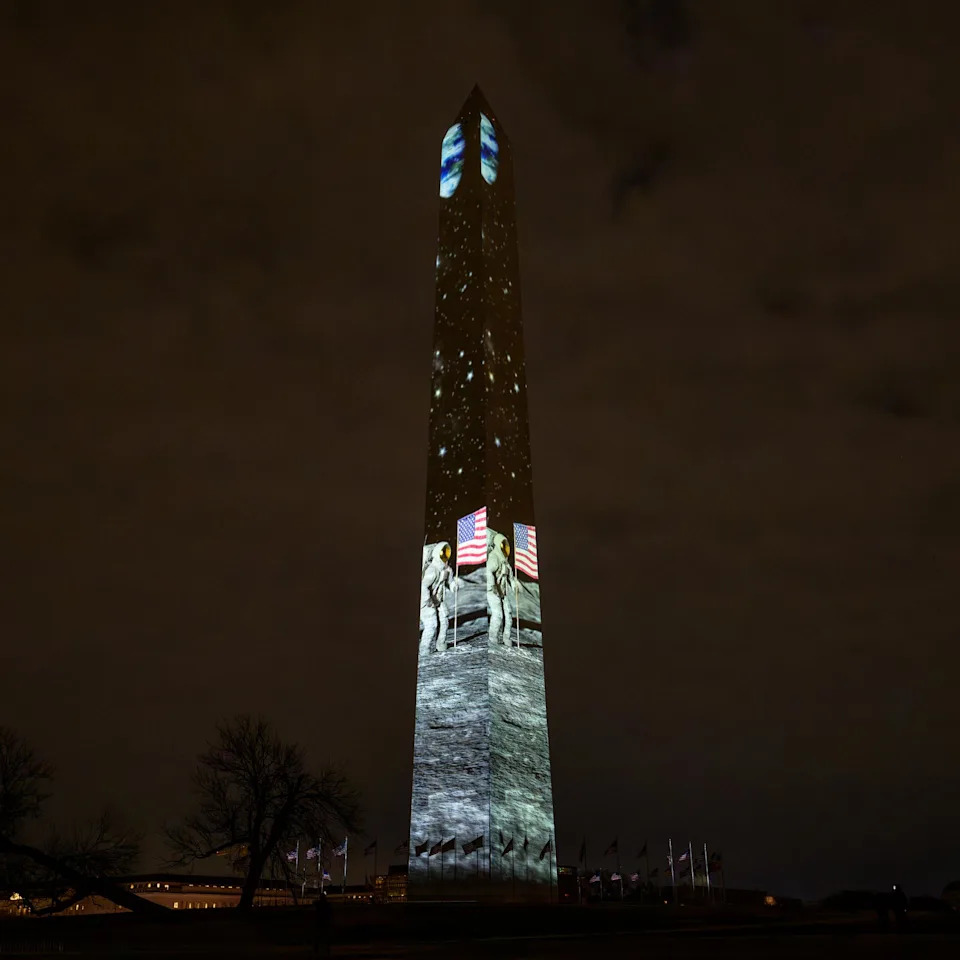
Images depicting NASA’s Space Launch System (SLS) rocket are projected onto the Washington Monument as part of an event to kick off the nation's 250th birthday year, Wednesday, Dec. 31, 2025, in Washington, D.C. | Credit: NASA/Bill Ingalls
The U.S. capital got a space-themed New Year’s greeting when imagery tied to NASA’s moon program was projected onto the Washington Monument at night from Dec. 31 through Jan. 5. The most striking image: the iconic Saturn V rocket — a visual nod to America’s past and future ambitions in deep space — displayed across the obelisk as attention turns to the upcoming Artemis 2 mission.
What Was Displayed
Freedom 250, the organization marking the 250th anniversary of the Continental Congress’s approval of the Declaration of Independence, ran the projection as part of its New Year’s presentation. The group said the display was intended to "illuminate the story of America," highlighting achievements from the nation’s founding to its reach for the stars.
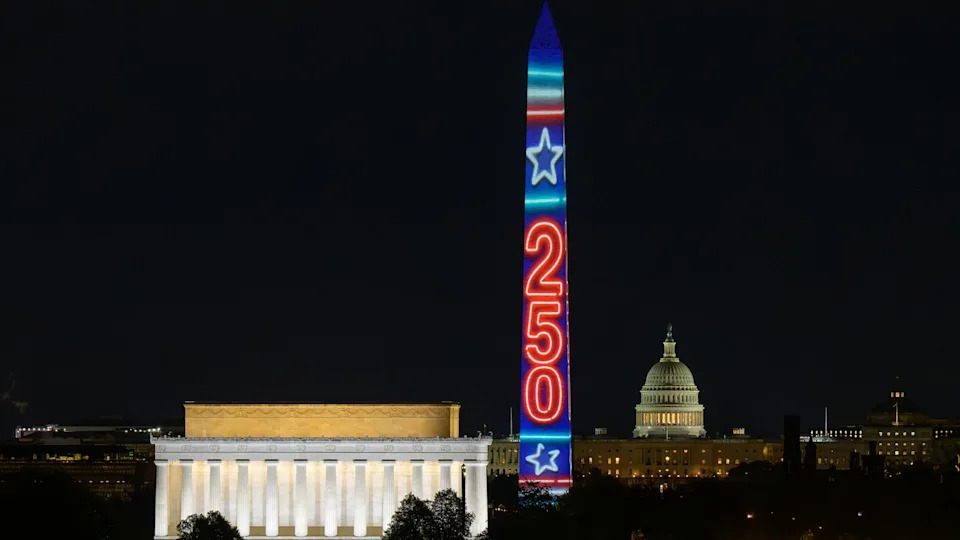
The projection show was accompanied by a fireworks display to celebrate New Year's Eve. | Credit: NASA/Bill Ingalls
Artemis 2: A Return To Crewed Lunar Missions
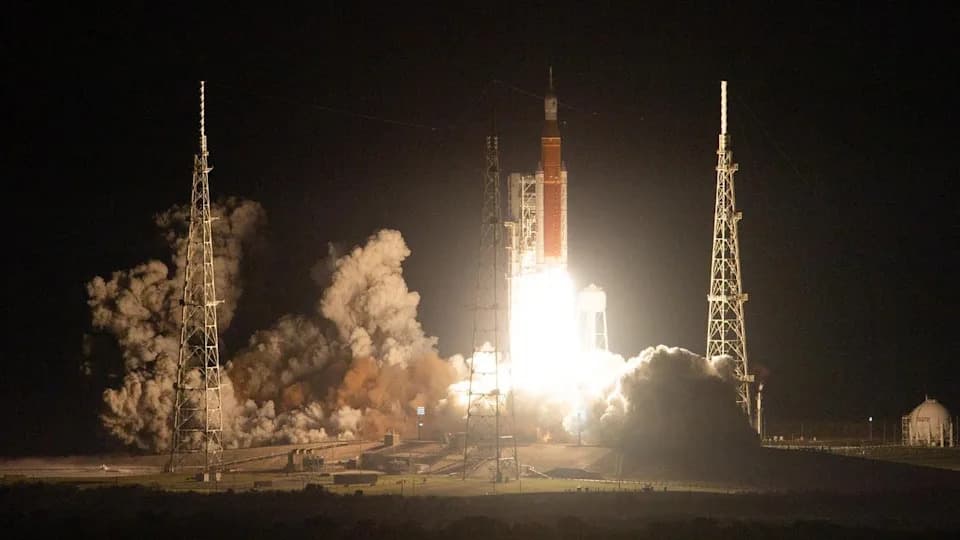
Artemis 2 is currently targeted to launch as soon as Feb. 6 and will be the first crewed flight of NASA’s Space Launch System (SLS). If the mission proceeds as planned, a four-person crew will make a roughly 10-day trip around the Moon — the first time people have traveled beyond low Earth orbit since Apollo 17 in 1972.
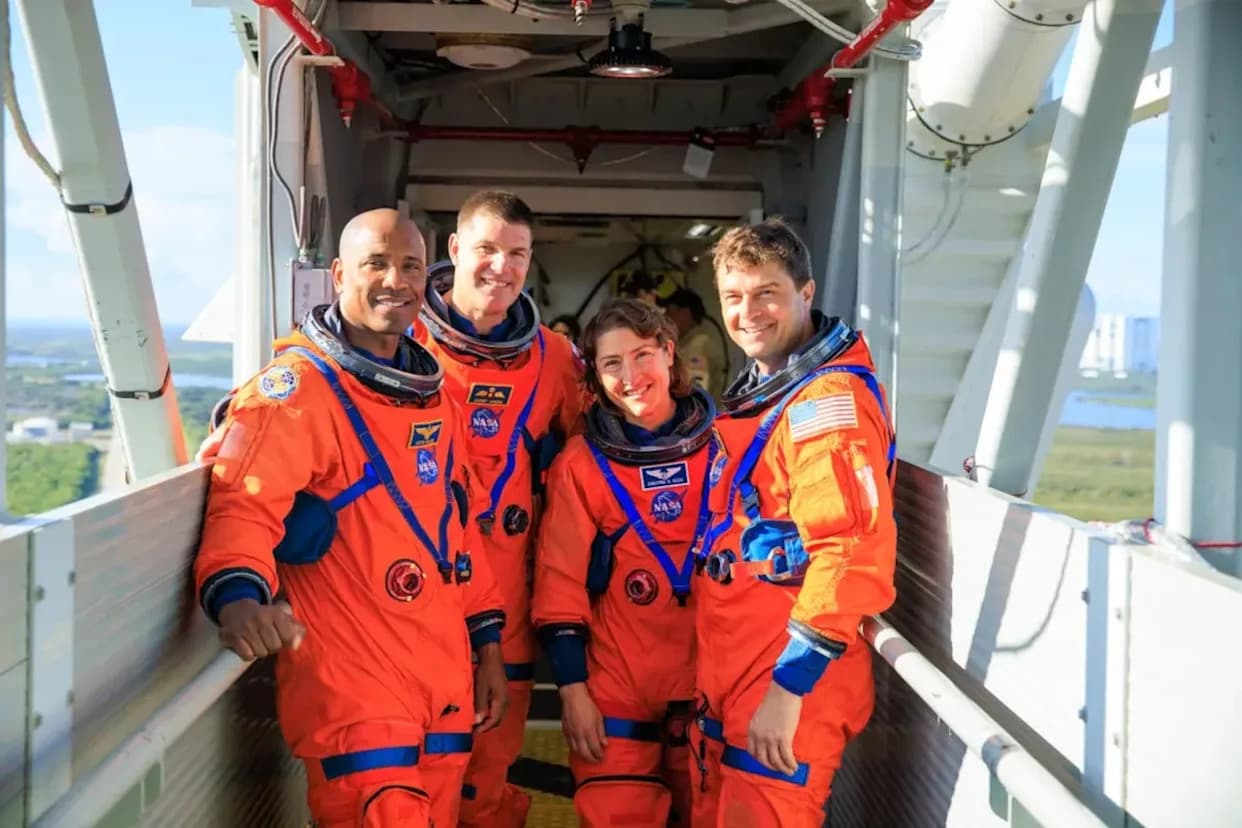
Crew:
Will the Artemis 3 mission be the next successful moon landing? | Credit: NASA/Bill Ingalls
- Reid Wiseman (NASA) — commander
- Victor Glover (NASA) — pilot; projected to be the first Black person to travel beyond low Earth orbit
- Christina Koch (NASA) — mission specialist; projected to be the first woman to travel beyond low Earth orbit
- Jeremy Hansen (Canadian Space Agency) — mission specialist; the first non-American crewmember on an Artemis lunar-orbit mission
Program Context And Partnerships
Artemis 2 follows Artemis 1, the uncrewed lunar-orbit test flight in late 2022 that validated both the SLS rocket and the Orion crew capsule. A successful Artemis 2 would pave the way for Artemis 3, which aims to land astronauts on the lunar surface later in the decade.
NASA intends Artemis to be more than a single landing: the program seeks sustained lunar presence through international and commercial partnerships, including plans for surface bases, resource prospecting, and advanced systems such as nuclear power. Canada’s contribution of the Canadarm3 robotic arm for the Gateway lunar outpost helped secure a seat for Jeremy Hansen on Artemis 2.
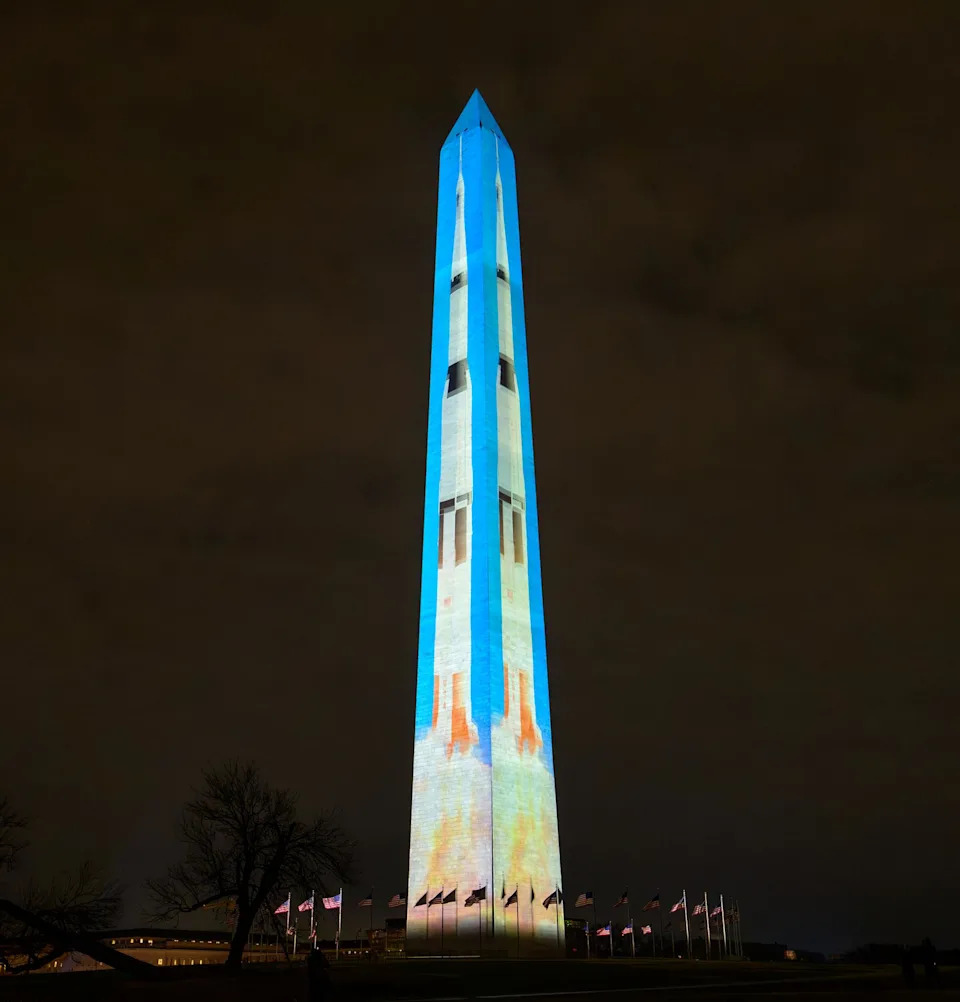
The Saturn V rocket is projected onto the Washington Monument. | Credit: NASA/Bill Ingalls
Separately, the Artemis Accords — a U.S.-led set of principles for peaceful, safe and sustainable space exploration — has been signed by more than 50 nations, reflecting broad international interest in the program.
Past Monument Projections
Projecting space imagery onto the Washington Monument is not new: in 2019, for the 50th anniversary of Apollo 11, a Saturn V image appeared on one face of the monument. The 2025 presentation was notable for displaying the Saturn V on all sides of the obelisk.
Whether it’s a public art display or a milestone mission, the Saturn V projection is a reminder that public enthusiasm for lunar exploration remains strong as NASA prepares to send astronauts back to the Moon.
Help us improve.