Isotopic analyses of Apollo lunar samples, Earth rocks and Antarctic meteorites indicate the Moon‑forming impactor, Theia, likely formed in the inner solar system — possibly closer to the Sun than Earth. Measurements of iron, molybdenum and zirconium isotopes, combined with hundreds of impact models, point to a rocky, metal‑cored Theia roughly 5–10% of Earth's mass. The results also imply an "unsampled" reservoir of material very near the Sun that is absent from known meteorites. The study clarifies Theia's local origin but leaves open how the two bodies mixed so completely during the giant impact.
Apollo Samples Suggest Moon‑Forming Impactor 'Theia' Grew Up Next Door

New analyses of Apollo lunar rocks, terrestrial samples and Antarctic meteorites strengthen the idea that the body that struck the young Earth and created the Moon — the hypothesized impactor nicknamed Theia — formed in the inner solar system, possibly even closer to the Sun than Earth.
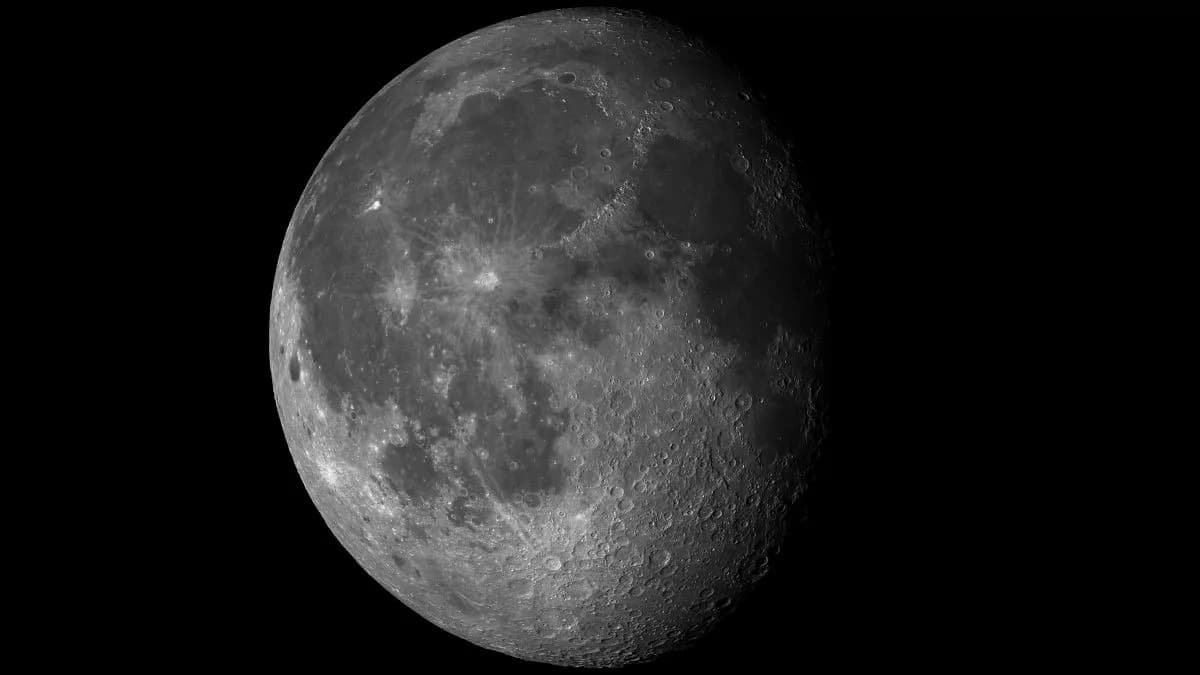
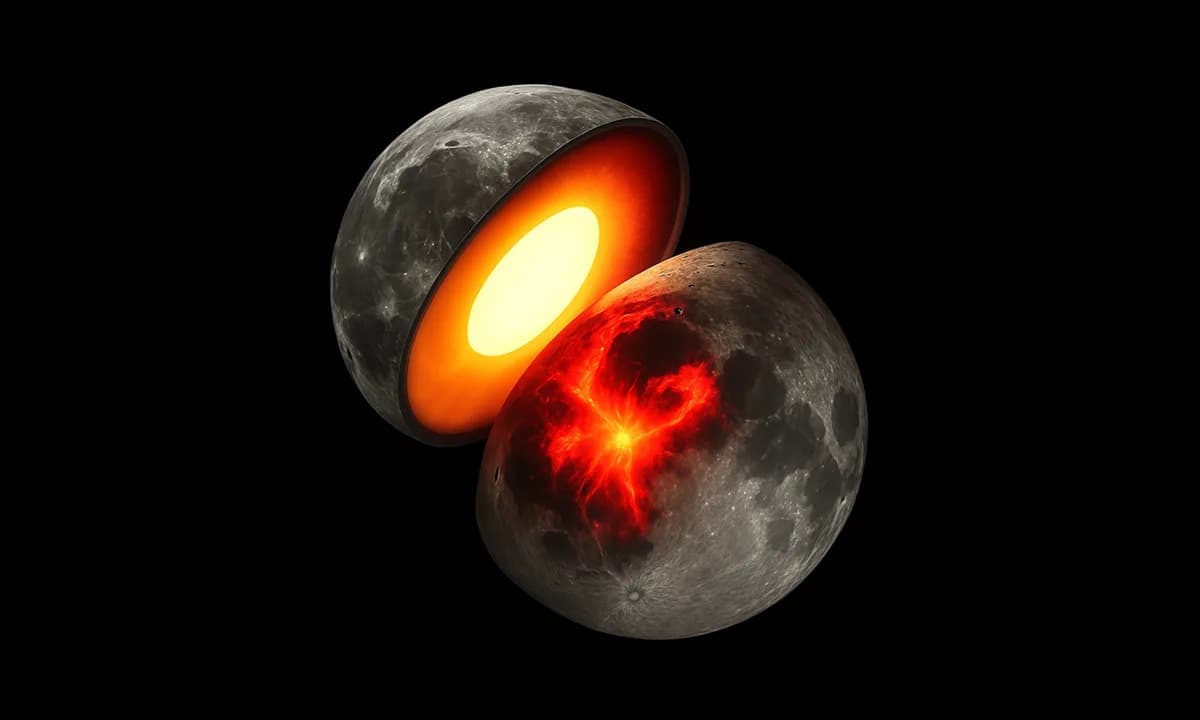
About 4.5 billion years ago a Mars-sized object collided with the proto-Earth with enough energy to melt large portions of the mantle and launch a disk of molten debris into orbit. That debris later coalesced to form the Moon. While this "giant impact" scenario is widely accepted, the origin and composition of Theia have been debated for decades because Earth and Moon are nearly chemically identical.
How the team investigated
Led by Timo Hopp of the Max Planck Institute for Solar System Research, the research team measured subtle isotopic signals in six Apollo lunar samples (from Apollo 12 and 17), 15 terrestrial rocks (including specimens from Kīlauea, Hawaii) and several Antarctic meteorites curated in museum collections. They measured minute variations in iron isotopes and combined those data with molybdenum and zirconium isotope compositions.
These isotopic fingerprints help indicate where material condensed in the early solar system relative to the Sun. The researchers then ran hundreds of formation and impact models — ranging from small impactors to bodies approaching half of Earth's mass — to find which scenarios reproduce the observed chemistry of both Earth and Moon.
Key findings
The only models that matched the combined isotopic evidence indicate Theia formed locally in the inner solar system. Theia was likely a rocky, metal‑cored body about 5–10% of Earth's mass. The results support the classical picture in which dozens to hundreds of planetary embryos populated the early inner solar system and frequently collided as planets assembled.
The models also require that both proto‑Earth and Theia contained material from an "unsampled" inner‑solar‑system reservoir — a component not represented in known meteorite collections. This missing material probably condensed very close to the Sun and either was incorporated early into growing planets (Mercury, Venus, Earth, Theia) or never survived as free‑floating bodies capable of becoming meteorites.
"Theia and proto‑Earth come from a similar region of the inner solar system," Timo Hopp said. He notes that future samples from Venus or Mercury could reveal larger fractions of the missing component and help confirm or refute the conclusion.
Open questions and implications
Although this study strengthens the case that Earth and Theia were local siblings, it does not fully explain how the impact mixed the two bodies so thoroughly that Earth and Moon now appear almost chemically identical. Solving how such deep homogenization occurred during the giant impact remains an important challenge and could complete our picture of the Moon's violent birth and the final stages of terrestrial planet formation.
Study details: The findings were published Nov. 20 in the journal Science. The lead author is Timo Hopp (Max Planck Institute for Solar System Research).
Help us improve.