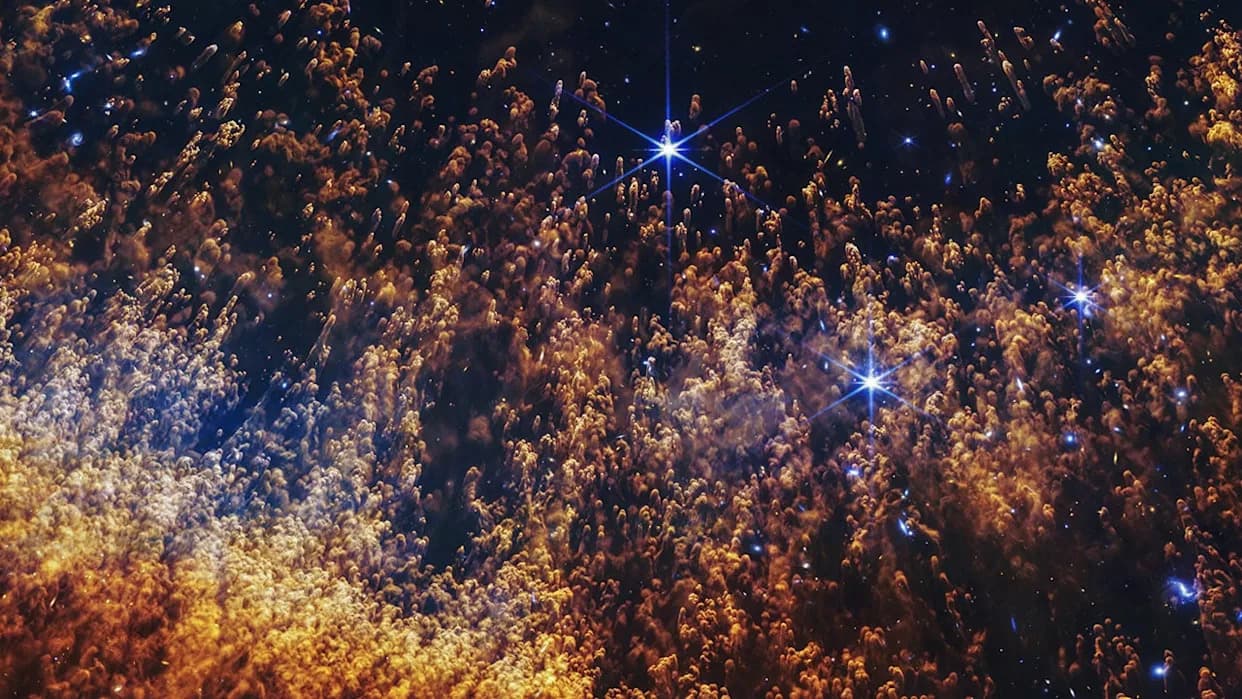
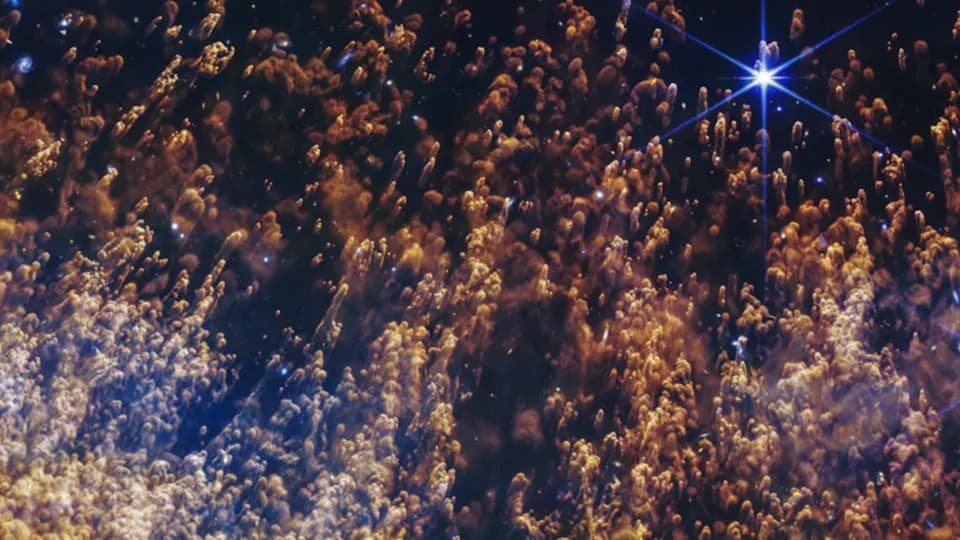
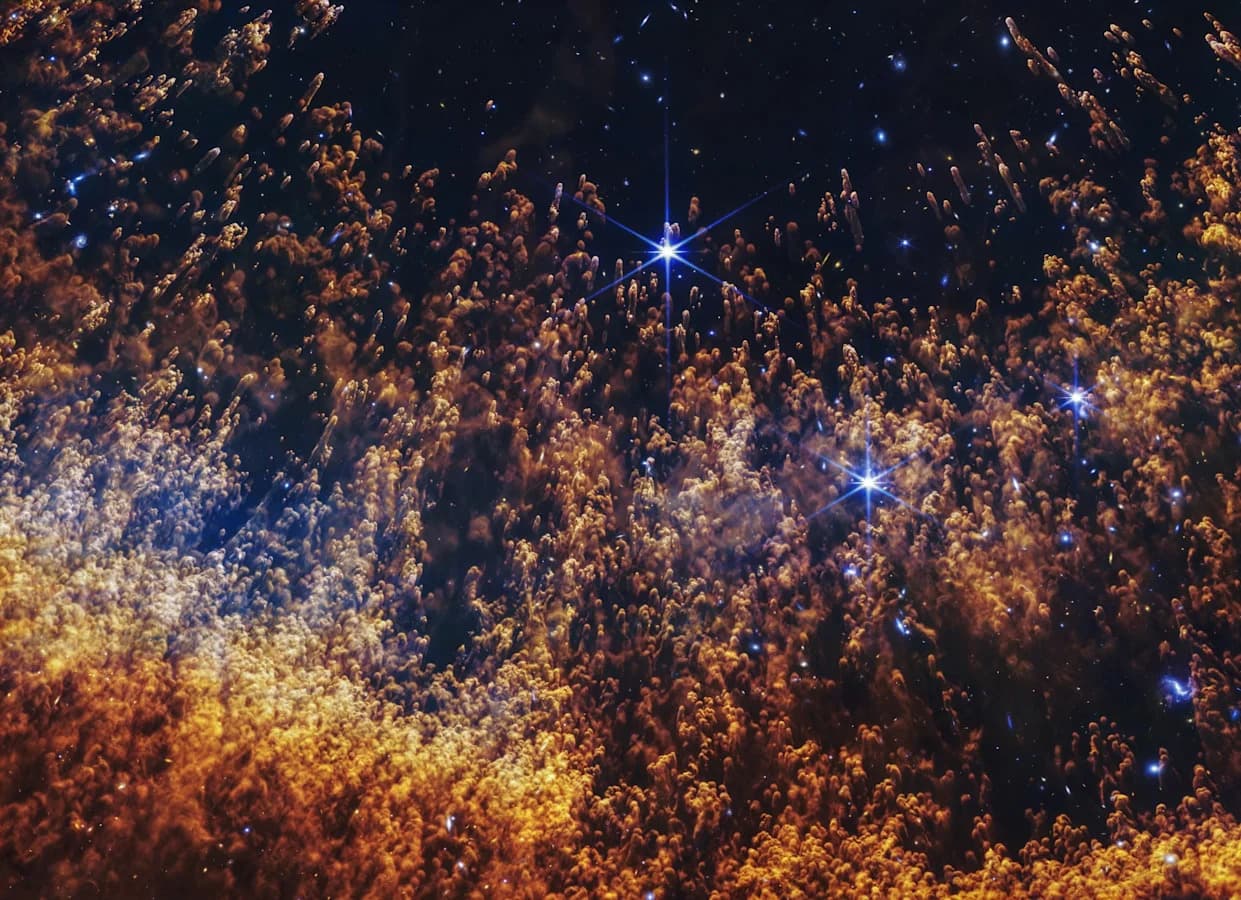
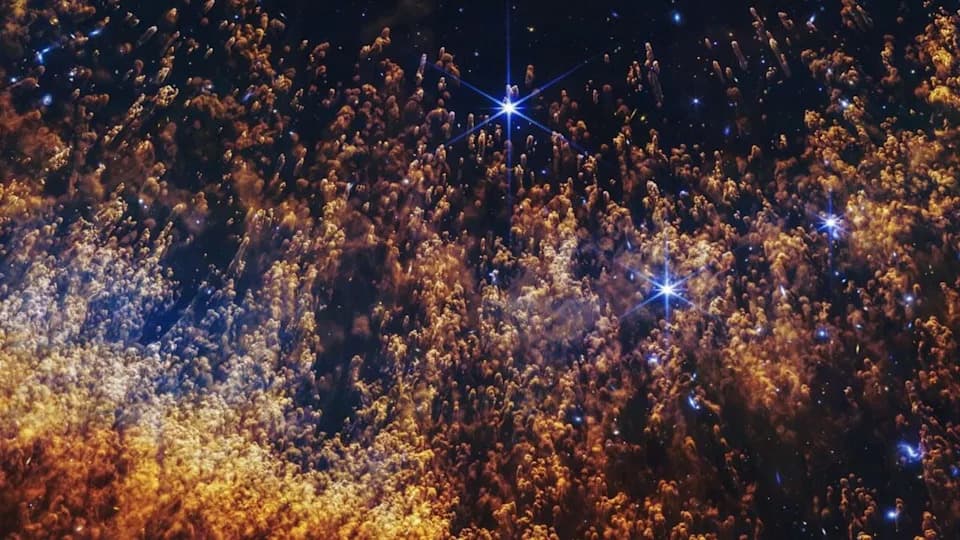
The James Webb Space Telescope's NIRCam has produced the most detailed images yet of the Red Spider Nebula, revealing its full outstretched lobes for the first time. The lobes appear as blue-traced H2-emitting, closed bubble-like shells, each about 3 light-years across. Scientists say outflowing gas from the central star inflated these bubbles over thousands of years, and Webb's high-resolution infrared data will support extensive follow-up studies into the nebula's structure and chemistry.
Webb Reveals Red Spider Nebula's Full 'Legs' — Bubble-Like Lobes Span ~3 Light-Years

Using its Near-Infrared Camera (NIRCam), the James Webb Space Telescope has delivered the most detailed view yet of the Red Spider Nebula. For the first time, Webb's infrared imaging maps the nebula's outstretched lobes — the spider's 'legs' — across their full extent.
The new NIRCam observations render these lobes in blue, tracing emission from molecular hydrogen (H2). The images show the lobes as closed, bubble-like shells, each stretching roughly 3 light-years from end to end.
Researchers interpret these structures as the result of powerful outflows of gas from the nebula's central star. Over thousands of years, that outflow has inflated the bubble-like lobes, producing the dramatic morphology now revealed in fine detail by Webb.
The Red Spider Nebula is a planetary nebula — the glowing, expanding envelope produced when a dying star sheds its outer layers. Webb's high-resolution infrared view penetrates dust and highlights cool molecules and warm gas, exposing features that were previously hidden or blurred in visible-light imagery.
Launched in 2021, Webb excels at infrared observations and complements earlier telescopes by revealing the cold and dusty components of stellar ejecta. The NIRCam data will enable follow-up studies of the nebula's morphology, chemical composition, dust properties, shock fronts and the physical processes shaping its evolution.
These striking images add a new chapter to our understanding of planetary nebulae and demonstrate Webb's ability to reveal fine structure in the aftermath of stellar death.
Help us improve.