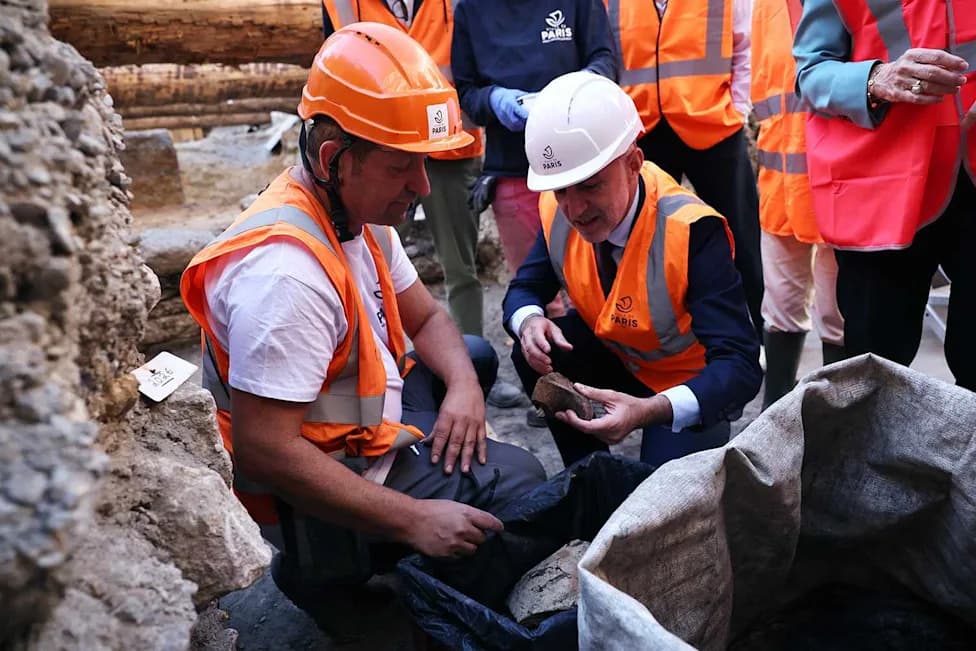
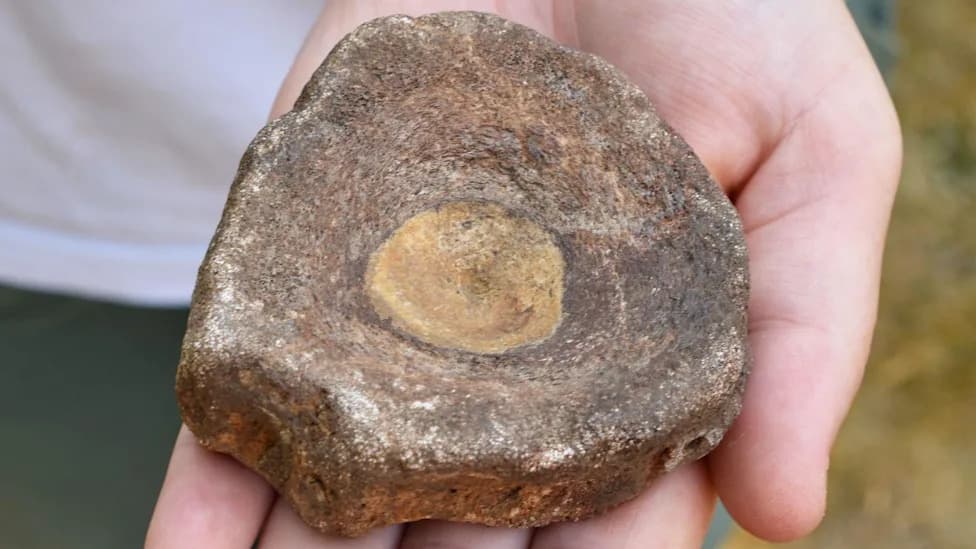
A three‑year archaeological dig beneath the Palace of Westminster has uncovered artefacts dating from the Mesolithic (around 4300 BC) through to the 19th century. Sixty flint fragments—toolmaking debris—were found in ancient Thorney Island sands and predate Stonehenge. Excavators also recovered Roman fragments, medieval leather footwear and the remains of the Lesser Hall (1167), whose walls survived the 1834 fire and WWII bombing. The discoveries will inform forthcoming restoration work and deepen understanding of central London’s early history.
Mesolithic Flints and a 12th‑Century Hall Found Beneath Parliament — New Finds Reframe Central London’s Early History

Archaeologists working beneath the Palace of Westminster have revealed a remarkable sequence of discoveries spanning the Mesolithic era to the 19th century, uncovered during a three‑year excavation undertaken to inform major upcoming restoration work at the Palace.
Among the most striking finds were 60 flint fragments—debitage from toolmaking—radiocarbon‑dated to about 4300 BC. These Mesolithic pieces were recovered from undisturbed sand deposits once forming part of Thorney Island, suggesting prehistoric communities fished, hunted and foraged in what is now central London. The flints therefore predate the earliest phases of Stonehenge, which began around 3100 BC.
The Restoration and Renewal Delivery Authority said the flints "offer a rare glimpse into early human life in what is now central London," and emphasized their importance for understanding the area's deep past.
Later material culture was also well represented. Excavators recovered medieval leather shoe soles and a leather boot dating to roughly 800 years ago, fragments of a Roman altar about 2,000 years old, a heart‑shaped lead badge from the Middle Ages, and several 19th‑century items including pottery, tobacco pipes and an inscribed five‑pint beer jug.
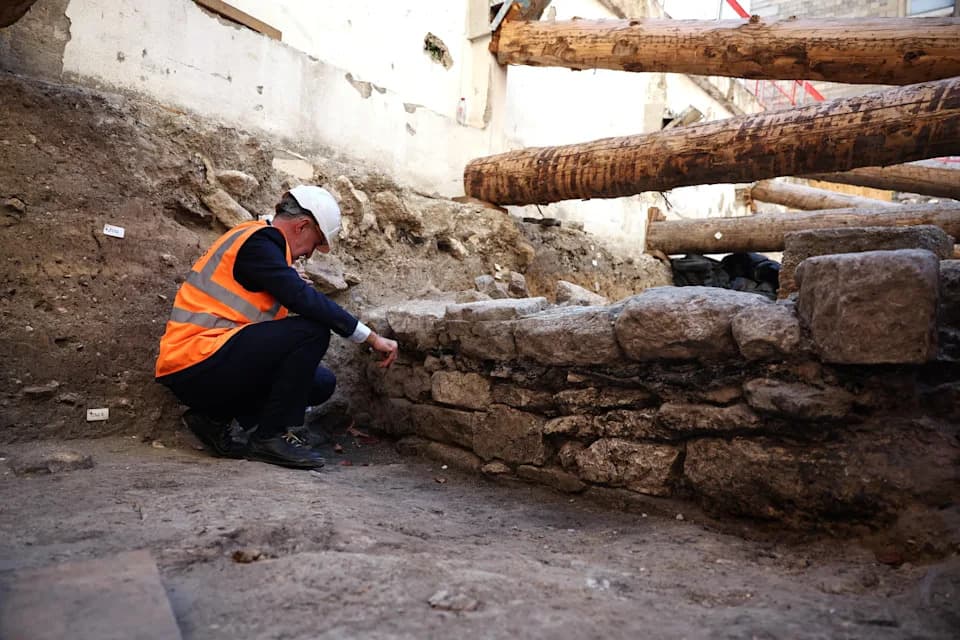
Perhaps the most significant architectural discovery was the Lesser Hall, a medieval building dated to 1167 and believed to have functioned as a royal dining space. Archaeological and documentary evidence indicate the space later accommodated institutions such as the Court of Chancery and the Court of Requests, and at times housed the House of Commons and the House of Lords.
Officials noted that the Lesser Hall's stone wall and original foundations survived both the catastrophic Fire of 1834 and damage from a World War II bombing raid, providing rare insight into the survival and layering of historic structures beneath the modern Palace. The findings are expected to shape restoration planning and guide future research into London’s long‑hidden past.
Background: The Palace site, commonly known as the Houses of Parliament, began as a royal residence; the oldest surviving building on the estate is Westminster Hall, built in 1097 for William II.
Help us improve.