The Maryborough meteorite was found in 2015 by metal-detectorist David Hole near Melbourne. After years of failed attempts to break it open, Melbourne Museum scientists identified it as a 17 kg H5 ordinary chondrite about 4.6 billion years old, complete with iron-rich material and chondrules. Estimated to have been on Earth between 100 and 1,000 years, it is one of only 17 recorded meteorites in Victoria and the region’s second-largest chondritic mass.
Kept a 'Gold Nugget' for Years — It Turned Out to Be a 4.6-Billion-Year-Old Meteorite

In 2015, metal-detecting enthusiast David Hole found an unusually heavy, reddish stone buried in yellow clay at Maryborough Regional Park, near Melbourne. Convinced it was a gold nugget — the region sits in Victoria’s historic Goldfields — he took it home and tried repeatedly to open it. He attacked the specimen with a rock saw, an angle grinder, a drill and even acid; not even a sledgehammer left a mark.
Perplexed by the rock’s weight and resistance, Hole eventually brought it to the Melbourne Museum for analysis. Museum geologists Dermot Henry and Bill Birch noted the stone’s distinctive surface texture: a sculpted, dimpled exterior that forms when a space rock melts and is shaped by the atmosphere during entry.
Using a diamond saw to remove a small slice, researchers discovered the sample is iron-rich and classified it as an H5 ordinary chondrite. The cut face revealed numerous small, rounded mineral grains called chondrules — crystallized droplets that formed in the early Solar System. Radiometric measurements indicate the material is about 4.6 billion years old.
"Meteorites provide the cheapest form of space exploration. They transport us back in time, providing clues to the age, formation, and chemistry of our Solar System," said Dermot Henry. "Some meteorites even contain stardust older than the Solar System and organic molecules such as amino acids — the building blocks of life."
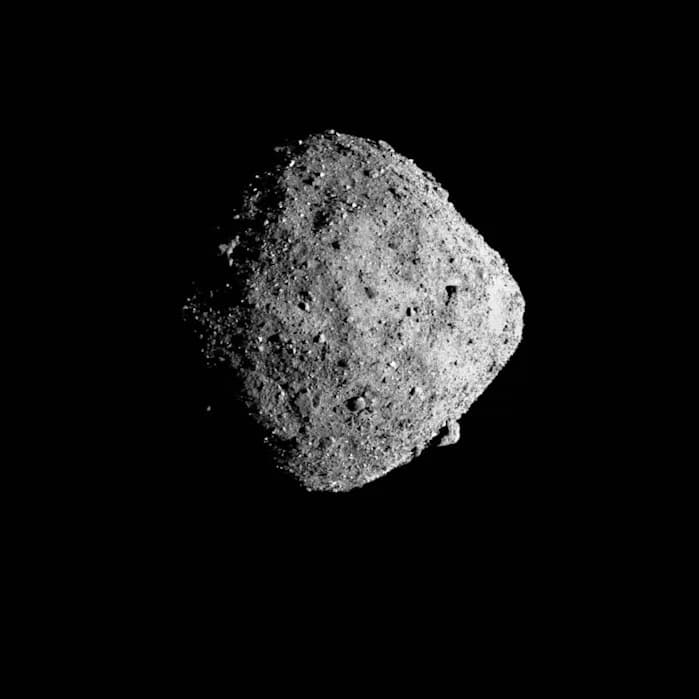
Named the Maryborough meteorite after the nearby town, the specimen weighs 17 kilograms (37.5 pounds). Researchers estimate it has been on Earth for roughly 100 to 1,000 years; a number of recorded meteor sightings between 1889 and 1951 could correspond to its arrival. While the exact parent body is unknown, the team says the meteorite most likely originated in the asteroid belt between Mars and Jupiter, where collisions can eject fragments onto Earth-crossing orbits.
The Maryborough find is scientifically significant for Victoria: it is one of only 17 meteorites recorded in the state and the second-largest chondritic mass documented there, after a 55-kilogram specimen found in 2003. That rarity — and the scientific information it contains — makes this space rock far more valuable for research than a typical gold nugget would be.
The museum team published their analysis in the Proceedings of the Royal Society of Victoria. The discovery joins other stories of ordinary-looking stones later revealed as meteorites — in one notable case, a meteorite spent decades as a household doorstop before its true origin was recognized.
Beyond the local curiosity, the Maryborough meteorite contributes to a growing body of extraterrestrial samples scientists use to reconstruct Solar System history. Recent studies have improved our ability to link meteorites to their parent asteroids, offering clearer context for where these ancient rocks formed and how they evolved.
Help us improve.