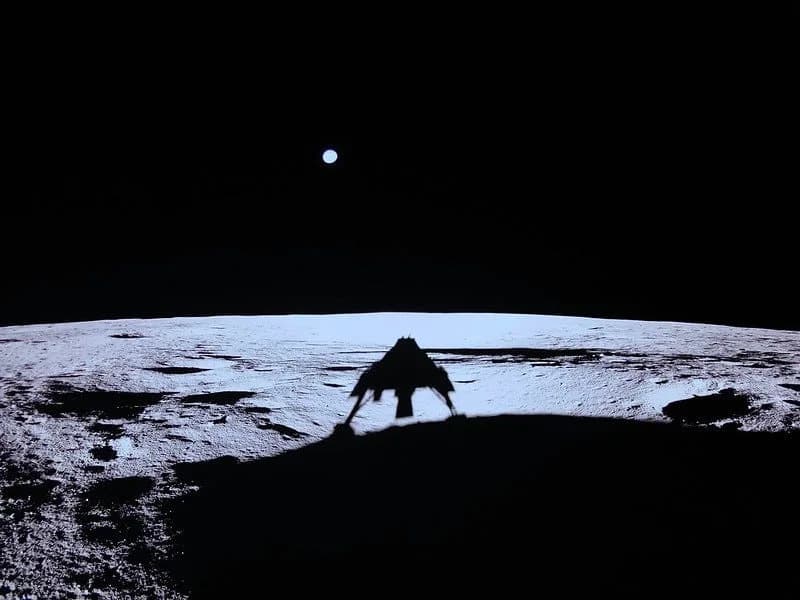
ESA director Josef Aschbacher has said the first European astronaut to fly to the Moon will be German, with Alexander Gerst and Matthias Maurer among the top candidates. Europe has secured three slots in NASA's Artemis programme, which plans crewed missions and the Lunar Gateway. At ESA's ministerial meeting member states approved a record €22.1bn budget, including nearly €500m for a European Resilience from Space initiative to bolster space-defence and dual-use technologies. Officials warned Europe must strengthen sovereign space capabilities amid concerns about foreign satellites probing European spacecraft.
ESA Chief: The First European to Fly to the Moon Will Be German

Josef Aschbacher, director general of the European Space Agency (ESA), has announced that the first European astronaut to travel to the Moon will be German. ESA has secured three astronaut slots within NASA's Artemis programme, which aims to return humans to the lunar surface and use the planned Lunar Gateway as a staging post for surface operations.
Aschbacher told ESA's ministerial council in Bremen:
"I have decided that the first Europeans to fly to the moon will be part of the Artemis programme. We are looking for a German astronaut to join the crew."
Leading German candidates include veterans Alexander Gerst and Matthias Maurer, both of whom have flown to the International Space Station (ISS) and are widely seen as strong contenders for the mission.
ESA has already completed an uncrewed Artemis test flight. Future missions include an orbital crewed test (Artemis II) and a planned crewed landing — the first lunar surface visit since 1972 — with subsequent missions using the Lunar Gateway to support operations.
Germany's federal minister for research, technology and space, Dorothee Bär, welcomed the decision.
"The director general has now decided that the first European is to be a German, and I'm very, very happy, very proud about that. Whoever it is, it will be an amazing European astronaut."
At its recent ministerial meeting, ESA member states approved a record €22.1 billion budget — a 32% increase — which includes nearly €500 million for the new European Resilience from Space initiative. The initiative is designed to strengthen Europe's space-defence capabilities and accelerate development of dual-use technologies.
Aschbacher and other officials warned that Europe must strengthen sovereign space capabilities as other actors increase investment. German authorities reported that Russian Luch-Olymp satellites have been observed trailing European spacecraft that provide vital Earth data and communications. Analysts believe the behaviour may be an effort to probe vulnerabilities, such as how signals could be jammed, intercepted or manipulated in a conflict.
Bär stressed that investment in space defence reduces dependence on private providers in crises:
"Every crisis brings opportunities. Russia's aggression against Ukraine showed what dependence on tech billionaires can mean; sovereignty and resilience are decisive."
The funding package also supports Earth- and planetary-protection projects, including the Ramses mission to prepare for the asteroid Apophis' close approach in 2029 and the Vigil mission to monitor space weather.
Help us improve.