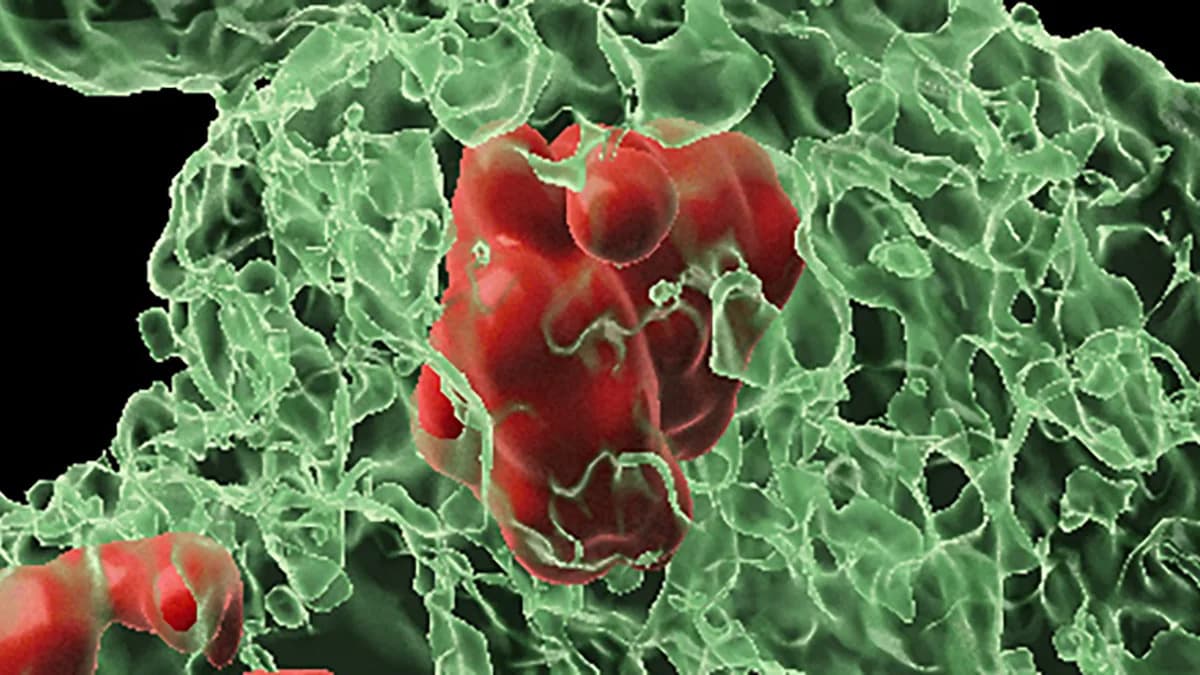
Researchers led by Saghi Ghaffari found that excessive acidity in lysosomes drives age-related decline in hematopoietic stem cells (HSCs) in mice. Treating extracted old HSCs with concanamycin A normalized lysosomal function, restored quiescence-like behavior, and improved regenerative capacity. Treated cells produced about eight times more new blood cells and engrafted successfully when returned to animals. The findings point to a potential ex vivo strategy to improve transplant outcomes, but they are limited to mouse studies and require further validation.
Resetting Lysosomes Rejuvenates Aging Blood Stem Cells in Mice

Deep in the bone marrow, hematopoietic stem cells (HSCs) produce the blood and immune cells the body needs. New research shows that age-related changes in these stem cells can be reversed in mice by targeting their lysosomes — the cellular compartments that break down and recycle biological material.
What the researchers found
Stem cell biologist Saghi Ghaffari and colleagues discovered that lysosomes in HSCs from older mice become excessively acidic and dysfunctional. This lysosomal hyperactivity pushes aged HSCs into a metabolically hyperactive state, disrupting genetic programs and diminishing their long-term regenerative capacity. By contrast, young HSCs remain largely quiescent — a low-activity state that helps them avoid stress and preserve potency.
How they reversed aging signs
The team treated extracted HSCs from old mice with the compound concanamycin A to reduce lysosomal acidity and activity. When these treated cells were transplanted back into animals, they produced roughly eight times more new blood cells than untreated aged cells and engrafted successfully. Treated cells also resumed a more quiescent, youth-like behavior and produced blood cell types in more balanced proportions.
"Our findings reveal that aging in blood stem cells is not an irreversible fate. Old blood stem cells have the capacity to revert to a youthful state; they can bounce back," said Saghi Ghaffari.
Why this matters
These results suggest that targeting lysosomal dysfunction could become an ex vivo strategy to improve stem cell transplantation and restore healthier blood and immune function in older individuals. The approach focuses on restoring cellular housekeeping rather than altering DNA, offering a potentially powerful route to rejuvenate aged stem cells.
Limitations and next steps
The study was performed in mice and used ex vivo treatment of stem cells before transplantation. Additional work is needed to confirm safety, determine whether concanamycin A or related approaches can be adapted for human cells, and understand long-term effects. The researchers published their findings in the journal Cell Stem Cell.
Help us improve.