Most Americans (63%) remain very or extremely confident that childhood vaccines prevent serious disease, but confidence in vaccine safety and support for school mandates has become markedly partisan. Democrats show far higher trust in safety testing and the childhood immunization schedule than Republicans. Support for requiring the MMR vaccine for public school attendance has fallen from 82% in 2016 to 69% now, driven largely by declining Republican support. Limited awareness of changing health guidance and growing distrust of scientific institutions help explain why official recommendations often fail to change behavior.
Most Americans Trust Childhood Vaccines’ Effectiveness — Partisan Doubts on Safety and School Mandates Are Growing

New polling from the Pew Research Center finds that most Americans continue to believe childhood vaccines are effective at preventing serious illness, but confidence in safety and support for school vaccine mandates have become increasingly divided along party lines.
Overall, 63% of respondents said they are extremely or very confident in the effectiveness of childhood vaccines. That surface-level consensus masks a sharp partisan gap: 80% of Democrats and Democratic-leaning independents express high confidence, compared with 48% of Republicans and Republican-leaning independents.
Belief in vaccine safety is more mixed. Fifty-three percent of Americans say childhood vaccines have been tested enough for safety, and 51% agree the recommended childhood vaccine schedule is safe. Among Democrats, 74% endorse the adequacy of safety testing and 71% say the schedule is safe; among Republicans, just 35% and 32% hold those views, respectively.
“Both things can be true, that people believe in vaccines’ effectiveness overall and the confidence is a little softer on safety,” said Eileen Yam, director of science and society research at Pew and a member of the study team. “Resistance tends to appear around mandates or policies that feel like being told what to do, especially on the Republican side.”
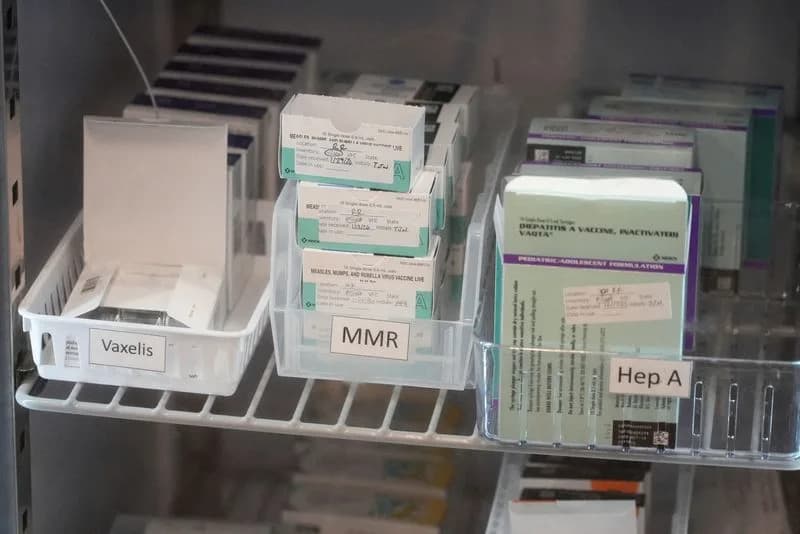
Support for requiring the measles-mumps-rubella (MMR) vaccine for attendance at public schools has dropped to 69% from 82% in 2016. The decline is concentrated among Republicans: only 52% of Republican respondents now favor the mandate, down from 79% in 2016. Democratic support rose slightly, from 83% in 2016 to 86% in the current survey.
The shift comes amid a recent measles outbreak that began in Texas and spread to multiple states. While most states maintain MMR requirements for public school attendance, some local officials have signaled willingness to revisit these rules.
Pew also found broad agreement that the MMR vaccine’s benefits outweigh its risks: 84% of Americans say the benefits outweigh the risks, down modestly from 88% in 2016. Partisan differences remain: 92% of Democrats and 78% of Republicans believe the benefits outweigh the risks.
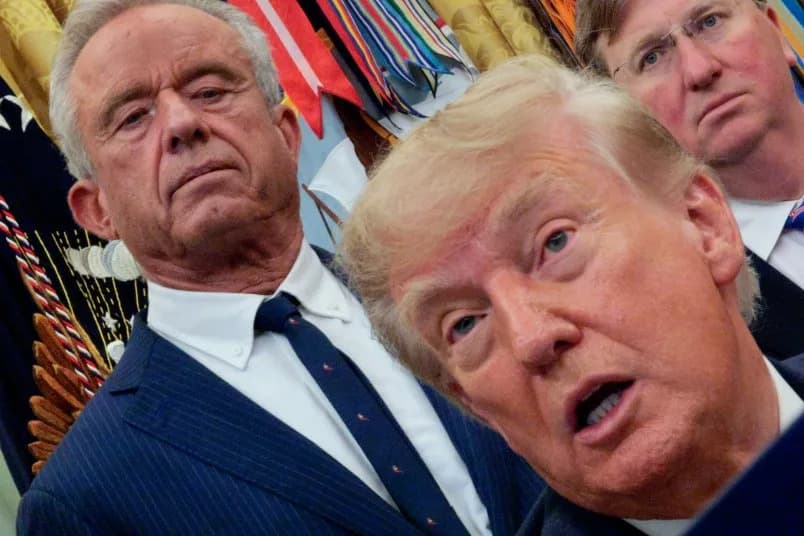
The poll highlights how public figures and political discourse can influence public views. Prominent critics of vaccines — such as Robert F. Kennedy Jr. — and some political leaders have questioned vaccine safety, which can amplify doubts even where scientific consensus is strong.
Parents with minor children expressed somewhat lower confidence: 57% said they are extremely or very confident in vaccines’ effectiveness. Among parents, 71% of Democrats report high confidence versus 45% of Republican parents. Similar partisan gaps appear on safety testing (63% of Democratic parents vs. 29% of Republican parents) and trust in the childhood vaccine schedule (58% vs. 27%).
Views on who should shape vaccine policy are sharply divided. A large majority of Democrats (85%) want medical scientists to play a major role in decisions about childhood vaccines; 62% of Republicans agree. Conversely, 71% of Republicans say parents of young children should have a major role in policy decisions, compared with 46% of Democrats.
Pew also asked whether recent changes in guidance from the U.S. Centers for Disease Control and Prevention influenced people’s decisions about getting updated COVID-19 shots. The CDC recently moved away from a universal recommendation for an updated booster and placed more emphasis on individual choice. Forty-four percent of respondents said they had heard nothing at all about the change; among those who had heard at least a little, 63% reported the change had no influence on whether they obtained an updated vaccine.
“Policies can only change behavior if people are aware of them,” Yam said. “When many people haven’t heard about a recommendation, or they’ve already made up their minds, official guidance often has little effect.”
Reporting: Barbara Rodriguez. Sources: Pew Research Center; interviews with Pew research director Eileen Yam.
Help us improve.