
HHS, under Secretary Robert F. Kennedy Jr., is reviewing aluminum salts used as vaccine adjuvants, and the CDC's advisory committee has called for further study. Aluminum salts are intentionally added to enhance immune response and have nearly a century of safety data; infants typically receive more aluminum from diet than from vaccines. Large studies — including a 1.2 million-child Danish cohort and a recent Pediatrics reanalysis — along with WHO reviews, found no link between vaccine aluminum and autism or major health harms. Some officials have proposed adopting a sparser schedule like Denmark’s, but many experts say aluminum concerns alone are a weak basis for changing U.S. recommendations.
Aluminum Adjuvants Draw Scrutiny as HHS Reassesses U.S. Childhood Vaccine Schedule

Robert F. Kennedy Jr. in the Oval Office on Oct. 16. (Kevin Dietsch / Getty Images)
Health and Human Services (HHS), led by Secretary Robert F. Kennedy Jr., has launched a review of aluminum salts used in childhood vaccines, a move that could foreshadow changes to the U.S. immunization schedule. Members of the Centers for Disease Control and Prevention's vaccine advisory committee — appointed by Kennedy after a shake-up of the previous panel — recently recommended a closer look at aluminum adjuvants even though extensive research has consistently found them safe.
What Are Aluminum Adjuvants?
Aluminum salts are not contaminants: they are intentionally included in some vaccines as adjuvants, ingredients that boost the immune response so smaller amounts of vaccine antigen can produce effective protection. Aluminum is ubiquitous in the environment — present in soil, water and food — and infants typically receive more aluminum from diet (including breast milk or formula) in their first six months than from routine vaccines.
“The purpose of them is to just help the immune system respond a little more robustly to that vaccine,” said Dr. Michelle Fiscus, chief medical officer at the Association of Immunization Managers.
What the Science Shows
Nearly a century of evidence supports the safety and effectiveness of aluminum adjuvants. A large Danish cohort study of more than 1.2 million children, published in the Annals of Internal Medicine, found no association between vaccine-derived aluminum and neurodevelopmental disorders, including autism. A recent reanalysis led by researchers at Stanford and published in Pediatrics likewise found no major safety concerns; most reported side effects were local reactions such as redness or swelling.
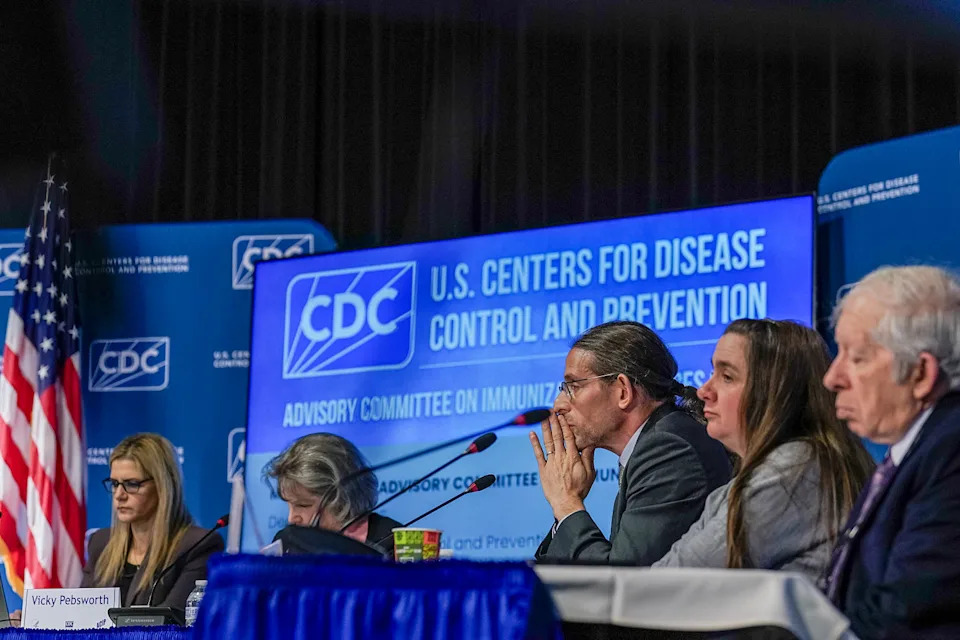
Retsef Levi listens during a meeting of the CDC Advisory Committee on Immunization Practices on Dec. 5 in Atlanta. (Elijah Nouvelage / Getty Images)
International reviews, including an analysis from the World Health Organization, have also found no credible link between aluminum-containing vaccines and autism or other major harms. Some smaller or disputed studies have reported possible associations with conditions such as asthma, but those findings have not been replicated in well-controlled analyses and are widely regarded as inconclusive.
Policy Debate and Possible Schedule Changes
The renewed focus on aluminum comes amid broader debates about the U.S. vaccine schedule. At a recent CDC advisory meeting, Dr. Tracy Beth Høeg, acting director of the FDA's Center for Drug Evaluation and Research, argued for considering a sparser schedule similar to Denmark's in order to reduce cumulative aluminum exposure. Other officials, including Secretary Kennedy, have publicly questioned links between vaccine ingredients and conditions such as autism, prompting criticism from many public-health experts.
HHS briefly posted a statement saying it was reviewing whether aluminum could be linked to autism; the post was later removed. The department also postponed a planned announcement about children's health, and media reports have suggested — without confirmation — that the administration has considered aligning the U.S. schedule more closely with Denmark's. Separately, the CDC's advisory committee voted to stop universally recommending the hepatitis B vaccine for all newborns, now advising mothers who test negative to discuss the shot with their providers.

A person holds a vial of the Varivax vaccine, which protects against chickenpox, in Los Angeles on Oct. 24. (Patrick T. Fallon / AFP via Getty Images)
Experts Urge Evidence-Based Decisions
Many public-health specialists warn that altering U.S. vaccine recommendations based solely on concerns about aluminum would be poorly justified. Several vaccines recommended in Denmark still contain aluminum salts (for example, HPV, pneumococcal, tetanus and pertussis vaccines), and some vaccines commonly given in the U.S. that lack aluminum include those for rotavirus, influenza, RSV and chickenpox. The MMR (measles, mumps and rubella) vaccine — often erroneously linked to autism by opponents — does not contain aluminum.
“When you see the same ‘no’ finding or ‘no’ association across multiple countries, multiple study designs and over a million children, that’s really, really clear and reassuring,” said Dr. Seth Ari Sim-Son Hoffman, summarizing the current evidence. Public-health experts emphasize that any change to vaccination policy should rest on rigorous science and careful consideration of the benefits and risks.
Current status: HHS and advisory groups are reviewing data on aluminum adjuvants. Policymakers and clinicians continue to weigh safety evidence against the public-health benefits of existing vaccine recommendations.
This article was originally published on NBCNews.com.


