Former President Donald Trump praised a controversial revision to the U.S. childhood vaccine schedule promoted by HHS Secretary Robert F. Kennedy Jr., calling it “rooted in the Gold Standard of Science,” despite little evidence to support that claim. He also advised against routine use of acetaminophen (Tylenol) in pregnancy and early childhood, recommended splitting and spacing vaccines, and downplayed physicians' guidance on aspirin. Medical experts, including Dr. Paul Offit, called the statements irresponsible and urged people to rely on qualified clinicians and established public-health guidance.
Trump Endorses Controversial Vaccine Changes and Offers Unqualified Medical Advice

Former President Donald Trump publicly praised a controversial revision to the U.S. childhood vaccination schedule promoted by HHS Secretary Robert F. Kennedy Jr., and separately offered a string of medical recommendations despite lacking clinical credentials. Public-health officials and medical experts have expressed strong concern about the guidance and its potential to mislead the public.
What Trump Said
On his social media platform, Trump hailed the revised schedule, writing that it was “rooted in the Gold Standard of Science,” a claim critics say is unsupported by peer-reviewed evidence or mainstream public-health consensus.
Minutes earlier he published an all-caps message that has been normalized for clarity. In that post he advised:
- Pregnant women should avoid acetaminophen (Tylenol) unless absolutely necessary.
- Parents should not give Tylenol to young children for almost any reason.
- Split the MMR vaccine into three separate injections rather than using a combined shot.
- Administer the chickenpox (varicella) vaccine separately.
- Delay the hepatitis B vaccine until age 12 or older.
- Spread childhood vaccinations across five separate medical visits.
Context and Reaction
These remarks follow a controversial White House event where Trump and RFK Jr. repeated anti-vaccine themes. Attendees reported Trump warned against taking Tylenol multiple times, suggested some physicians might be corrupt, and described infant immunization schedules as “too much liquid.”
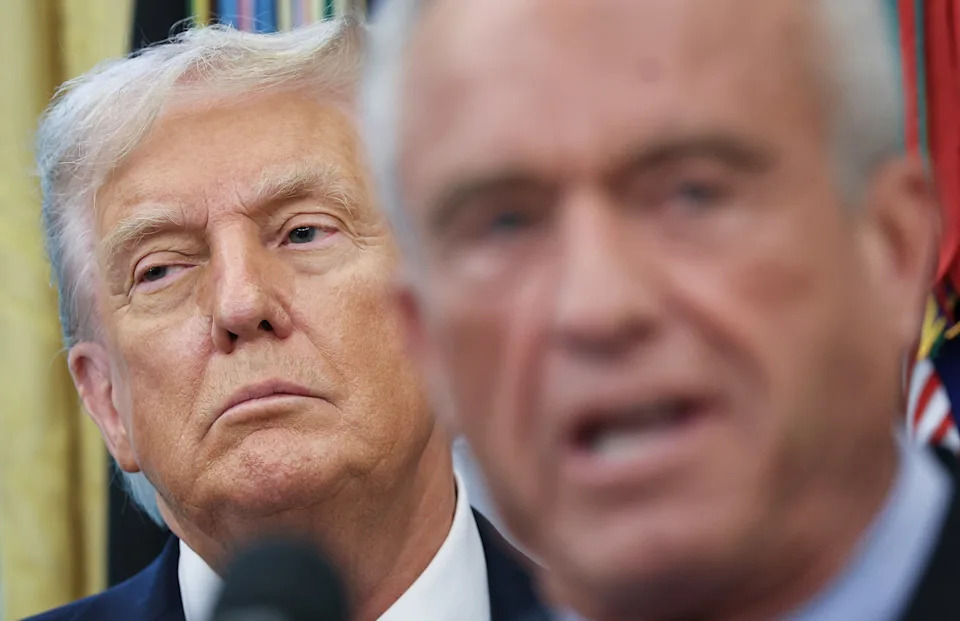
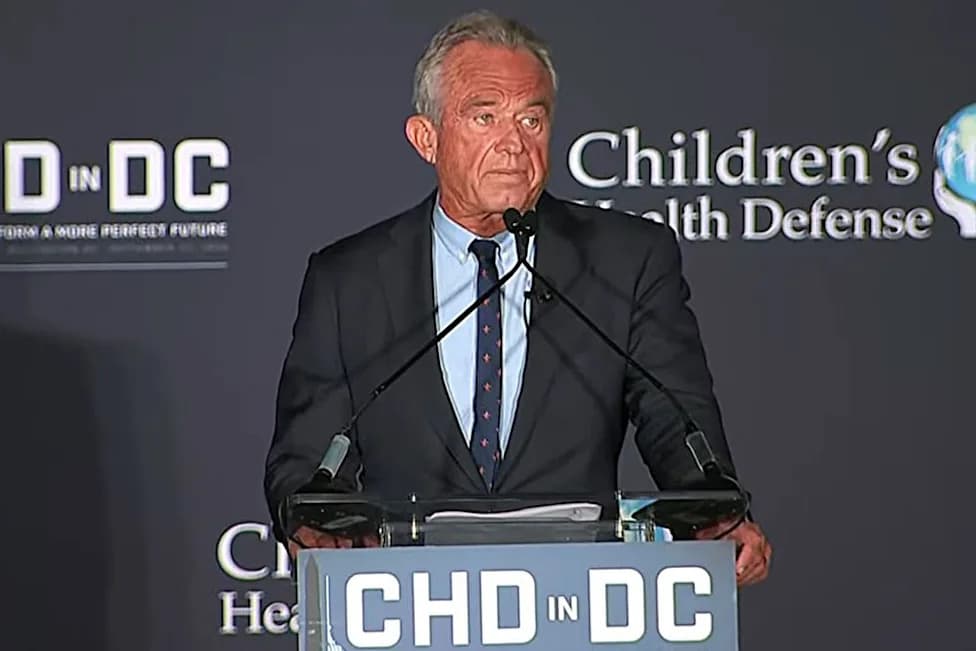
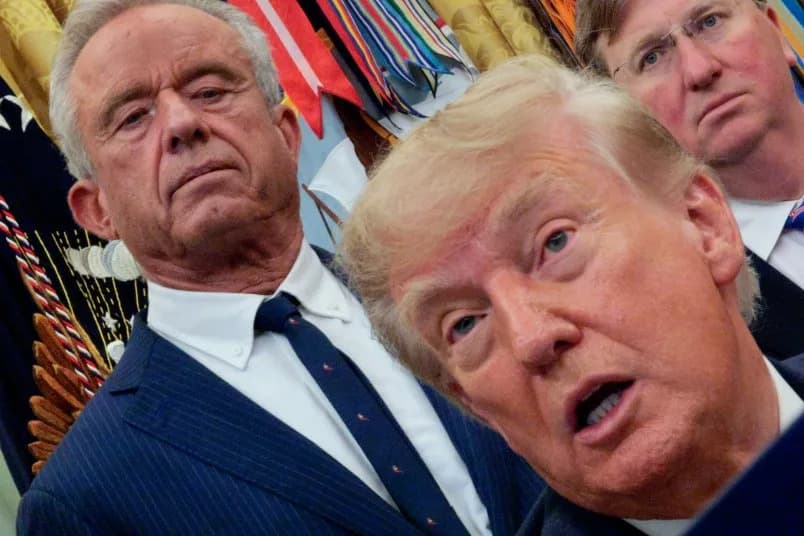
President Donald Trump and Secretary of Health and Human Services Robert F. Kennedy Jr. on Sept. 30, 2025, in the Oval Office of the White House.(Win McNamee / Getty Images)
“That was the most dangerously irresponsible press conference in the realm of public health in American history,” said Dr. Paul Offit, a pediatrician and vaccine researcher at the Children’s Hospital of Philadelphia, speaking to The Washington Post.
The new round of statements also coincides with recent disclosures about Trump’s approach to medical guidance: he acknowledged that a procedure he previously described as an MRI was not actually an MRI, and said he sometimes ignores physicians’ recommendations about daily aspirin use for personal reasons, including superstition and a desire for what he called “nice, thin blood pouring through my heart.”
Why Experts Warn Against Taking Medical Advice From Non-Experts
Public-health specialists emphasize that medical recommendations should be based on evidence from clinical studies, regulatory review, and consensus among qualified clinicians. Vaccination schedules are developed to maximize safety and protection at ages when children are most vulnerable; altering them without rigorous study can reduce effectiveness and increase risk.
While public figures can raise questions about health policy, medical guidance aimed at broad audiences is best left to trained professionals who can weigh the evidence and individual patient circumstances.
Bottom line: Medical experts urge the public to consult qualified clinicians and official public-health agencies for vaccine guidance and other health decisions.
Originally published on MS NOW.
Help us improve.