Researchers exposed sporophytes of Phycomitrium patens on the outside of the ISS for 283 days; over 80% survived and 89% of survivors could still germinate. Lab tests showed UV radiation was the primary stress, but sporophytes tolerated it far better than juvenile forms—likely thanks to a protective spore capsule. Chlorophyll levels remained largely intact despite a ~20% drop in chlorophyll a, and models suggest spores could survive up to 15 years in space under some conditions.
Moss Survives Nine Months on the Exterior of the ISS — Over 80% of Spores Remain Viable

Mosses are among Earth's hardiest plants, able to colonize environments from Death Valley to Antarctica. New research shows that one species, Phycomitrium patens (spreading earthmoss), can survive extended exposure to outer space: researchers report that its reproductive structures withstood 283 days on the exterior of the International Space Station (ISS).
What the team did
Led by Tomomichi Fujita, the research team first ran laboratory simulations of space stresses—vacuum, cosmic radiation, extreme temperature swings, and microgravity—on several life stages of the moss: juvenile plants, brood cells (specialized stress-induced cells), and sporophytes (the structures that produce spores). Ultraviolet (UV) radiation proved the most damaging stress in lab tests, but sporophytes were substantially more tolerant than juveniles or brood cells.
Orbital experiment and results
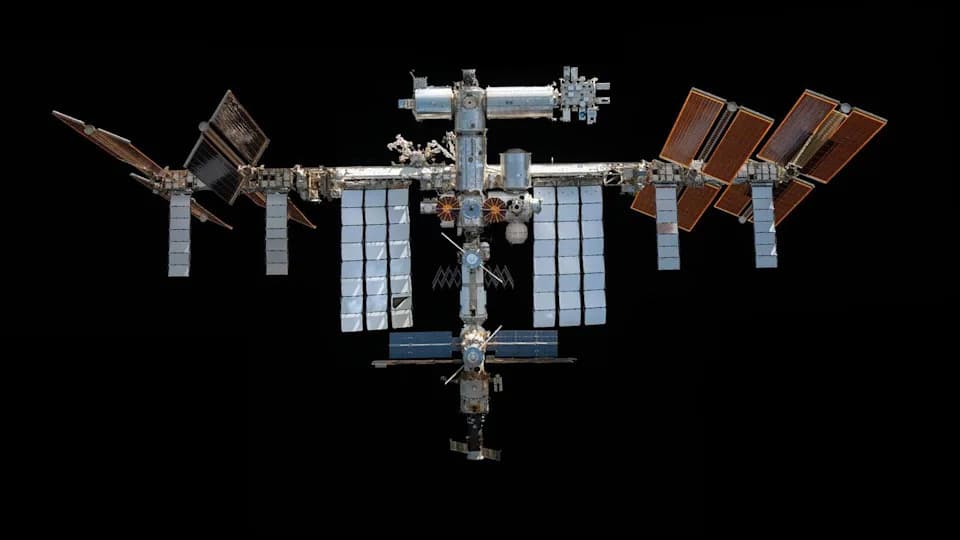
Encouraged by lab results, the team sent hundreds of sporophytes to the ISS in 2022. Astronauts mounted the samples on the station's exterior, where they remained for 283 days (about nine months) before being returned to Earth. Contrary to expectations of near-zero survival, more than 80% of the sporophytes survived the exposure and the journeys to and from the station. Of those survivors, 89% were still capable of germinating after return.
“We expected almost zero survival, but the result was the opposite. Most of the spores survived. We were astonished by the extraordinary durability of these tiny plant cells.” — Tomomichi Fujita
Why they survived
The researchers attribute much of the resilience to the spores' protective capsule, which acts as both a physical and chemical barrier and helps absorb harmful UV radiation that would otherwise damage internal tissues. Analysis also showed that nearly all forms of chlorophyll remained close to normal levels after flight; chlorophyll a declined by about 20%, but this decrease did not prevent spores from remaining viable and germinating.
Broader implications
Using the survival data, computer models indicate that under certain conditions these spores might persist in space for up to 15 years. The findings highlight the remarkable durability of some terrestrial life forms and raise questions about biological survival beyond Earth, planetary protection, and the long-term transport of microscopic life between worlds.
Help us improve.