Researchers compared isotopic fingerprints from Earth, lunar samples and meteorites and conclude the Moon-forming impactor Theia most likely originated in the inner Solar System. Although the Moon's isotopes closely match Earth's, Theia's reconstructed isotopic signature is distinct and points to inner-disk material. The findings suggest Earth and Theia were neighbors before their cataclysmic collision that produced the Moon. The study is published in Science.
Theia Was Likely a Neighbor: Isotopes Trace Moon‑Forming Impactor to the Inner Solar System

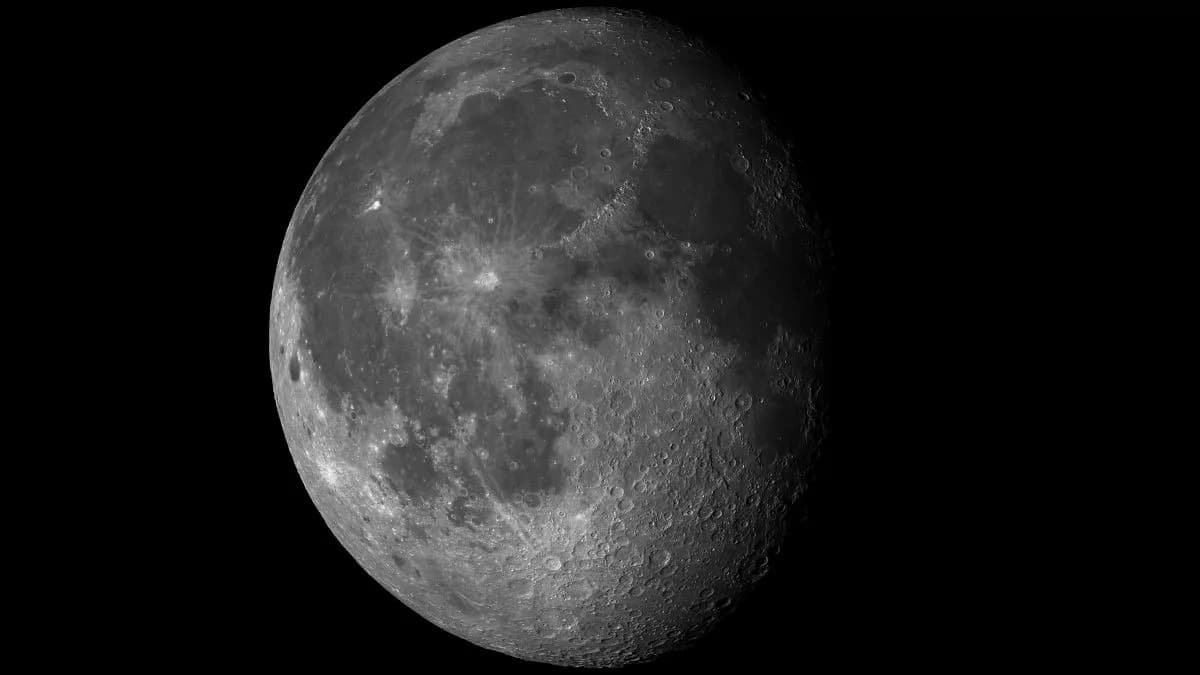
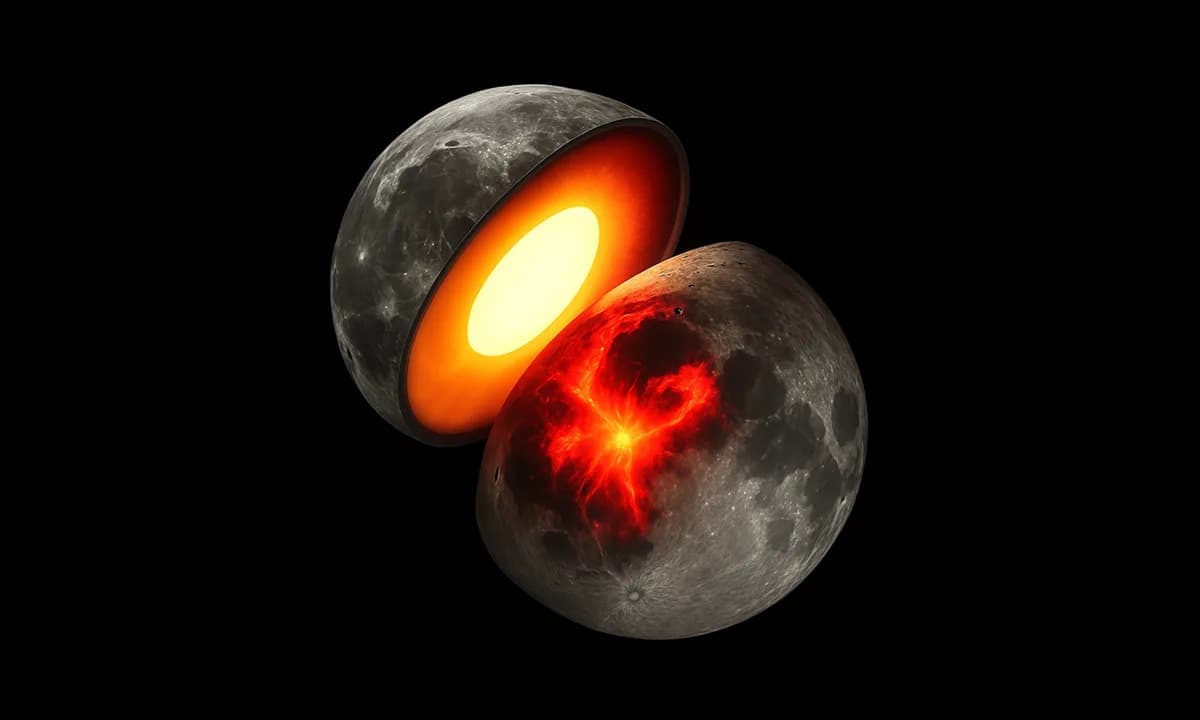
About 4.5 billion years ago a Mars-sized body known as Theia collided with the proto-Earth, melting large portions of both worlds and launching debris that later reassembled into Earth and the Moon. A new study by researchers at the Max Planck Institute for Solar System Research and the University of Chicago uses isotopic “fingerprints” to show Theia most likely formed in the warmer, inner regions of the Solar System — possibly even closer to the Sun than some of the material that made up early Earth.
The team compared detailed isotope ratios measured in samples from Earth, lunar rocks, and a wide variety of meteorites. Isotopes are variants of elements that differ by neutron count; their relative abundances act like a chemical passport, recording where and under what conditions a rock formed. As planets cool and differentiate, elements sort by mass, melting point and chemical affinity: iron and iron-loving metals such as molybdenum tend to sink into a planet's core, while elements like zirconium remain in the mantle.
Because siderophile elements preferentially entered Earth’s core early on, the iron now present in Earth’s mantle likely arrived later — delivered by a massive impactor. To identify that impactor’s origin, researchers built an isotope-based 'ingredient list' for Theia and compared it with known meteorite groups. Variations in the original giant molecular cloud and the resulting protoplanetary disk produced regions with distinct isotope signatures — likened by the authors to 'poorly mixed cake batter' — that persist in bodies formed there.
Measurements show the Moon's isotopic mix of iron, chromium, calcium, titanium and zirconium closely matches Earth's, requiring the team to look elsewhere for Theia’s distinctive signature. Meteorites provided crucial comparisons: non-carbonaceous (NC) meteorites — formed in the inner disk — are depleted in volatiles and largely dry, while carbonaceous chondrites (CC) formed farther out and contain more carbon and water.
Overall, Earth’s mantle isotopes align with inner Solar System meteorites. Yet the isotope ratios the researchers assign to Theia do not match Earth's known building blocks; instead they point to material formed in the inner disk but with a distinct composition. 'The most convincing scenario is that most of the building blocks of Earth and Theia originated in the inner Solar System,' says lead author Timo Hopp. MPS cosmochemist Thorsten Kleine adds that composition preserves an object's formation history, including its place of origin.
The likely conclusion: Earth and Theia were neighbors before their catastrophic collision, and that neighborly impact created the Moon. The Moon has been slowly receding from Earth since its formation at a current rate of roughly 1.5 inches (3.8 centimeters) per year. The study is published in the journal Science.
Key takeaways
- Theia likely formed in the inner Solar System, possibly closer to the Sun than some of Earth's early material.
- Isotopic comparisons of Earth, Moon, and meteorites enabled researchers to reconstruct Theia's probable composition and origin.
- The Moon's isotopic match to Earth forced the team to search for a distinct Theia signature among meteorites and inner-disk materials.
Help us improve.