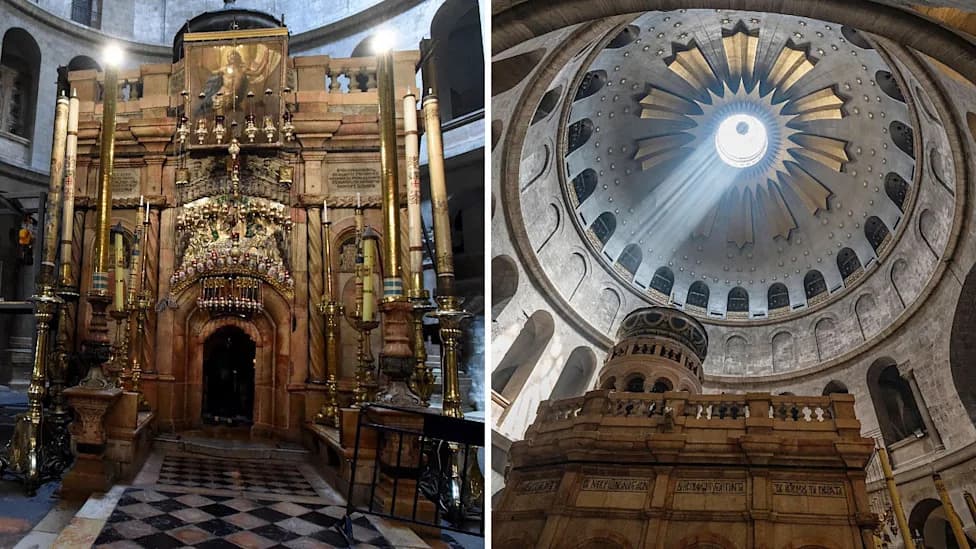
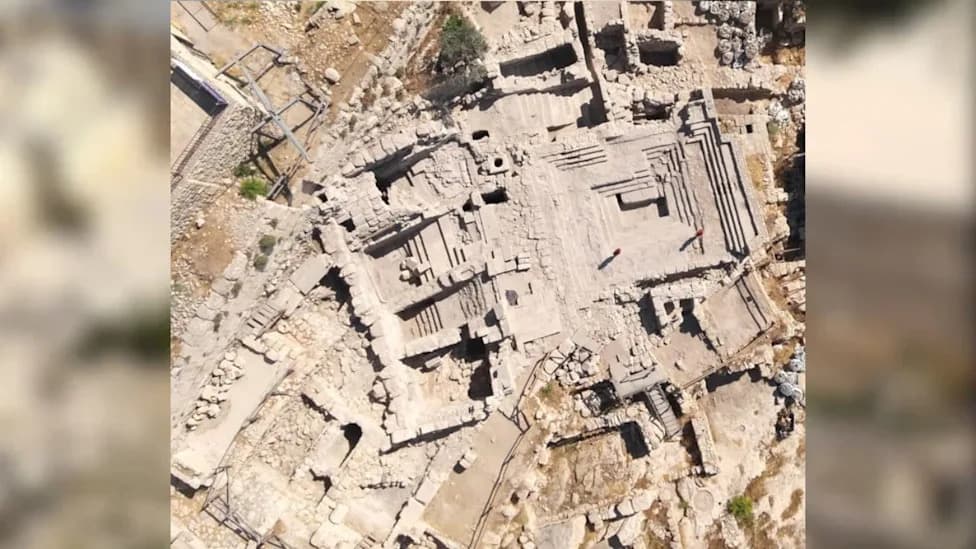
Key points: Excavations beneath the Church of the Holy Sepulchre, led by Sapienza University since 2022, uncovered low stone-enclosed plots and archaeobotanical remains of olive trees and grapevines dated to about 2,000 years ago. These findings align with the Gospel of John’s description of the burial place as "a garden," but do not by themselves identify a specific tomb. The dig also exposed an Iron Age quarry and recovered 4th-century coins and pottery; full analysis will take years.
2,000-Year-Old Garden Unearthed Beneath Church of the Holy Sepulchre — Botanical Evidence Echoes Gospel Account

Italian archaeologists from Sapienza University of Rome have completed a long-awaited excavation beneath the floor of Jerusalem’s Church of the Holy Sepulchre, revealing botanical and structural evidence that the area once supported cultivation roughly two millennia ago.
The team, working under the direction of Francesca Romana Stasolla since 2022, exposed low stone walls and fills containing ancient olive and grape remains dated to about 2,000 years ago. Those findings are consistent with intentional planting and enclosure of plots, and they match the Gospel of John’s brief description of Jesus’s burial place as "a garden." While intriguing, the evidence does not by itself establish the identity of any specific tomb.
“At the place where Jesus was crucified, there was a garden, and in the garden a new tomb, in which no one had ever been laid.” — John 19:41
Beneath the modern 19th-century floor the archaeologists encountered an older quarry that had been worked in the Iron Age (circa 1200–586 B.C.) and later used as a burial area with tombs hewn into the rock. Early Christians identified this quarry as the location of the burial used to build the first church on the spot during the reign of Constantine; the structure was altered many times afterward and largely reshaped by Crusader-era construction.
Besides the botanical remains, the excavation recovered coins and pottery dated roughly to the 4th century, among other finds. Specialists — including geologists, archaeobotanists and archaeozoologists — have contributed analyses, but Stasolla cautions that comprehensive study of all materials will take years.
Stasolla emphasized the broader significance of the work: the excavation illuminates how generations of people shaped and worshiped at this place. "The real treasure we are revealing is the history of the people who made this site what it is by expressing their faith here," she said, underscoring that the site’s long devotional history is itself an important historical record.
Access to the site for archaeological work was limited for decades by both the continuous presence of pilgrims and by administrative disputes among the three custodial communities that share responsibility for the church — the Orthodox Patriarchate, the Custody of the Holy Land, and the Armenian Patriarchate. Their agreement in 2019 to renovate the 19th-century floor created the opportunity for this excavation to proceed.
In sum, the discovery of cultivated plots with olive and vine remains adds a new layer of material evidence to a location central to Christian devotion and scholarship. It enriches our understanding of how the landscape around early Christian burial sites was used, while stopping short of offering definitive proof about any individual tomb.
Help us improve.