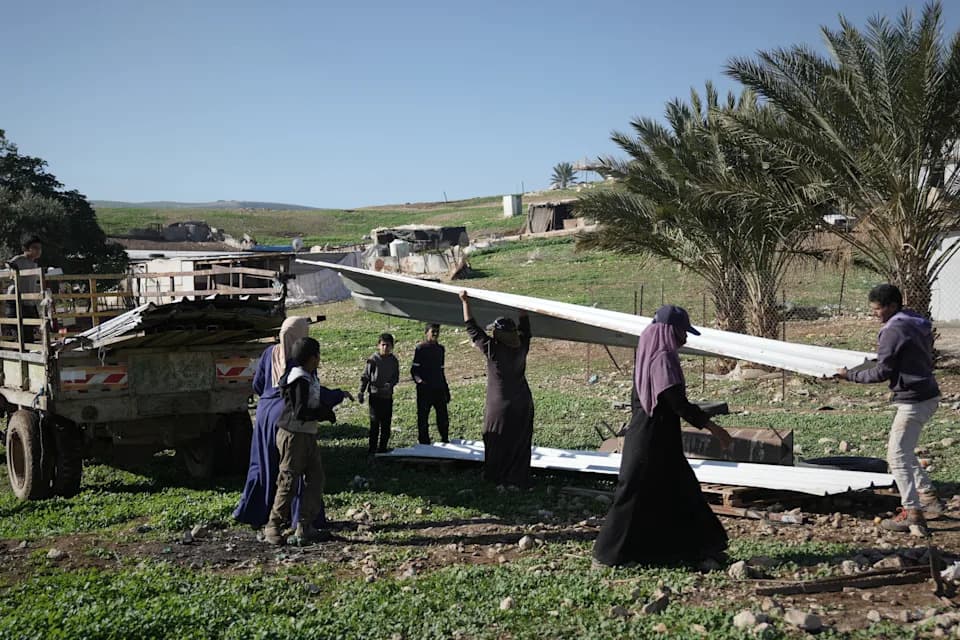
Residents of Al-Eizariya near Jerusalem are receiving demolition and evacuation notices they say are tied to Israel's approval of the E1 settlement plan. The E1 project would build about 3,400 housing units across roughly 12 sq km and link Jerusalem to Maale Adumim, a move critics say would fragment Palestinian territory. Locals warn the scheme would disrupt travel, reduce tourism to religious sites that attract around 500,000 visitors annually, and displace Palestinian families and Bedouin communities.
Al-Eizariya on Edge: Demolition Notices and the Controversial E1 Settlement Plan

In Al-Eizariya, a town on the outskirts of Jerusalem, an increasing number of homes and businesses have received demolition and evacuation orders that residents link to Israel's recent approval of the large E1 settlement plan. Locals warn the measures would damage the town's economy, disrupt travel and tourism, and displace Palestinian families and Bedouin communities.
The E1 plan
The E1 project covers roughly 12 square kilometres (about 4.5 square miles) east of Jerusalem and envisages approximately 3,400 housing units that would connect Jerusalem with the large settlement of Maale Adumim. Critics say the plan would further separate east Jerusalem from the rest of the West Bank and undermine the possibility of a contiguous Palestinian state.
Local impact and mobility
Although the planned new road between Jerusalem and Maale Adumim would pass through Al-Eizariya's area, residents say it would be inaccessible to them. Experts warn the road system would create separate routes for Israelis and Palestinians, adding long detours for ordinary journeys and restricting access to services.
Livelihoods and tourism
Al-Eizariya—also known historically as Bethany—has about 22,000 residents and is home to the tomb and church of Lazarus, sites that draw an estimated half a million visitors a year. The town's four-kilometre shopping street serves many Palestinians, especially from east Jerusalem. Business owners and the mayor say demolition orders and restricted access would severely harm tourism and local commerce.
Voices from the town
"This is a project of total destruction for the economy and the people. It will affect everyone," said Yahya Abu Ghaliyeh, whose home was demolished earlier this year and who now faces demolition orders for his car wash business.
"They only think of their own interests. It's as if the Palestinian community were livestock," Abu Ghaliyeh added, describing the threat to his family's livelihood.
Other local business owners report similar notices for workshops and stores that support multiple families.
Security, permits and legal context
Israeli authorities say the demolition orders target structures built without permits in areas they consider unlicensed. Residents and local officials counter that obtaining building permits from Israel in much of the West Bank—particularly Area C, which remains under Israeli civil and security control—is effectively impossible for Palestinians.
The Israeli military said it had "issued demolition orders for several illegal buildings constructed in an unlicensed area that pose a threat to the area's security." An Israeli court rejected an appeal by Israeli organizations seeking to annul the E1 project.
Wider concerns
Cartographers and analysts warn the E1 plan could increase settler presence, fragment Palestinian territory and lead to the displacement of dozens of Palestinian and Bedouin communities that rely on grazing land. Palestinian officials predict significant demographic changes in the area if the project proceeds.
Despite mounting pressure and the risk of losing their businesses and homes, some residents, including Abu Ghaliyeh, insist they will not leave. "I do not intend to evacuate," he said. "This is our land: Palestinian land."
Help us improve.