
Twelve European states, plus Canada and Japan, condemned Israel's December 11 decision to legalize 19 settler outposts in the occupied West Bank, calling it a breach of international law and a threat to regional stability. Far-right Finance Minister Bezalel Smotrich publicly defended the move as necessary to prevent a "Palestinian terror state." The announcement comes amid a spike in settler violence — the UN recorded at least 264 settler attacks in October — and growing concern that demolitions and outpost expansions risk forced displacement and further undermine a two-state solution.
Twelve European States, Canada and Japan Condemn Israel’s Legalization of 19 West Bank Outposts

Israelis look at troops standing guard during a weekly settlers' tour in Hebron, in the Israeli-occupied West Bank, on December 13, 2025. - Mussa Qawasma/Reuters
Twelve European states, together with Canada and Japan, sharply criticized Israel's decision earlier this month to legalize 19 settler outposts in the occupied West Bank, saying the move undermines prospects for long-term peace and violates international law.
An Israeli source said the cabinet formally authorized the legalization and establishment of the 19 outposts on December 11. Far-right Finance Minister Bezalel Smotrich — himself a resident of a settlement — announced the step in a social media post, framing it as part of a broader effort to expand Jewish presence across the West Bank.
What the Governments Said
"Such unilateral actions, as part of a wider intensification of the settlement policies in the West Bank, not only violate international law but also risk fueling instability," the joint statement said. The declaration was issued by Belgium, Canada, Denmark, France, Germany, Italy, Iceland, Ireland, Japan, Malta, the Netherlands, Norway, Spain and the United Kingdom.
The signatories reiterated their commitment to a negotiated, durable two-state solution in accordance with relevant UN Security Council resolutions, in which Israel and a future Palestinian state would live side-by-side in peace and security within recognized borders.
Israeli Response
Israel's Foreign Minister rejected the joint criticism, asserting that Jews have a right to establish a national homeland across what he described as "Mandatory Palestine." He wrote on X that "foreign governments will not restrict the right of Jews to live in the Land of Israel."
Smotrich defended the approvals as necessary security and historical measures, saying they would "block on the ground the establishment of a Palestinian terror state" and pledging to "develop, build, and settle in the land of our forefathers' inheritance."
Context And Concerns
The West Bank has been under Israeli military occupation since 1967 and is home to more than 3.3 million Palestinians. Under widely accepted interpretations of international law, Israeli settlements in occupied territory are illegal; many outposts are also illegal under Israeli law.
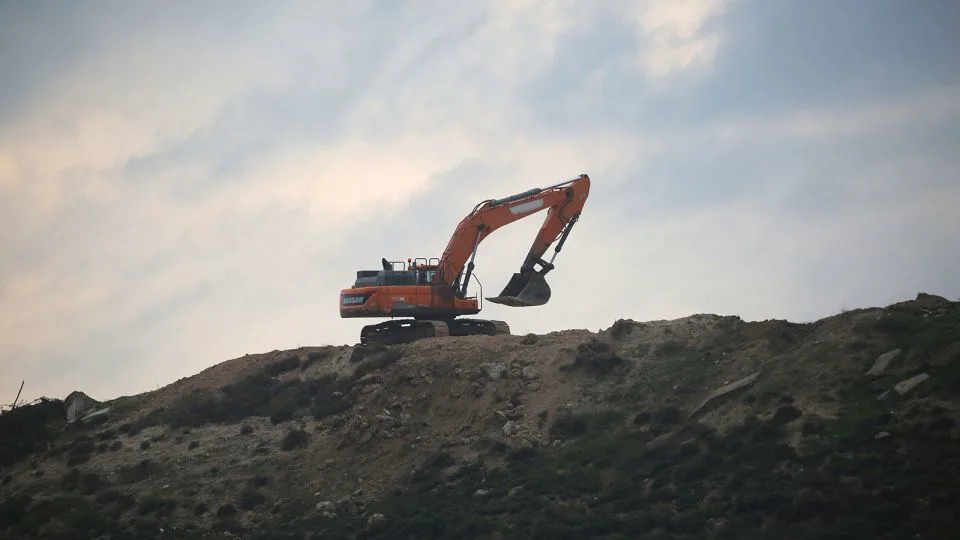
Israeli bulldozers are seen working in the abandoned Jewish settlement of Sa'anur, south of Jenin in the West Bank, in preparation for the return of Jewish settlers, following the Israeli government's approval of their return, on December 23, 2025. - Nasser Ishtayeh//SOPA Images/LightRocket/Getty Images
Settler outposts are often erected without formal authorization with the expectation of later legalization. Many of the newly authorized outposts lie deep within the West Bank, a move critics say makes a contiguous Palestinian state more difficult to achieve.
Earlier this year, Israeli authorities announced plans to create 22 new settlements in May, a step the watchdog group Peace Now called the largest expansion in over 30 years. Since the current right-wing government took office in 2023, settlement approvals and outpost legalizations have accelerated markedly.
Violence, Demolitions And Humanitarian Impact
The legalization comes amid a marked surge in settler violence against Palestinians, especially during the October–November olive-harvest season. Videos from farmers and activists have captured masked settlers carrying clubs, sticks and sometimes firearms while attacking Palestinian harvesters and Israeli-Jewish solidarity activists. Some footage appears to show soldiers nearby or moving in close proximity to attackers.
A United Nations report released last month recorded at least 264 attacks by Israeli settlers in October — the highest monthly toll since the UN began tracking such incidents in 2006. UN and Palestinian officials have also warned that ongoing Israeli military operations and home demolitions in the West Bank are causing widespread displacement and may amount to forced displacement.
"The failure to prevent or punish such attacks is inconsistent with international law," said UN Humanitarian Coordinator Tom Fletcher. "Palestinians must be protected. Impunity cannot prevail. Perpetrators must be held accountable."
CORRECTION: This story was updated to correct the number of European countries that condemned the new West Bank settlements.
The developments are likely to intensify international scrutiny of Israel's settlement policies and could complicate diplomatic efforts to revive negotiations toward a two-state solution.


