
A Palestinian Christian activist, Alice Kisiya, returned to her family’s land in al-Makhrour after an Israeli court ruled settlers had presented forged ownership documents and ordered an illegal outpost removed. The ruling affirmed the Kisiya family’s title to 5 dunams (5,000 sq m; 0.005 sq km), but Kisiya avoids permanent residence amid fears of settler violence and political backing for settlement expansion. The decision offers a rare legal victory as settlements and outposts in the West Bank and East Jerusalem have surged from 141 to 210 under the current government. Legal experts warn such wins can be fragile while farmers and activists continue on-the-ground resistance to protect land and livelihoods.
Court Win in al-Makhrour Gives Palestinian Family Hope as West Bank Settlements Expand

Alice Kisiya standing on her land on December 23 after winning the court case [Ahmad Jubran/Al Jazeera]
For Alice Kisiya, a Palestinian Christian activist from Beit Jala, this Christmas season carried unusual hope. After an Israeli court found that settlers had presented forged ownership documents, Kisiya was able to set foot on her family’s land in the Christian village of al-Makhrour for the first time since 2019. The June ruling ordered an illegal outpost dismantled and affirmed the Kisiya family’s title to the 5 dunams (5,000 sq m; 0.005 sq km) plot.
“This victory, which forced the settlers to dismantle their outpost in preparation for leaving for good, confirms to me that one must never tire of continuing the struggle, despite all the methods they used to pressure me and my family into leaving the land,”Kisiya told Al Jazeera.
The family’s legal battle was long and contentious. A settler organisation claimed it had purchased the land and presented ownership papers; after years of litigation the court found those documents forged and restored the family’s legal rights. The ruling affirmed the Kisiya family’s right to return to the land, and to the house and the restaurant that had been demolished.
Despite the victory, Kisiya and her relatives remain cautious. Persistent settler violence, and the perceived backing of far-right Israeli ministers such as Finance Minister Bezalel Smotrich and National Security Minister Itamar Ben-Gvir, have left them avoiding permanent residence on the property. Kisiya — who was arrested in 2024 while protesting settler land seizures and whose family home was demolished when she was a child — has become a symbol of resistance in her community through sustained civil, legal and public campaigning.
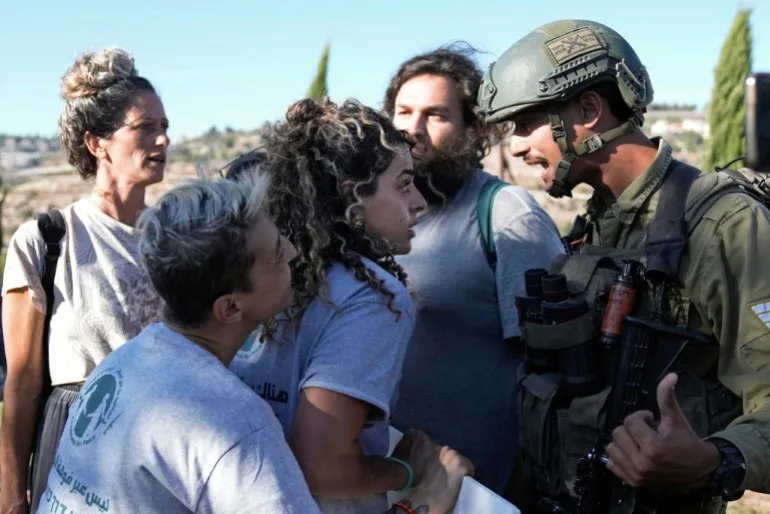
Alice Kisiya, centre, confronts Israeli soldiers after they declared her family’s land a closed military area, in the West Bank town of Beit Jala, Friday, August 2, 2024 [Mahmoud Illean/AP Photo]
Local Resistance and Agricultural Presence
Other local residents continue to assert their presence as a form of resistance. Farmer Bashir al-Sous, 60, said he has consistently cultivated and rehabilitated land in al-Makhrour despite plans to confiscate some 2,800 dunams (2.8 sq km) of agricultural terrain. He and other farmers rely on historic wells, terraces and traditional structures, and say visible cultivation undermines claims that land is ownerless.
“I believe we can protect our land by keeping our presence 24 hours a day, and by planting it with grapes and olives,”
Such on-the-ground persistence is both practical and symbolic: Palestinians say ongoing cultivation and habitation make it harder to justify expropriation.
Wider Context: Settlement Expansion
Kisiya’s court win comes amid a sharp increase in settlement activity. Under the current Israeli government the number of settlements and outposts in the occupied West Bank and East Jerusalem rose from 141 in 2022 to 210 — a near 50% increase. Israeli social media posts by ministerial figures celebrate legalising and expanding settlements; Smotrich wrote that authorities have legalised 69 settlements in three years and asserted a political aim of preventing a Palestinian state "on the ground."
Outposts are built without government authorisation, while settlements are authorised by Israeli authorities. Both are deemed illegal under international law because they are built on occupied territory. Nearly 10% of Israel’s Jewish population — within a population of about 7.7 million — now live in these communities.
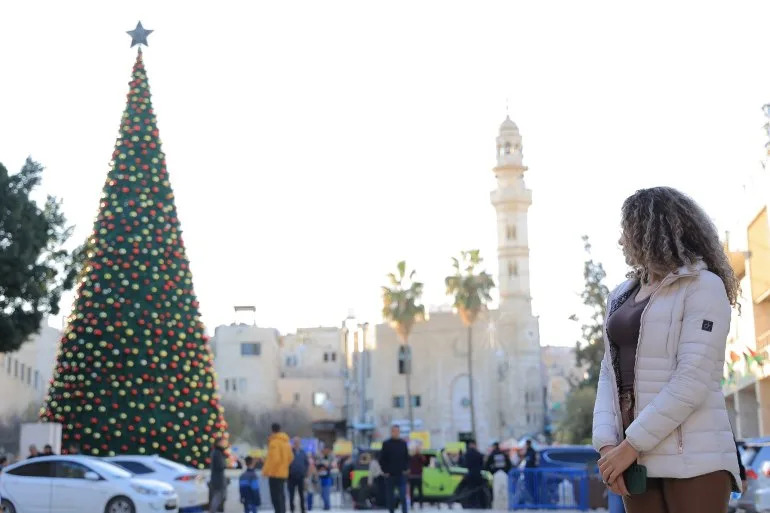
Alice Kisiya says that Christians are persecuted by the Israeli government, and wants more support from global church leaders [Monjed Jadou/Al Jazeera]
Authorities are also expected to advance large-scale projects such as plans for roughly 9,000 new housing units on the site of the abandoned Qalandiya airport in East Jerusalem and outline approval for the Atarot neighbourhood, moves critics say will further fragment Palestinian territory and impede the possibility of a contiguous Palestinian state.
Legal Warnings and International Appeals
Palestinian legal experts caution that individual court victories can be fragile. Hassan Breijieh, head of the international law department at the Colonization and Wall Resistance Commission, warned that officials and settler leaders often seek ways to circumvent rulings, particularly in strategic areas central to plans to connect Jerusalem with the Gush Etzion bloc.
For Kisiya and her family, however, the court decision is a meaningful affirmation of rights and an encouragement to continue their struggle. She appealed to international Christian leaders — including the Pope — to support the ancient Christian communities of Bethlehem and the wider Palestinian presence.
“I pray that God strengthens our faith and keeps us rooted in our land,”
“We are part of the struggle and the building of the Palestinian state,” Kisiya added, stressing that Palestinian Christians are an integral part of the national cause and face pressures that risk emptying the Holy Land of its Christian communities.


