China is rapidly expanding drone and small eVTOL activity in cities such as Guangzhou and Shenzhen, backed by firms like EHang, DJI and XPENG and regional incentives. The low‑altitude economy generated about 506 billion yuan ($70 billion) in 2023 and could grow to 3.5 trillion yuan ($490 billion) by 2035. Growth is constrained by battery limits, high‑profile safety incidents and tightly controlled airspace, though regulators are gradually easing rules and analysts expect meaningful commercialization by around 2030.
China's Flying‑Taxi Ambition Hits Turbulence: Batteries, Airspace and Safety Slow Takeoff

An unmanned, oval‑shaped eVTOL built by EHang hummed like a small helicopter over a riverside innovation zone on the outskirts of Guangzhou during a recent trial, illustrating a vision once reserved for science fiction: low‑altitude aircraft operating in urban skies.
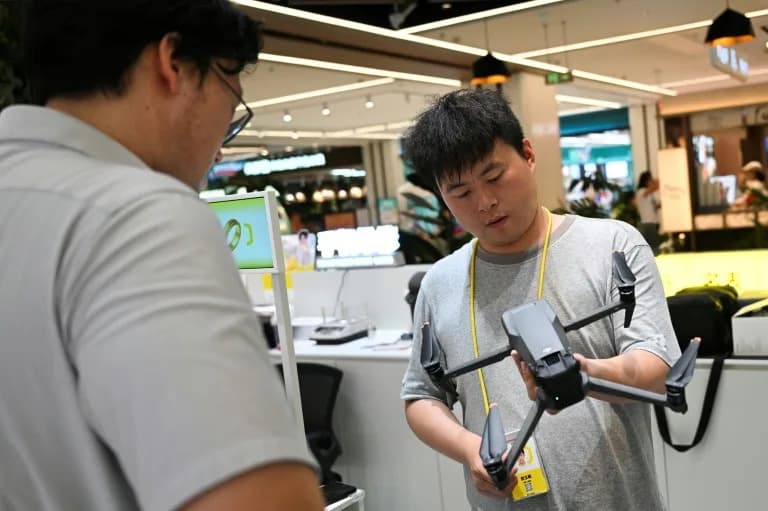
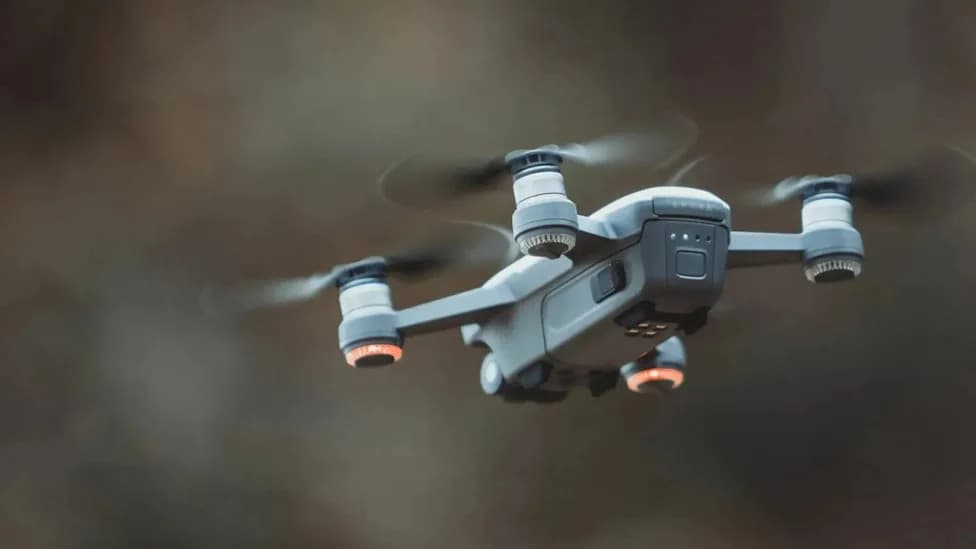
In nearby Shenzhen, delivery drones have already become part of daily life and a tourist novelty. In a waterfront park ringed by towers, visitors ordered bubble tea just to watch it delivered by a drone that cut through drizzle and arrived about 30 minutes later.
Industry growth and economic potential
China’s so‑called "low‑altitude economy" is expanding quickly with strong regional support. Activity in airspace below 1,000 meters generated roughly 506 billion yuan (about $70 billion) in turnover in 2023 and — according to Zhang Xiaolan of the State Information Center — could rise to 3.5 trillion yuan (about $490 billion) by 2035.
Guangdong province leads the push. It is home to DJI, which controls an estimated 70% of the global commercial drone market, and to major players such as EHang, SF Express’s drone arm Phoenix Wings, and XPENG’s ARIDGE flying‑car division. Local governments are offering incentives including construction of flight service platforms, tourism vouchers and prize funds for companies that secure passenger eVTOL certifications.
Technical and safety challenges
Despite investment and early trials, significant hurdles remain. Battery technology limits flight duration: Guo Liming, co‑founder of Shenzhen‑based Skyevtol, says his single‑seat manned eVTOL can fly only 20 to 30 minutes on a charge. Extending range and improving battery performance are top technical priorities.
Safety incidents have also raised concerns. In September, two XPENG eVTOLs collided after a rehearsal for an exhibition; one caught fire while landing. No injuries were reported, but the event prompted other organizers to cancel demonstrations and emphasized the need for rigorous testing and certification.
Regulatory and infrastructure constraints
Policy and airspace limits are another bottleneck. Less than one‑third of China’s low‑altitude airspace was open to general aviation in 2023, access is uneven across regions, and internet connectivity in some areas is patchy. The number of registered general aviation aerodromes (excluding private airports) is roughly one‑tenth of the U.S. total.
The military retains control of much airspace, but regulators are beginning to ease restrictions. Officials have pledged to simplify approval procedures and shorten review times in Shenzhen and several provinces. Proposed revisions to the civil aviation law would add a chapter focused on developing civilian low‑altitude activities and clarify allocation and supervision of that airspace.
Outlook
China has several advantages: a robust drone manufacturing base, concentrated regional hubs, and the ability to mobilize regulators, industry and academia. Analysts expect the earliest commercial applications to be sightseeing and industrial tasks rather than point‑to‑point urban taxi networks. Gary Ng, a senior economist, sees meaningful commercialization emerging around 2030, with broader passenger services following if safety, battery life and public acceptance improve.
Some companies are already preparing: EHang has received certificates to operate its pilotless eVTOL for commercial passenger service and has been building takeoff and landing sites in multiple cities, while XPENG continues to develop hybrid ground‑and‑air concepts and prepare for larger production runs.
"The future for the low‑altitude economy is bright," says Chen Wen‑hua of the Hong Kong Polytechnic University’s Research Centre for Low Altitude Economy, "but the road leading to that bright future might be treacherous."
Contributors: Olivia Zhang and Yu Bing.
Help us improve.