China used the Singapore Airshow to underline expanding military reach and a sustained push into commercial aviation. The PLAAF aerobatic team flew Chengdu J-10C jets to Singapore — reportedly using mid-air refuelling — while AVIC displayed a 1:2 model of the J-35A stealth fighter. COMAC showcased its C919 and promoted the planned C929 to Southeast Asian buyers. Analysts say interest is rising amid questions about U.S. reliability, but certification, service networks and geopolitics will shape any long-term procurement shifts.
China Flexes Military and Aviation Muscle at Singapore Airshow as U.S. Influence Wavers

FILE PHOTO: The People's Liberation Army Air Force Bayi Aerobatic Team perform during an aerial flying display at the Singapore Airshow at Changi Exhibition Centre, in Singapore, February 3, 2026. REUTERS/Caroline Chia/File Photo
China used this week’s Singapore Airshow to prominently display both military capability and commercial aviation ambitions, drawing strong interest from regional delegations as Beijing steps up efforts to expand its influence across Southeast Asia.
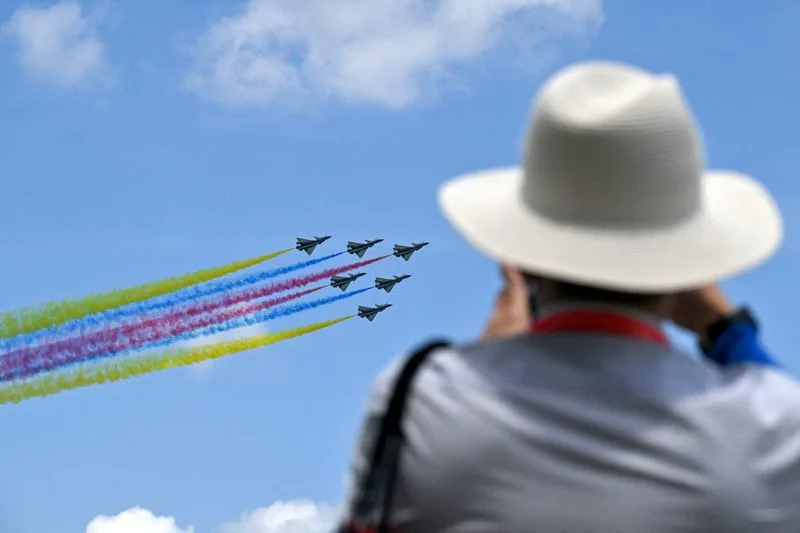
FILE PHOTO: A visitor watches The People's Liberation Army Air Force Bayi Aerobatic Team perform an aerial flying display, at the Singapore Airshow at Changi Exhibition Centre, in Singapore, February 3, 2026. REUTERS/Caroline Chia/File Photo
While the U.S. military has mounted high-profile operations this year — including a precision extraction of Venezuelan President Nicolas Maduro and a major naval posture near Iran — President Donald Trump’s public criticism of some allies and the use of tariffs have left questions about U.S. reliability that China sought to exploit at the event.
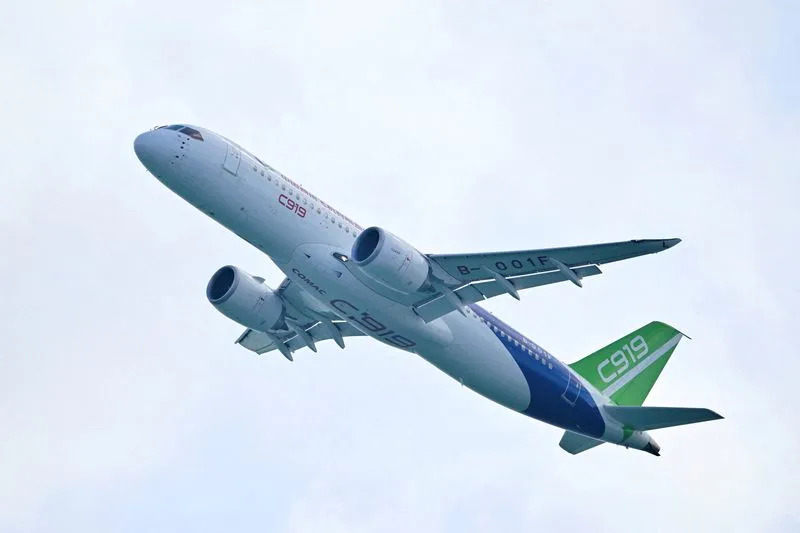
FILE PHOTO: A Comac C919 flies during an aerial flying display ahead of the Singapore Airshow at Changi Exhibition Centre in Singapore February 1, 2026. REUTERS/Caroline Chia/File Photo
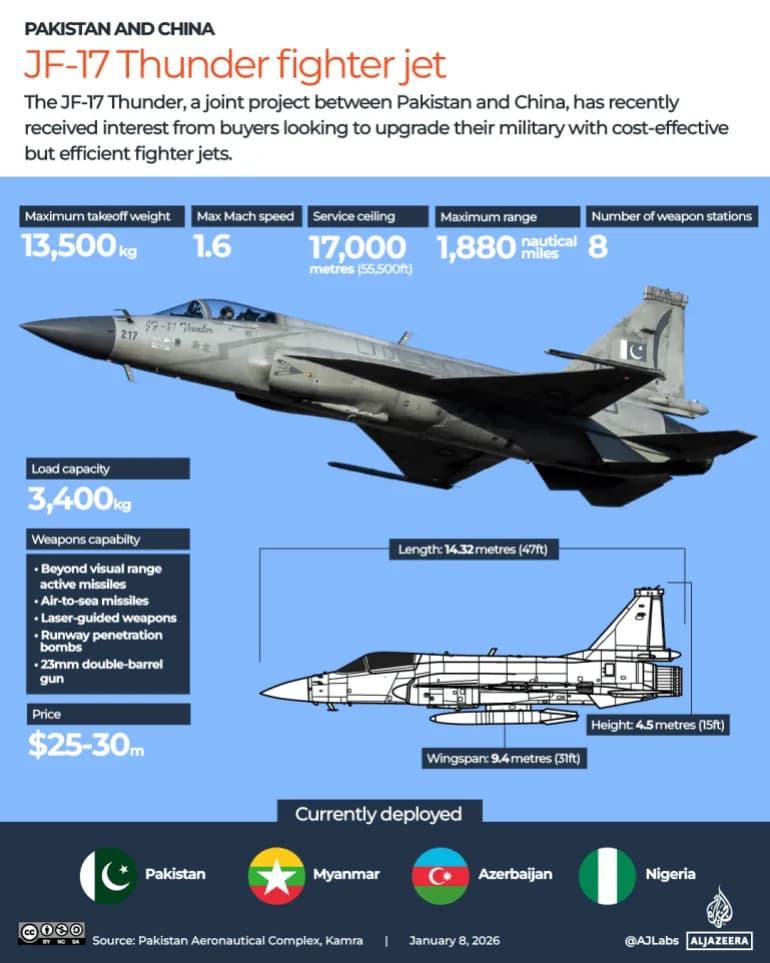
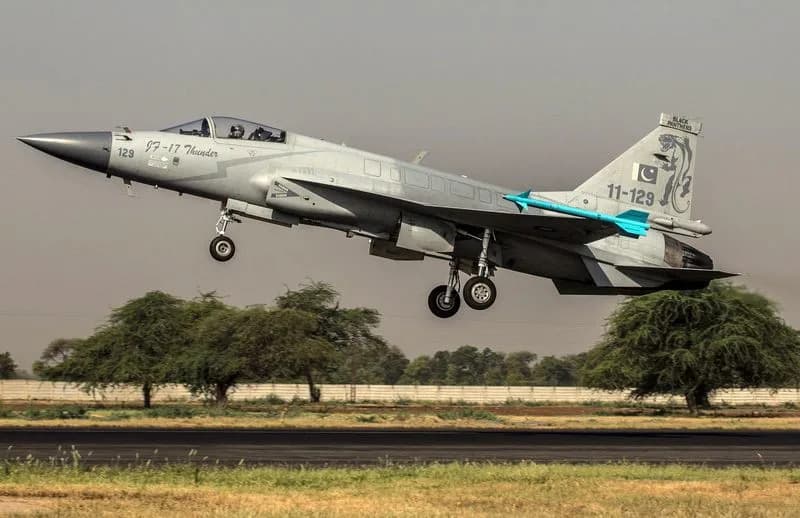
The People’s Liberation Army Air Force (PLAAF) aerobatic team made a headline-grabbing appearance with Chengdu J-10C fighter jets. Chinese state media said the team flew directly to Singapore using mid-air refuelling, a display experts said signals growing Chinese power-projection capability. The J-10C’s export variant, the J-10CE, drew attention after a 2025 incident in which a Pakistani operator reportedly used it to shoot down an Indian Air Force Rafale.
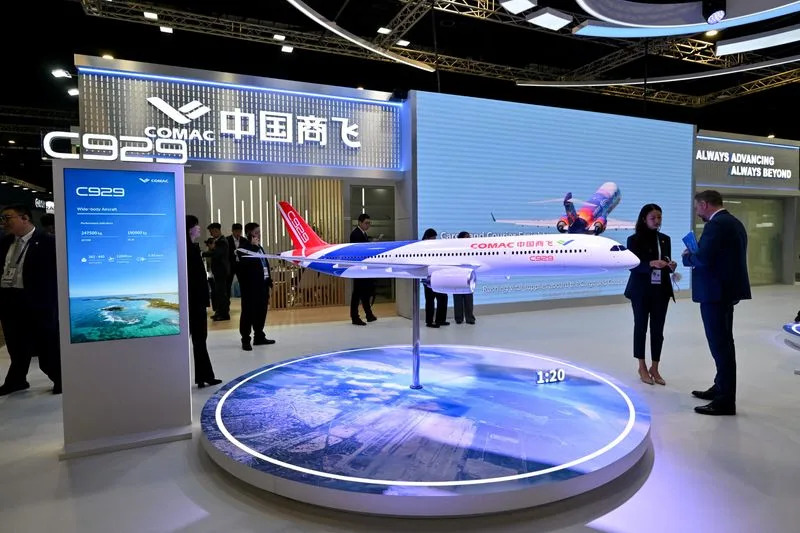
FILE PHOTO: A Comac C929 model on display at the Singapore Airshow at Changi Exhibition Centre, in Singapore, February 3, 2026. REUTERS/Caroline Chia/File Photo
“That’s a bit of a message to say: our power projection is growing,”— Tim Robinson, editor-in-chief of Aerospace magazine, Royal Aeronautical Society.
Inside the air-conditioned halls, state-owned Chinese firms occupied prominent positions. AVIC featured a 1:2 scale model of the J-35A stealth multirole fighter — a platform first seen domestically in 2024 about which little public technical data exists. Observers said the display was clearly aimed at signaling an alternative to Western stealth fighters for customers who cannot or will not buy an F-35.
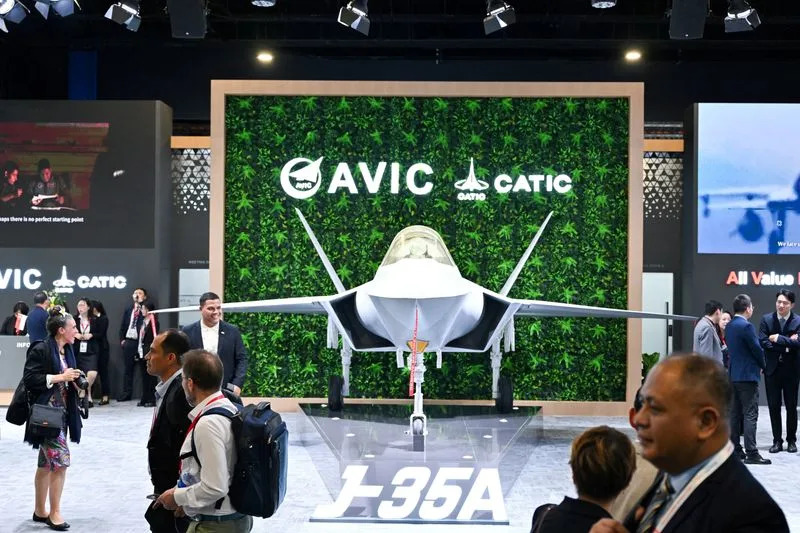
FILE PHOTO: Visitors stand by the AVIC (Aviation Industry Corporation of China) and its subsidiary CATIC (China National Aero-Technology Import & Export Corporation) pavilion, at the Singapore Airshow at Changi Exhibition Centre, in Singapore, February 3, 2026. REUTERS/Caroline Chia/File Photo
Southeast Asian Interest
Southeast Asian defence delegations crowded Chinese military and aerospace booths, underscoring Beijing’s growing commercial pull as it markets equipment across the region. Industry sources noted the same delegations attend such shows regularly, but the tenor of discussions has shifted as some governments reassess ties and diversify suppliers.
Analysts cautioned that a rapid, widespread switch to Chinese systems is unlikely: many countries will continue to consider European, South Korean and Japanese options alongside any Chinese offerings. Still, Chinese firms see openings where confidence in American suppliers has weakened.
Commercial Aviation Push
China’s state-owned planemaker COMAC again flew its C919 narrowbody and displayed a model of the planned C929 wide-body, now progressing through detailed design as a Chinese-led project after earlier talks with Russia. COMAC representatives said they prioritized Southeast Asian clients at the Singapore venue, and delegates from Indonesia and other regional carriers showed interest.
Western analysts say China’s effort to challenge Airbus and Boeing is a long-term national priority, but building the certification, global service networks and aftermarket support that underpin commercial success will take years or decades. Delegates also flagged a growing aftermarket strategy — including third-party spare parts — aimed at airlines facing global supply pressures.
Despite the promotional tone of the show, experts said any lasting shift in regional procurement will hinge on aircraft performance, pricing, certification, maintenance networks and broader geopolitical calculations by buyer states.
Help us improve.