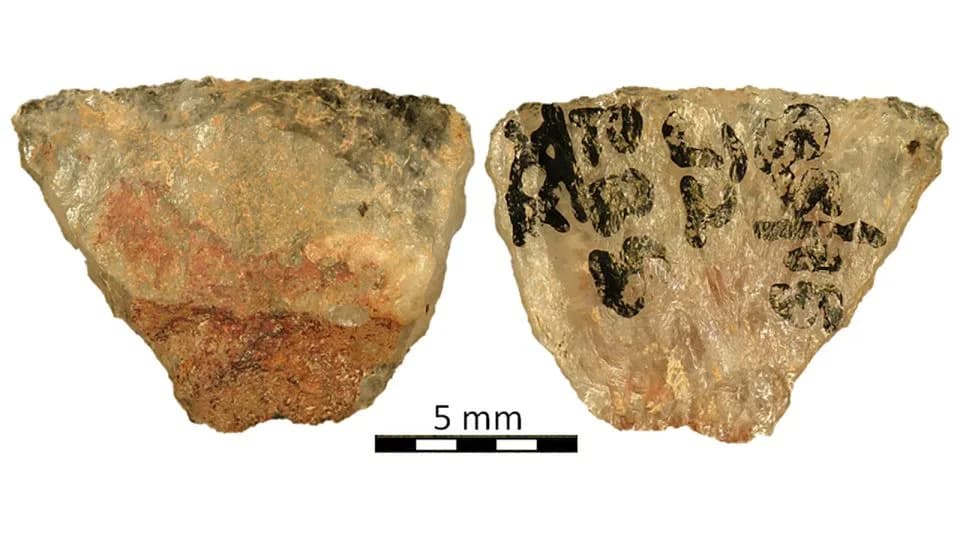
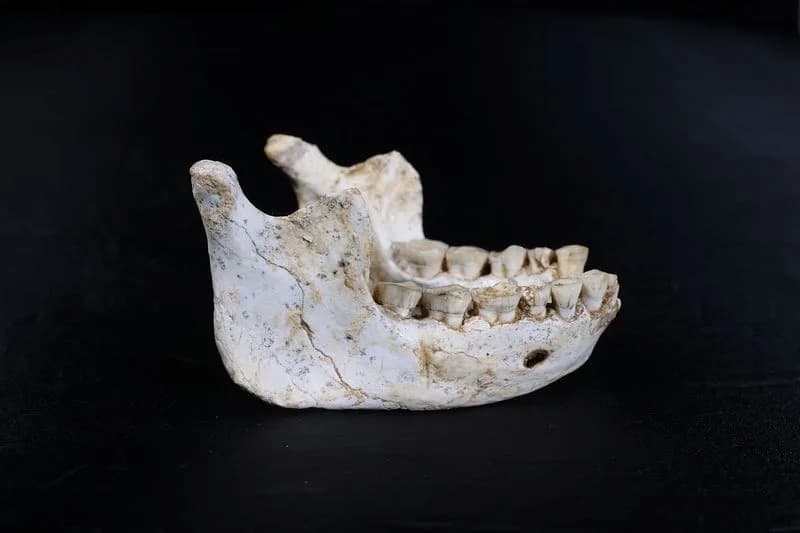
Archaeologists uncovered a piece of chewed birch tar dating to about 10,500 years ago that retains tooth marks and saliva. DNA recovered from the residue suggests the chewer was likely a teenage girl with brown hair and brown eyes. The find reinforces that birch tar was used as both an adhesive and a remedy (it has antiseptic properties), complements similar Swedish discoveries, and highlights contrasts with modern gum, which can contain microplastics.
10,500‑Year‑Old 'Gum' Yields DNA — Likely Chewed by a Stone Age Teen

Archaeologists have uncovered a piece of prehistoric "gum" — birch tar chewed about 10,500 years ago — that preserves tooth impressions and traces of saliva. DNA recovered from the residue indicates the chewer was likely a teenage girl with brown hair and brown eyes.
Discovery and analysis
Researchers from the Institute of History and Archaeology at the University of Tartu in Estonia identified the resinous material and noted clear dental marks. Specialists at the Institute of Genomics extracted ancient DNA from the salivary residue and were able to infer the individual's probable age range and physical traits.
What birch tar is and why it matters
Birch tar is produced by the dry distillation of birch bark and is regarded by scientists as the world’s oldest synthetic substance. It was widely used in prehistory as an adhesive and for medicinal purposes because of its antiseptic properties. Evidence suggests people chewed birch tar to relieve toothache, to shape or soften tar for adhesive use, or perhaps as a habitual pastime.
"This shows how one throwaway item can bring us face-to-face with the people of the past," said historian Bettany Hughes, who highlighted the find in an episode of her television series. "It’s such a relatable but profoundly remarkable thing — a Stone Age teenager chewing gum."
Broader context
Similar chewed birch tar fragments were found last year at Huseby Klev in Sweden, dated to around 10,000 years ago; those pieces were also frequently associated with teenagers. DNA and residue analyses from the Swedish finds revealed aspects of diet — including deer, trout, hazelnuts, apples, duck and fox — and, in at least one case, bacteria consistent with severe periodontitis, indicating significant oral disease.
Then and now
While Stone Age birch tar likely offered antiseptic or soothing benefits and served practical purposes, researchers caution that modern commercial chewing gum often contains microplastics and other additives with environmental and health concerns. The study of ancient chews offers a rare, intimate glimpse into daily life, diet and health in prehistoric communities.
Sources: Institute of History and Archaeology, University of Tartu; Institute of Genomics; commentary by historian Bettany Hughes.
Help us improve.