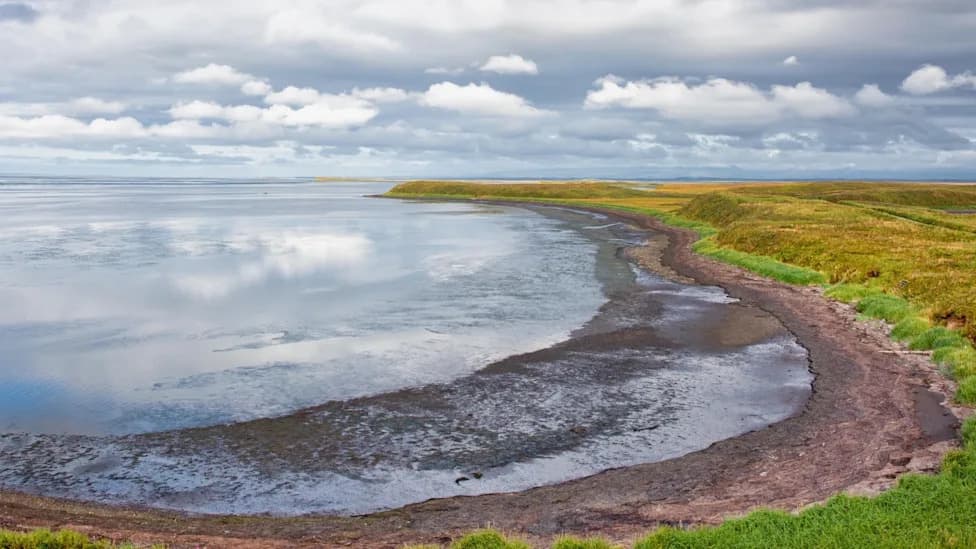
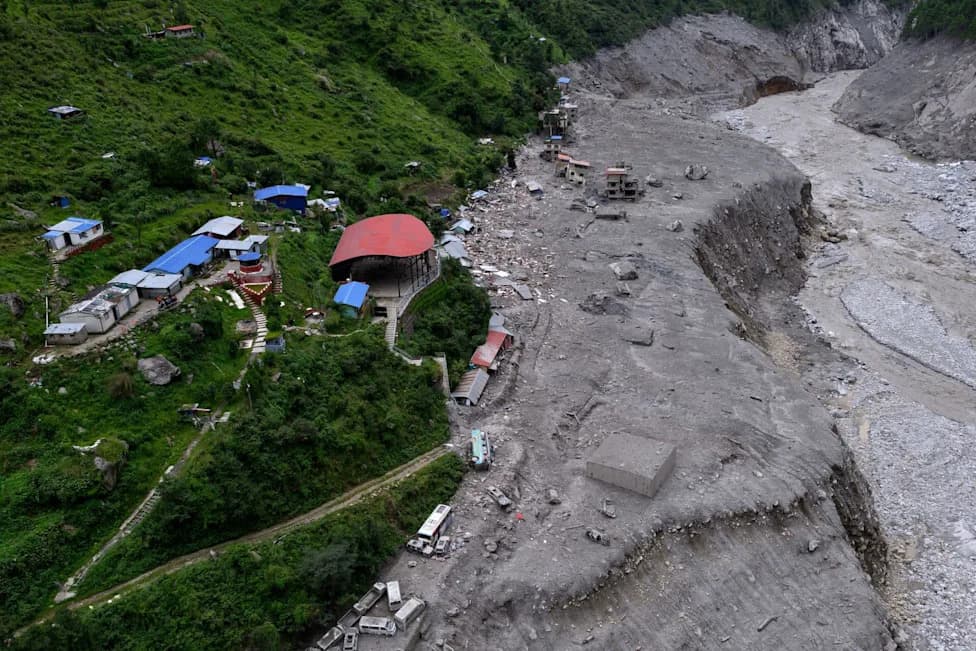
Fall storms — including remnants of Typhoon Halong — struck Alaska’s western coast, severely damaging about 700 homes and leaving communities like Kipnuk and Kwigillingok facing months of displacement. Thawing permafrost and reduced sea ice are accelerating coastal erosion, putting 144 Native communities at risk. Options such as fortifying sites, managed retreat or full relocation are costly and slow, and fragmented federal funding and limited coordination complicate durable solutions.
Alaska Native Villages Struggle as Storms and Thawing Permafrost Devastate Coastal Lands

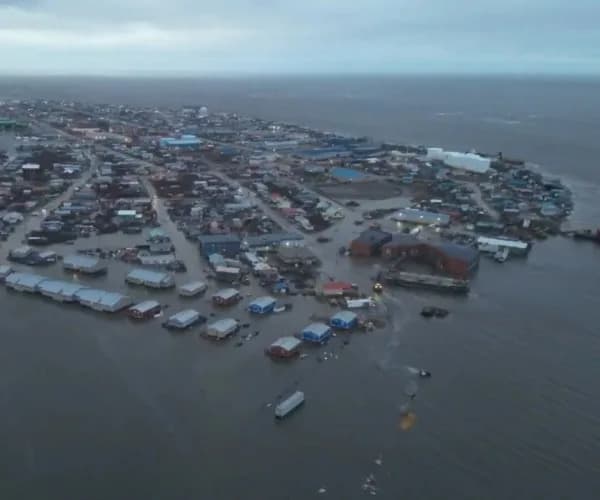
Storms that struck Alaska’s western coast this fall have renewed attention on low-lying Indigenous villages increasingly at risk from climate-driven flooding, thawing permafrost and severe coastal erosion. Two October storms, including the remnants of Typhoon Halong, battered dozens of communities and left emergency repairs and cleanup slowed by the onset of winter.
Residents of some of the hardest-hit communities — notably Kipnuk and Kwigillingok — face months of displacement and deep uncertainty about the future. Kwigillingok had already been pursuing relocation, but such moves can take decades because there is no centralized federal coordinator and long-term funding remains scarce.
Immediate impact
Bryan Fisher, Alaska’s emergency management director, said the state is prioritizing short-term steps to buy communities time, such as rebuilding and reinforcing infrastructure and installing pilings to elevate homes.
“Where we can support that increased resilience to buy that time, we’re going to do that,” Fisher said.
Warming in Alaska is outpacing the global average. A 2023 report by the Alaska Native Tribal Health Consortium identified 144 Native communities facing threats from erosion, flooding, thawing permafrost or combinations of those hazards. Coastal settlements are especially vulnerable: diminished sea ice creates more open water for storm-driven waves, while thawing permafrost weakens formerly frozen shorelines, accelerating erosion.
The remnants of Halong consumed dozens of feet of shoreline in Quinhagak and damaged an archaeologically and culturally significant site. Quinhagak, Kipnuk and Kwigillingok are all near the Bering Sea. Rick Thoman, a climate specialist with the Alaska Center for Climate Assessment and Preparedness, notes that ex-typhoons reaching the Bering Sea coast north of the Pribilof Islands have become more frequent in recent years; three of the four since 1970 have occurred since 2022.
Officials described the damage from Halong as among the worst in decades. Estimates suggest roughly 700 homes were destroyed or severely damaged; some structures washed away with people inside and were carried for miles. Kipnuk and Kwigillingok — together home to roughly 1,100 people — were devastated. One person died and two remain missing.
Options are limited and costly
Communities at risk generally face three broad choices: reinforce and elevate existing infrastructure; pursue managed retreat by moving infrastructure to higher ground; or fully relocate. The estimated scale of need is large: a 2020-based estimate put the cost of protecting infrastructure in Native communities at about $4.3 billion over 50 years. Progress has been slowed by limited resources, fragmented programs and lack of centralized coordination.
Planning can complicate funding. Announcing relocation plans can make a community ineligible for funds to repair infrastructure at its current site, while federal rules can limit investments at a new site until people actually live there. Newtok’s relocation — one of the first full village moves in Alaska — took decades and roughly $160 million to move about 300 residents nine miles to Mertarvik, illustrating how expensive and slow relocation can be.
Federal response and uncertainty
Some federal funding has been directed to relocation work: following passage of recent infrastructure laws, the U.S. Bureau of Indian Affairs created a Voluntary Community-Driven Relocation Program in 2022 and committed $115 million across 11 tribes, including allocations for Newtok and Napakiak. But that funding is far short of what full relocations require, and other potential funding sources are scattered across agencies such as the U.S. Department of Agriculture and the National Oceanic and Atmospheric Administration.
Policy shifts and proposed cuts at the federal level have increased uncertainty. Some grants and awards have been delayed or paused, and changes to climate-related information and staffing at federal agencies have hindered access to data that communities rely on for planning.
What communities are doing
Local leaders and advocates emphasize that immediate recovery must be paired with clearer, sustained coordination and funding so Alaska Native communities can pursue durable solutions — whether that means fortifying sites, staged managed retreat or full relocation. Sheryl Musgrove, director of the Alaska Climate Justice Program at the Alaska Institute for Justice, said her organization is advising 10 tribal communities as they weigh adaptation and relocation choices.
“I’m hopeful this attention will lead to change,” Musgrove said, urging federal reforms to help communities in peril.
Residents, local leaders and state officials are now balancing urgent recovery needs with long-term planning under mounting time pressure and constrained resources.
Reported by Aoun Angueira. Sources quoted include Bryan Fisher, John Walsh and Rick Thoman.
Help us improve.