Last week a magnitude‑7 quake struck about 5 km beneath the Hubbard Glacier near Mt. King George, triggering avalanches and serac collapses but causing no casualties because it occurred in the off‑season. YGS field teams observed dust from rockfall and concentrated damage on Mt. King George, and preliminary surveys indicate roughly 2 metres of sudden fault slip with no surface rupture. Aftershocks clustered across a ~65 km area, which scientists say could reflect multiple fault mechanisms, a geological transition zone, or icequakes. The event underscores how isostatic rebound and accelerating glacier melt are increasing shallow seismic risks for mountaineers.
Magnitude‑7 Hubbard Glacier Quake Triggers Avalanches and Serac Collapses — New Hazards for Mountaineers

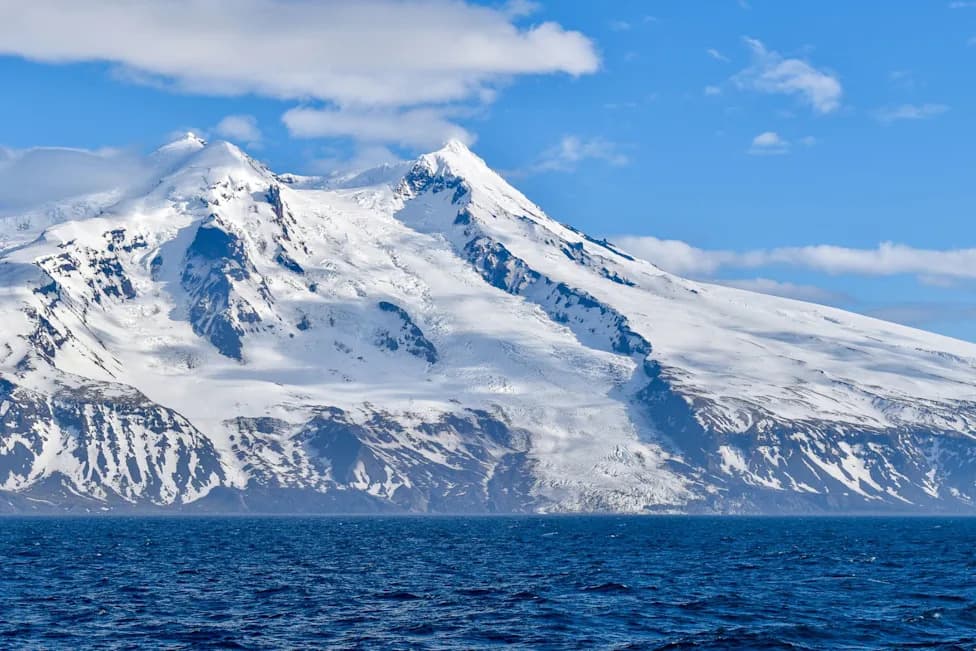
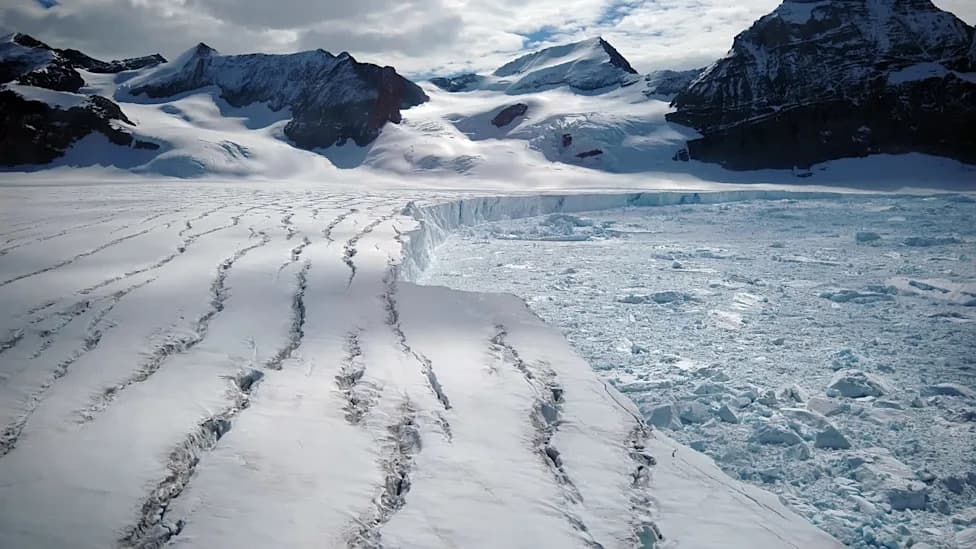
The earthquake originated near Mt. King George, where rockfall and avalanches are visible by eye. Photo: YGS
Last week a magnitude‑7 earthquake struck beneath the Hubbard Glacier on the Alaska–Yukon border, and field teams from the Yukon Geological Survey (YGS) report that the event triggered localized snow and ice avalanches and multiple serac falls. The glacier’s dramatic response highlights growing risks for climbers and backcountry users as glaciers change in a warming world.
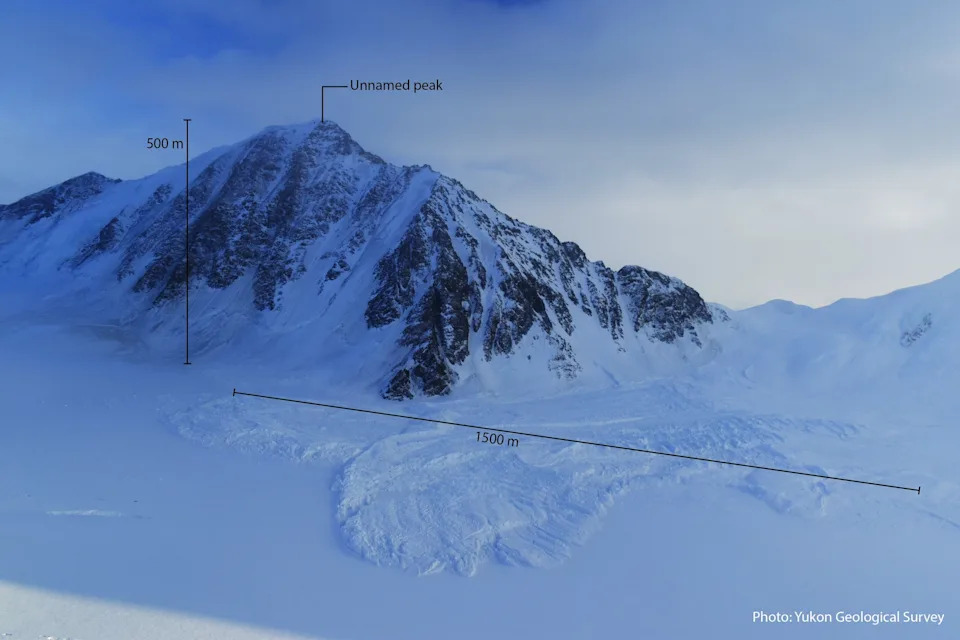
The YGS found the remnants of numerous avalanches near the epicenter. Photo: YGS
What Happened
The main shock originated roughly 5 kilometres below the ice surface, registering 7.0 on the Richter scale. Preliminary YGS fieldwork indicates approximately 2 metres of sudden relative slip between tectonic plates, though teams found no visible surface rupture. Aftershocks did not align on a single fault trace; instead, they clustered across an area roughly 65 kilometres wide, complicating efforts to map the responsible fault.
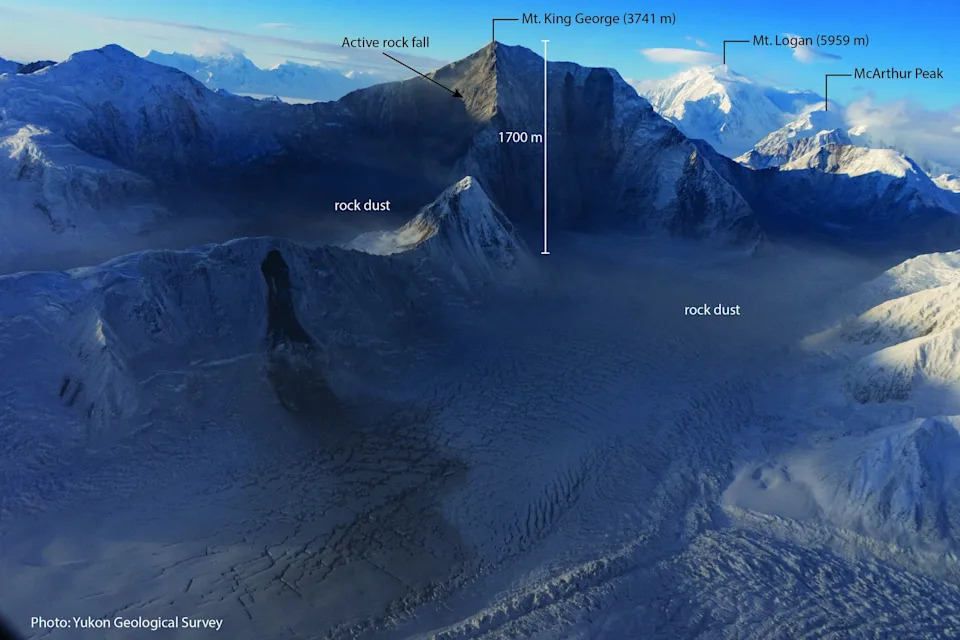
A view of Mt. King George with the most rockfall activity. Photo: YGS
Observed Glacier Impacts
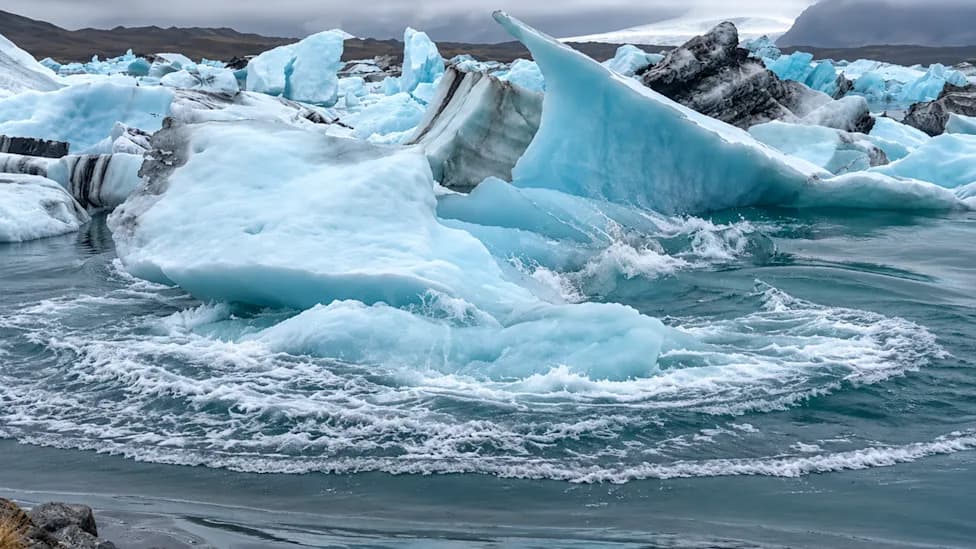
YGS crews reached the epicentral area near 3,741‑metre Mt. King George soon after the quake and documented dust hanging in the air from recent rockfall. Radiating outward from the epicentre they found numerous snow and ice avalanches and evidence of serac collapses, with the most severe damage concentrated on Mt. King George.
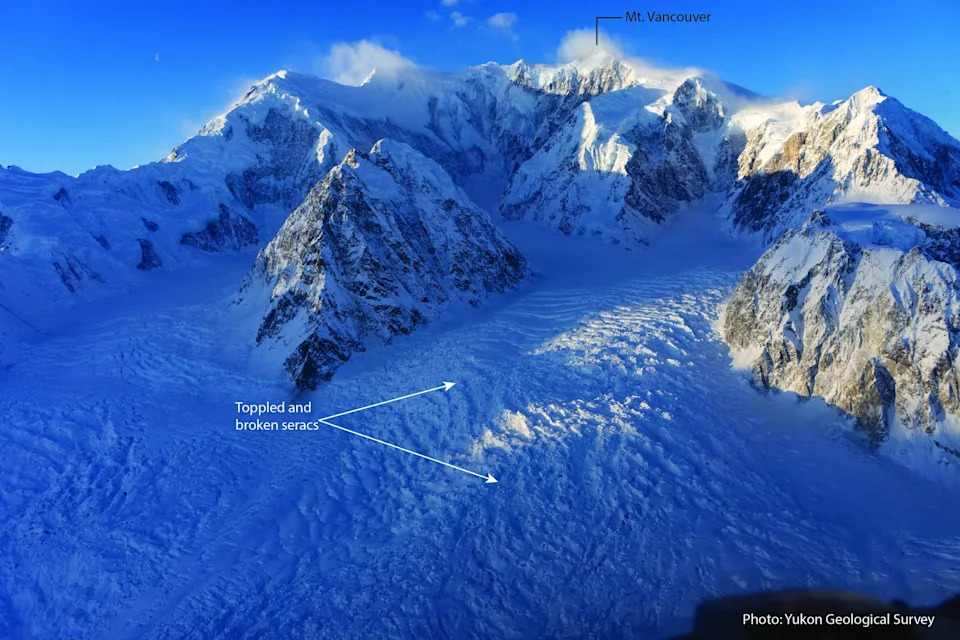
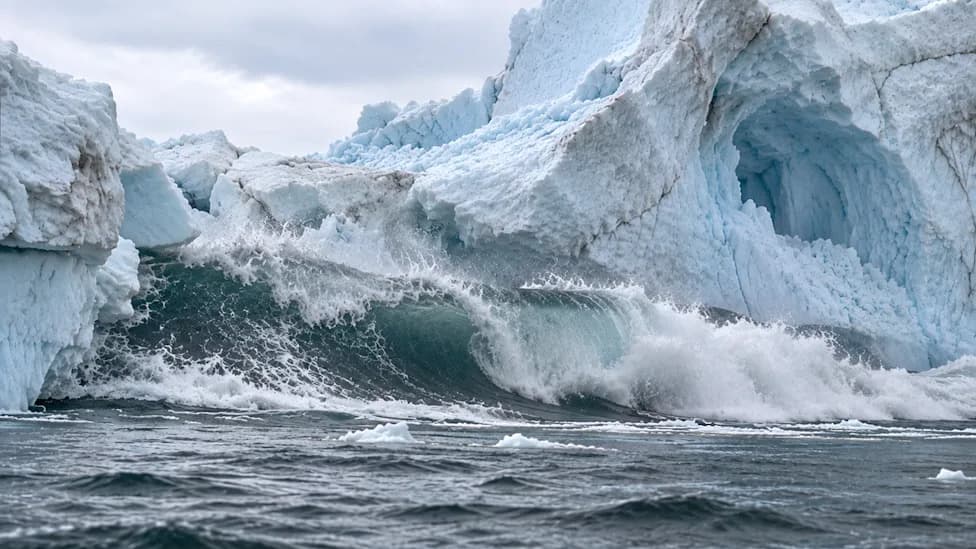
Serac falls amid an ice avalanche on the Hubbard Glacier. Photo: YGS
"It is fortunate that this event did not occur during mountaineering season, as earthquake‑triggered serac falls and avalanches have caused fatalities in the past," the YGS team wrote. "The damage to ice in the region and persistent rockfall from landslide scars may pose new additional hazards for mountaineering and skiing expeditions in the area."
Why Aftershocks Were Clustered
Scientists offer several explanations for the clumped aftershock pattern. Multiple mechanisms may have been involved — for example, strike‑slip motion, thrusting (one plate sliding beneath another), or other subterranean processes — causing secondary quakes on nearby faults. The glacier lies near a geological transition zone, where plate motion style changes, which can produce complex and chaotic fault behaviour. A third possibility is that some recorded events were icequakes originating within the glacier rather than tectonic aftershocks.
Broader Context: Isostatic Rebound and Climate Change
Shallow earthquakes beneath glaciers are an increasingly important concern as global temperatures climb. Melting ice drains weight from the crust and produces slow uplift called isostatic rebound; this long‑running process contributes to seismicity in formerly glaciated regions and can trigger avalanches. Researchers have also documented rising low‑level seismic activity beneath large ice masses, such as Greenland, as melt accelerates. Events like the Hubbard Glacier quake provide valuable data to improve warnings for ice and snow hazards.
Implications For Mountaineers
Geologists and glaciologists hope to use field observations from events like this to refine seismological warning signs for serac collapse and avalanche risk. In the future, seismic indicators might be integrated into expedition planning the way weather forecasts currently are. For now, the YGS is asking outdoor users to help scientists:
If you have pre‑event photos of Mt. King George, please send them to [email protected]. Pre‑event imagery will help teams estimate landslide volumes and better understand the scope of glacial damage.
Help us improve.