False: Viral photos claiming South Korea installed vending machines that dispense free hot meals to schoolchildren are misleading. The images are unverified and inconsistent; searches found no credible reporting to back the claim. South Korea does provide universal free school lunches, but they are prepared and served in school cafeterias, not from vending machines.
Fact Check: Viral Images of 'Food Vending Machines' Do Not Show South Korea's School Lunch Program

Summary
Claims that South Korea has installed vending machines that dispense free hot meals to schoolchildren are false. The viral images circulating online are unverified, inconsistent, and do not match any documented national policy. South Korea does provide universal free school lunches, but those meals are prepared and served in school cafeterias.
What the posts say
Social-media posts shared images and text asserting that vending machines near schools dispense hot, free meals to children with "no paperwork, no judgment"—offering food by simply opening a drawer. The claim was amplified by repeated reposts of the same images and similar copy across multiple platforms.
Why the claim is misleading
Images are inconsistent and unverified: Reverse-image and text searches returned many duplicates of the same social-media posts but no credible news reports or official announcements confirming a nationwide program of hot-food vending machines.
Design problems in the photos: The machines shown vary markedly across posts. Some feature large cube-shaped selection buttons with the top row too high for the children pictured to reach. Others appear to lack any visible opening to retrieve food. One recurring yellow kiosk was identified in variants as a flower vending machine rather than a food dispenser.
What actually exists
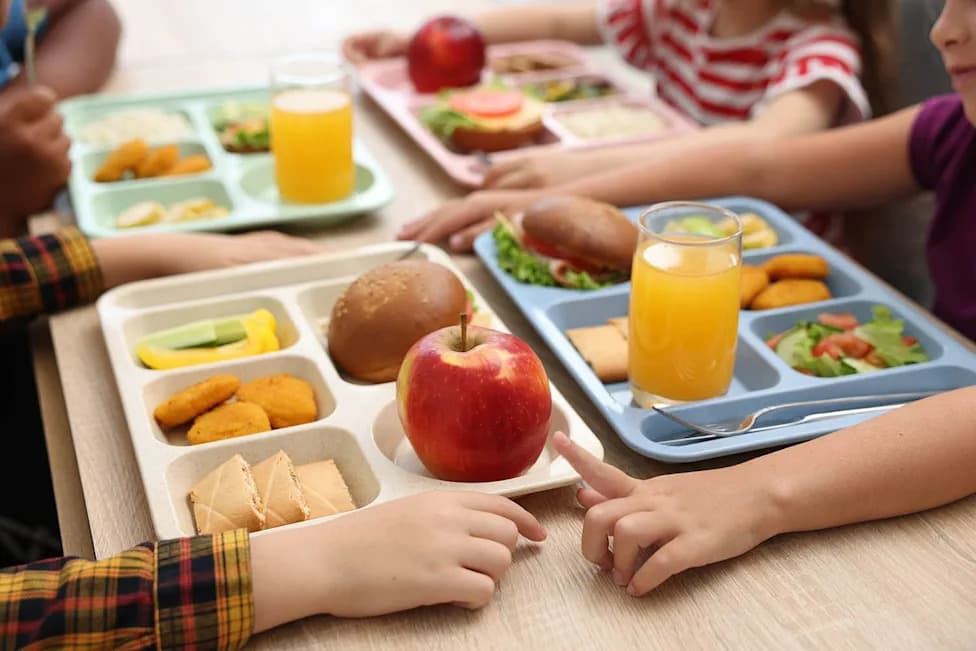
South Korea operates a well-established, long-running school meal program that provides free lunches to students from kindergarten through high school. Those meals are cooked and served in school cafeterias, not distributed from street-side vending machines. The modern expansion of the program began through local pilots in the early 2010s and the system traces its origins back to postwar food-aid efforts in the mid-20th century. By 2022, the program covered all school-age children nationwide.
Related initiatives elsewhere
There have been isolated pilots of food-dispensing machines in other countries. For example, a small U.S. pilot tested vending units stocked with prepackaged items (cereal with milk, peanut-butter-and-jelly sandwiches), but that project required families to receive access codes—so it was neither identical to the viral claim nor paperwork-free.
Bottom line
The viral pictures do not document a real South Korean policy of hot-food vending machines for schoolchildren. The country's free-meal program operates through school dining facilities, and independent checks found no evidence that the pictured machines are part of an official nationwide initiative.
Help us improve.