South Korea has eased a decades‑old ban on reading North Korea's official newspaper, the Rodong Sinmun, allowing copies to be viewed at selected public libraries without prior state permission. The change removes identity and application requirements but confines access to on‑site library viewing, while North Korean websites remain blocked. Public reaction in Seoul is split between alarm that the move could spread propaganda and skepticism that many people will actually seek out the paper. Officials describe the policy as a symbolic, controlled step toward improving understanding and ties with Pyongyang.
South Korea Allows Public Access to North Korea’s Rodong Sinmun — Copies Available in Selected Libraries
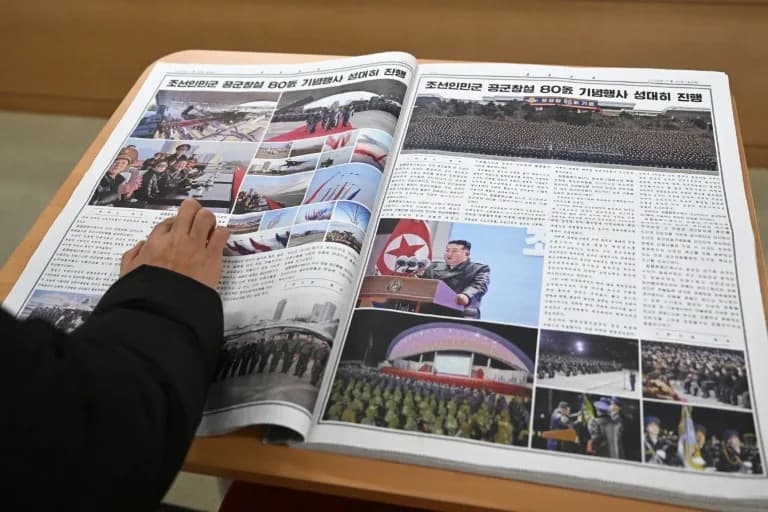
A visitor reads Rodong Sinmun, North Korea's top newspaper, at the National Library of Korea in Seoul on January 2, 2026 (Jung Yeon-je)(Jung Yeon-je/AFP/AFP)
South Korea has relaxed a long-standing restriction that barred its citizens from reading North Korea's official newspaper, the Rodong Sinmun. Starting this week, copies of the Rodong Sinmun — the Workers' Party mouthpiece known for its praise of leader Kim Jong Un, coverage of missile tests and anti‑U.S. rhetoric — can be viewed at selected public libraries without prior state approval.
What Changed
Under President Lee Jae Myung's administration, readers no longer have to identify themselves or submit an application explaining their purpose to access the paper. However, access remains limited: copies must be consulted on site at participating public libraries, and North Korean websites remain blocked to South Korean internet addresses.
Public Reaction Is Mixed
"It's like giving people access to ISIS propaganda," said Park Si‑won, a 22‑year‑old university student, expressing fears that exposure could radicalize readers.
"To allow people to read the newspaper of a hostile country... is extremely unsettling," said Hong Se‑wung, 81.
Others are skeptical that many South Koreans will seek out the paper. "Many people these days don't even read physical newspapers anyway," said Son Yu‑jin, 27. "I doubt they'll make the effort to read Rodong Sinmun." Businesswoman Bae Jee‑woo argued the change could improve understanding: readers can interpret the content critically rather than be swayed by it.
Practical Impact and Limits
At Seoul's National Library, AFP reporters observed a handful of people leafing through recent issues, which often feature photographs of Kim Jong Un and bolded references to his name. But many other libraries have not yet implemented the new rules, and experts say the change is largely symbolic for now.
Chad O'Carroll, who runs NK News, said the policy is a step forward for researchers but noted that full access to North Korean state websites would be far more useful — and would require politically sensitive changes to South Korea's security laws.
Broader Context
The move comes as Seoul says it hopes to "steadily expand access" to information about the North while pursuing warmer ties with Pyongyang. The relaxation is one‑way: North Koreans remain strictly barred from accessing South Korean media and face severe penalties if caught doing so. President Lee has framed the policy as "an opportunity to understand the reality of North Korea accurately."
Takeaway
The decision loosens Cold War‑era censorship in a limited, controlled way. While symbolically significant, practical access remains restricted and many legal and political constraints still limit how much material South Koreans can access from the North.
Help us improve.