
South Korea's liberal-controlled National Assembly approved a controversial bill allowing courts to impose punitive damages and fines on media outlets and large online channels judged to have spread "false or fabricated information." The measure permits punitive awards up to five times proven losses, up to 50 million won for nonquantifiable harm, and regulator fines up to 1 billion won. Critics — including press groups and civic organizations — have urged President Lee Jae Myung to veto the bill, warning its vague wording could chill legitimate journalism and expand platforms' takedown powers.
South Korea's Parliament Approves Controversial Bill Targeting 'False' Media Content — Critics Warn Of Censorship Risks

The National Assembly pass a bill allowing heavy punitive damages against traditional news and internet media for publishing "false or fabricated information," at the National Assembly in Seoul, South Korea, Wednesday, Dec. 24, 2025. (Hwang Kwang-mo/Yonhap via AP)(ASSOCIATED PRESS)
Seoul — South Korea's liberal-led National Assembly on Wednesday approved a contentious bill that would allow large punitive awards against traditional news organizations and major online channels found to publish what courts determine to be "false or fabricated information." Critics and press freedom advocates say the measure risks chilling legitimate reporting and could empower platforms and state review to remove contentious content.
What the Law Would Do
Under the bill, courts could order punitive damages of up to five times proven losses against outlets — including large YouTube channels — that disseminate “illegal information or false, fabricated information” with intent to cause harm or obtain profit. The proposal also allows awards of up to 50 million won (about $34,200) for harms that are difficult to quantify. South Korea's media regulator would be empowered to fine outlets up to 1 billion won (about $684,000) if a court finds they distributed false or manipulated information on more than two occasions.
Political Debate And Concerns
The bill passed the National Assembly by a vote of 170-3, with four abstentions, after many members of the main conservative opposition, the People Power Party (PPP), boycotted the final vote. The bill's passage followed a 24-hour filibuster by PPP lawmakers, during which members from both sides debated its scope and safeguards.
PPP lawmaker Choi Soo-jin warned the bill "fails to define how inaccurate information must be before it is forbidden," and cautioned it could be applied broadly to material with minor errors or sweeping claims, creating a tool to silence critics via lawsuits.
Democratic Party supporters say the law is needed to combat a rising tide of disinformation that they believe is fragmenting public discourse and fueling hate speech. Party spokesperson Park Soo-hyun emphasized that the measure targets "malicious and deliberate dissemination of false information," requires proof of intent, and exempts satire and parody.
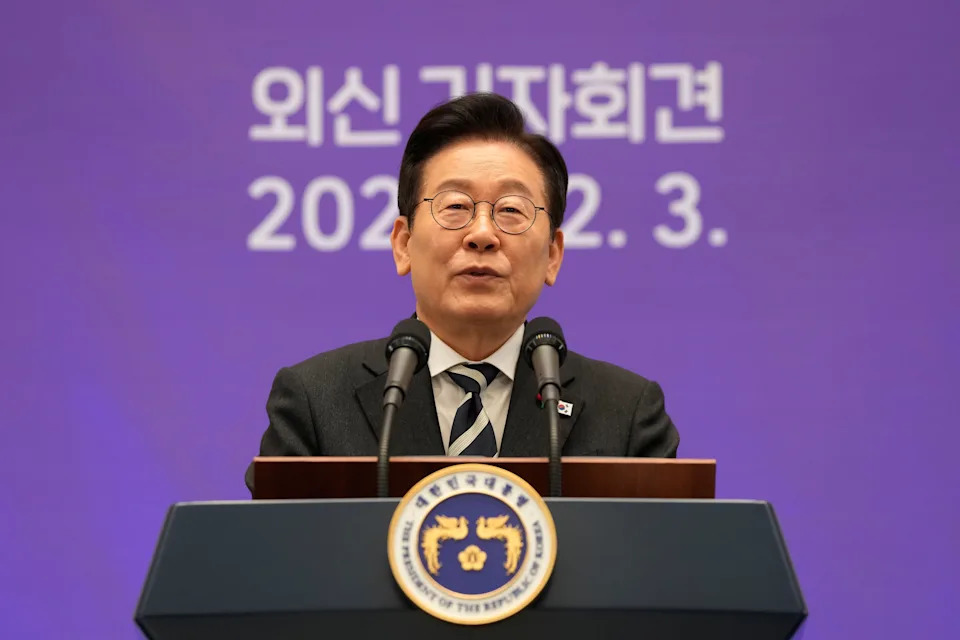
FILE - South Korean President Lee Jae Myung speaks during a news conference to mark the first anniversary of the Dec. 3 martial law crisis at the Blue House in Seoul, South Korea, Dec. 3, 2025. (AP Photo/Ahn Young-joon, File)(ASSOCIATED PRESS)
Press Groups And Civic Organizations Urge A Veto
Press freedom groups, the National Union of Media Workers and civic organizations such as the People’s Solidarity for Participatory Democracy have urged President Lee Jae Myung to veto the bill. They argue the wording is vague, lacks clear safeguards for investigative journalism, and could lead to the removal of legitimate public-interest reporting.
Activists also warn the law could give private online platforms broad power to delete content and block accounts, and could reinforce state-led administrative reviews of content — a combination they say would likely suppress controversial but important speech.
Legal scholars note the law may initially hit smaller, profit-driven online channels harder than established legacy media, but they also caution that relying primarily on punitive measures is not the ideal long-term strategy for addressing misinformation.
Context
Observers pointed to chaotic months after the brief declaration of martial law by jailed former President Yoon Suk Yeol as an example of South Korea's muddled information environment, during which unproven YouTube claims about election fraud circulated widely and heightened political polarization.
The bill now awaits the president's signature or veto. Supporters say it will curb harmful disinformation; opponents say it risks chilling legitimate criticism and public-interest journalism unless the law's enforcement is narrowly and clearly defined.


