
South Korea plans to end international adoptions by 2029 and strengthen domestic child welfare, but the U.N. says the government has not done enough to provide truth, reparations and remedies for adoptees harmed by past abuses. A truth commission recognized 56 victims after investigating hundreds of complaints, but its wider probe was suspended and 311 cases remain unresolved. Seoul cites past reforms — including a 2011 law restoring judicial oversight — yet says further investigations and reparations depend on future legislation.
South Korea to Phase Out International Adoptions by 2029 as U.N. Demands Truth, Reparations

South Korean 1st Vice Minister of Health and Welfare Lee Seuran speaks during a briefing at the government complex building in Seoul, South Korea, Friday, Dec. 26, 2025. (Choo Sang-chul/Newsis via AP)(ASSOCIATED PRESS)
South Korea announced plans to phase out international adoptions within five years, aiming for zero overseas placements by 2029, while United Nations investigators expressed “serious concern” over Seoul’s response to historical abuses tied to decades of mass adoptions.
The government’s pledge came after the U.N. human rights office published Seoul’s formal reply to investigators who urged specific steps to remedy wrongs experienced by adoptees who were sent abroad under falsified records or who suffered abuse by adoptive parents.
What the Government Says
Vice Minister of Health and Welfare Lee Seuran said the administration will phase out foreign adoptions and strengthen domestic welfare supports for children in need. She noted that international placements dropped sharply over recent decades—from an average of more than 6,000 per year in the 1980s to roughly 2,000 in 2005 and 24 in 2025—following reforms and a move toward public oversight.

FILE - Yooree Kim sits for a portrait with a computer tablet displaying a picture of her taken before she was sent from South Korea to be adopted by a family in France when she was 11 years old, in her apartment in Seoul, South Korea, Sunday, May 19, 2024. (AP Photo/Jae C. Hong, File)(ASSOCIATED PRESS)
Seoul highlighted a 2011 law that restored judicial oversight of foreign adoptions and described efforts to centralize adoption authority under government agencies. Officials emphasized future safeguards and promoting domestic adoption, but said more in-depth investigations and stronger reparations would require new legislation.
U.N. Concerns and Victims’ Calls for Justice
A team of U.N. special rapporteurs — including experts on trafficking, enforced disappearances and child abuse — criticized South Korea for not providing effective access to remedies for adoptees and for failing to guarantee their rights to truth, reparations and memorialization. The investigators raised alarm that a government fact-finding probe into historic adoption abuses had been suspended despite reports of serious violations that, in some cases, may amount to enforced disappearances.
“There may have been other competing interests” beyond children’s best interests when private agencies ran adoptions, Vice Minister Lee said, describing the current restructuring as an opportunity to reassess whether international adoption remains necessary.
Individual Cases and the Truth Commission
The U.N. review was prompted in part by the case of Yooree Kim, who was sent to France in 1984 after officials falsely recorded her as an abandoned orphan. Kim has alleged severe physical and sexual abuse by her adopters and has petitioned the U.N. seeking accountability from governments and agencies in both South Korea and France.
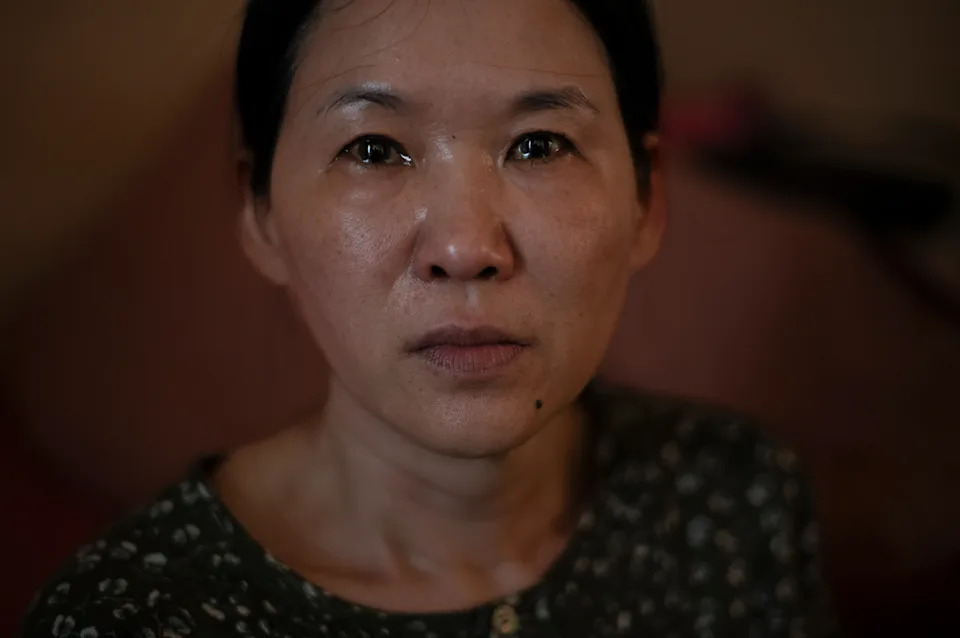
FILE - Yooree Kim, who was sent to a French family in 1984 without her biological parents’ consent, based on documents that falsely described her as an abandoned orphan, sits for a portrait as tears well up in her eyes in her apartment in Seoul, South Korea, Sunday, May 19, 2024. (AP Photo/Jae C. Hong, File)(ASSOCIATED PRESS)
After nearly three years investigating complaints from 367 adoptees in Europe, the United States and Australia, a South Korean truth commission in March recognized Kim and 55 other adoptees (56 total) as victims of human rights violations — including falsified origins, missing records and failures in child protection. Weeks later the commission suspended its broader adoption probe amid internal disputes, leaving 311 cases unresolved and dependent on whether lawmakers establish a new truth commission by legislation.
Accountability, Records and Next Steps
Human rights lawyers and victims criticized Seoul’s response as perfunctory, saying draft bills do not clearly define reparations or a concrete plan to remove a backlog of inaccurate or falsified records that block reunification and access to origins. The government vetoed an April bill that would have removed the statute of limitations for state-related human rights violations, though President Lee Jae Myung later issued an apology in October following the truth commission’s recommendations.
An Associated Press and Frontline investigation documented how South Korean governments, Western countries and private agencies cooperated to send roughly 200,000 Korean children overseas over past decades, often amid fraud and abusive practices. Critics say some Western nations overlooked abuses or pressured Seoul to maintain the supply of adoptable infants.
Seoul’s announced phase-out and the U.N. scrutiny set the stage for a contentious legislative and public debate over how to reconcile past abuses, deliver reparations, restore records, and protect vulnerable children going forward.


