Researchers at ELI‑NP used a 10‑petawatt laser (≈230 J in 23 fs) to produce a directed muon beam that generated a low‑resolution transmission image of lead bricks behind two metres of concrete. Monte Carlo simulations indicate roughly 90% of detected particles were muons, and portable detectors placed up to 42 m from the source recorded the shadow image. The result — posted as a preprint on 23 September 2026 — is a laboratory proof-of-concept: resolution, one-shot‑per‑minute repetition and large facility scale mean practical deployment will require substantial engineering advances and peer review.
Seeing Through Lead-Shielded Walls: ELI‑NP’s Laser-Driven Muon Imaging Breakthrough
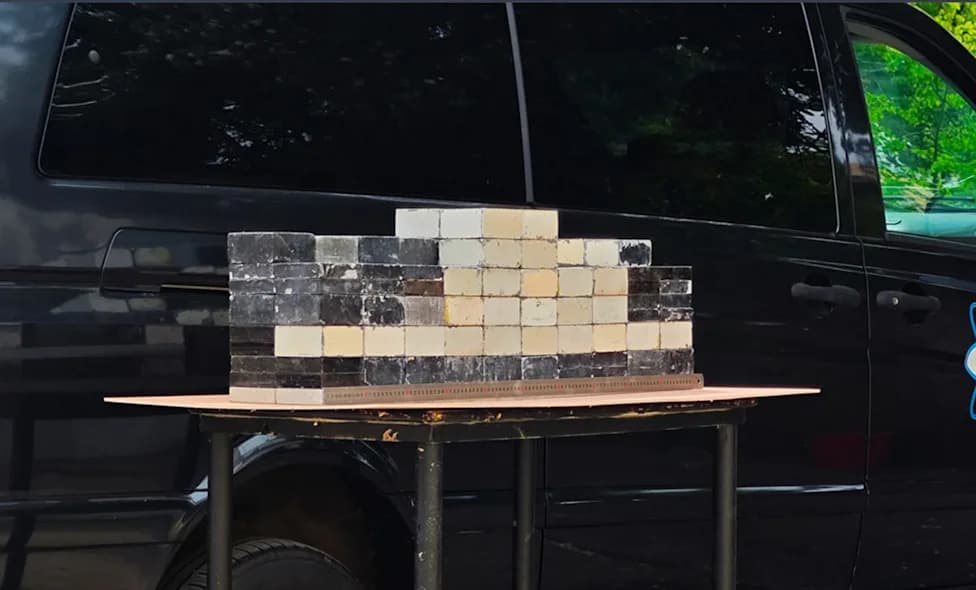
Muon detectors in a van captured the shadow of lead bricks. Image: Catalin Vancea
Concrete and heavy metal shielding routinely block conventional imaging. Researchers at the Extreme Light Infrastructure–Nuclear Physics (ELI‑NP) facility in Măgurele, Romania, have demonstrated a laser-driven muon beam that produced a low-resolution transmission image of lead bricks behind two metres of solid concrete. Posted as a preprint on September 23, 2026, the team describes this as, to their knowledge, the first imaging demonstration dominated by laser-produced muons; the result has not yet completed peer review.
How the Experiment Worked
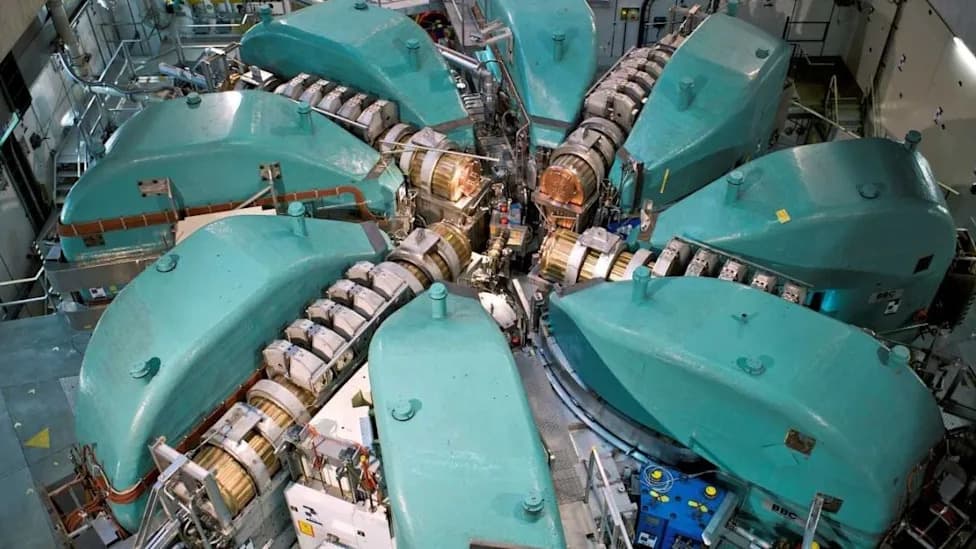
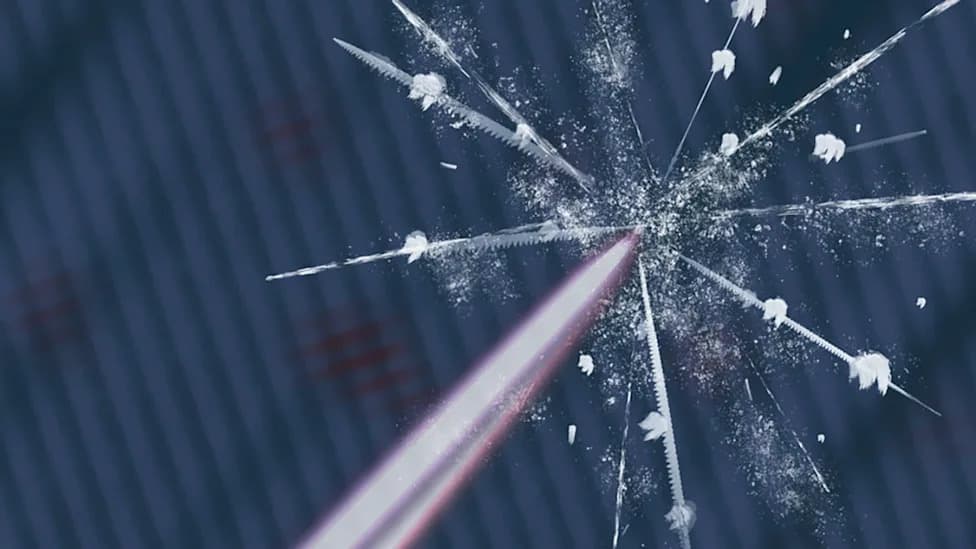
The group used a 10-petawatt laser that delivered roughly 230 joules in a 23-femtosecond pulse to accelerate electrons inside a gas-filled chamber. Those electrons struck a lead converter target and generated high-energy photons, which in turn produced muon pairs via a Bethe–Heitler pair-production process. A plastic and paraffin filter removed much of the background, leaving a forward-directed beam that traversed two metres of concrete.
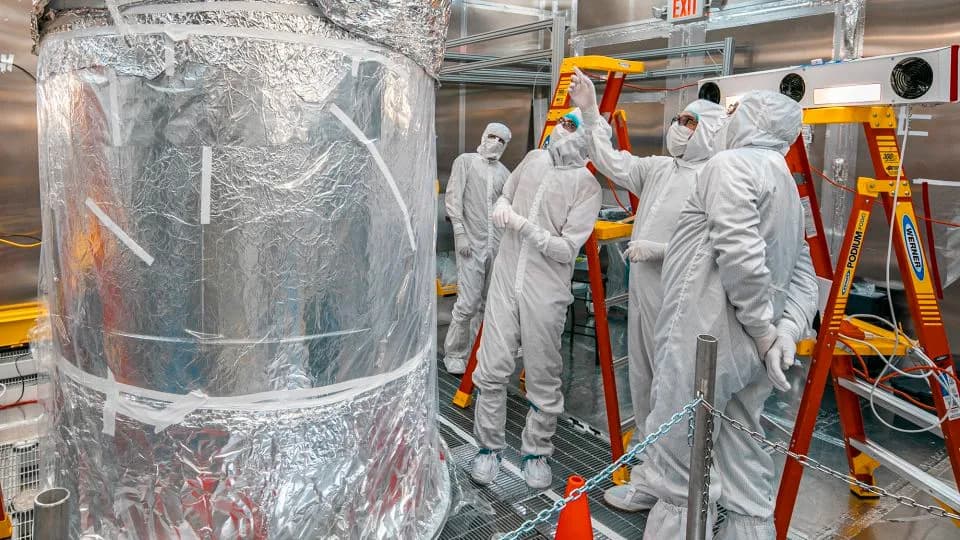
Portable detectors mounted inside a black van, parked up to 42 metres from the source, recorded the transmitted particles. Monte Carlo simulations used to cross-check the measurements indicated that about 90% of detected particles were muons, and that signal was sufficient to form a shadow image of the lead bricks placed beyond the wall.
Significance And Limitations
Muons are elementary particles roughly 200 times heavier than electrons; their greater mass and high energies let them penetrate materials that block X-rays and reveal internal density contrasts. Using an artificial, on‑demand muon source addresses the slow accumulation time of cosmic-ray muons — which can require months to produce usable images — but the demonstration also highlights practical hurdles.
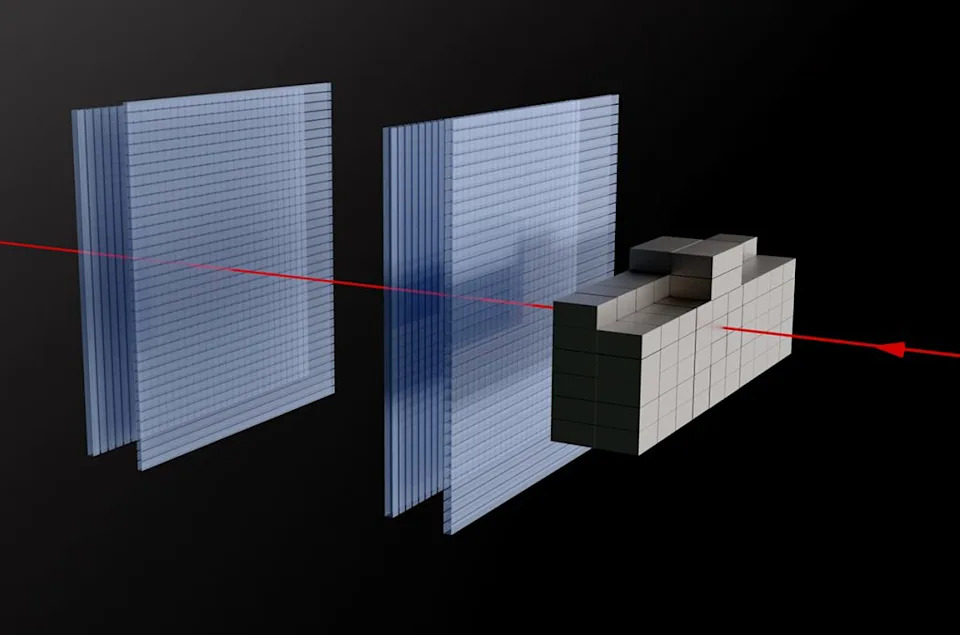
A muon beam generated by a powerful laser can reveal materials concealed by dense barriers.Image: Alexandra Saftoiu
“This is the first imaging, so there's not a very high resolution of course. But we're going to improve,” said Domenico Doria, project lead at ELI‑NP (as cited in Science).
The laser currently fires at roughly one shot per minute, the facility is large-scale research infrastructure, and image resolution is modest. Converting this laboratory milestone into a deployable system would require higher repetition rates, smaller and more practical lasers, improved detectors and background suppression, and independent peer review and validation.
Potential Applications
Possible future uses include non-invasive cargo screening (including lead‑shielded containers), archaeological surveys of buried structures, and nondestructive inspection of thick industrial components that X-rays cannot penetrate. These remain prospective: the experiment is a proof-of-concept, not a fielded technology.
By demonstrating that a laser-generated, directed muon source can produce an interpretable transmission image, the team has taken a meaningful first step toward on-demand muography. Whether the approach becomes practical will depend on engineering advances in source repetition, laser miniaturisation, detector sensitivity, and system integration.
Technical Notes: The experiment combined high-intensity laser acceleration, converter-target photon generation, Bethe–Heitler pair production, plastic/paraffin filtering for background reduction, and Monte Carlo validation to estimate particle composition and image fidelity.
Help us improve.