Study Summary: Scientists injected misfolded human tau from Alzheimer’s and corticobasal degeneration (CBD) brains into wild-type mice and found the animals’ own tau adopted the same atomic folds as the human seeds. Cryo-electron microscopy showed a near-atomic match: Alzheimer’s seeds produced neuron-only inclusions, while CBD seeds produced both neuronal and glial inclusions. The human seed material cleared quickly, but its structural imprint persisted in mouse tau, supporting a prion-like templated seeding model without demonstrating natural infectivity.
Human Alzheimer’s and CBD Tau Proteins Imprint Their Atomic Fold on Mouse Brains — Strong Evidence for Prion-Like Templating
(AscentXmedia/iStock/Getty Images Plus)
Researchers have demonstrated that misfolded human tau proteins derived from Alzheimer’s disease and corticobasal degeneration (CBD) can induce the same disease-specific atomic folds in normal mouse tau, adding compelling molecular evidence for a prion-like templated seeding mechanism in tauopathies.
Background: When Proteins Go Wrong
Proteins must fold into precise three-dimensional shapes to function. Occasionally a protein misfolds into a stable, abnormal conformation that resists cellular clearance and can convert other copies of the same protein into the same toxic structure. Classic prion diseases operate by this mechanism; researchers have long suspected similar templated spread underlies many neurodegenerative disorders, including Alzheimer’s disease and CBD.
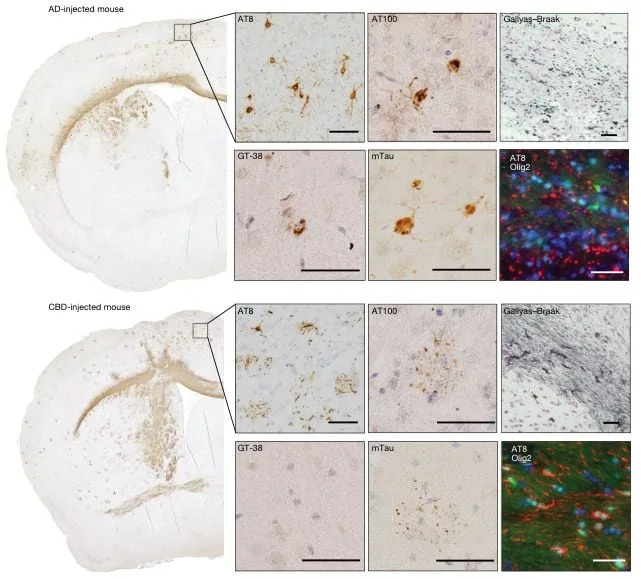
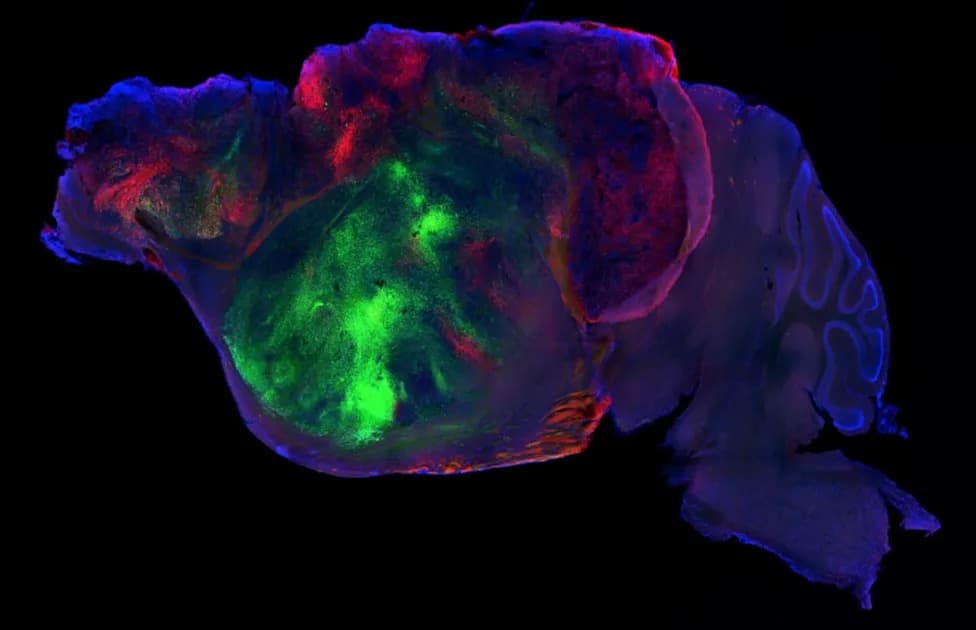
Tau pathology in the brains of mice injected with tau from people with Alzheimer's disease (top) and corticobasal degeneration (bottom), nine months after injection. The different tau seeds produced distinct patterns of pathology. (Lövestam et al.,Nature, 2026)
What The Study Did
A team led by Sjors Scheres and Michel Goedert at the MRC Laboratory of Molecular Biology extracted misfolded tau filaments from human post-mortem brains of people diagnosed with Alzheimer’s disease or CBD. They injected those human tau assemblies into the brains of living wild-type (non-transgenic) mice, deliberately using animals that express only normal mouse tau to test cross-species templating under physiologically ordinary conditions.
Key Findings
Rapid clearance of injected human tau: The introduced human tau assemblies became undetectable within about a week, as measured by biochemical assays.
YouTube Thumbnail
Progressive misfolding of native mouse tau: Over subsequent weeks and months, the mice’s own tau proteins began to misfold and accumulate.
Disease-specific patterns of pathology: Alzheimer's-derived tau produced misfolded tau confined mainly to neurons. CBD-derived tau produced both neuronal and glial inclusions, mirroring the cell-type distribution seen in human CBD brains.
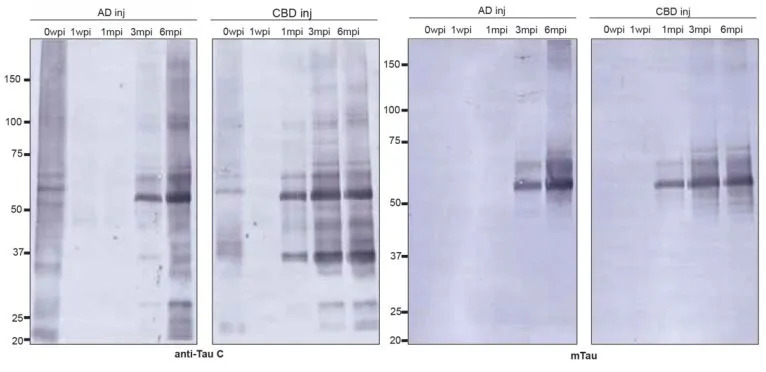
Western blots track tau in mouse brains after injection with human Alzheimer's (AD) or corticobasal degeneration (CBD) tau seeds, as the injected seeds are cleared and mouse tau accumulates over the following months. (Lövestam et al.,Nature, 2026)
Atomic-scale copying confirmed by cryo-electron microscopy: Using cryo-EM, the investigators determined that the newly formed mouse tau filaments adopted atomic-level folds that closely matched the corresponding human disease structures (Alzheimer’s fold vs. CBD fold). In short, the human seeds left a structural imprint on native mouse tau despite the seeds themselves disappearing.
Implications and Caveats
This work provides direct molecular evidence that distinct tau “strains” — different misfolded architectures — can template their specific folds onto normal tau, producing corresponding patterns of pathology. That strengthens the hypothesis that templated seeding contributes to how tauopathies spread through brain tissue.
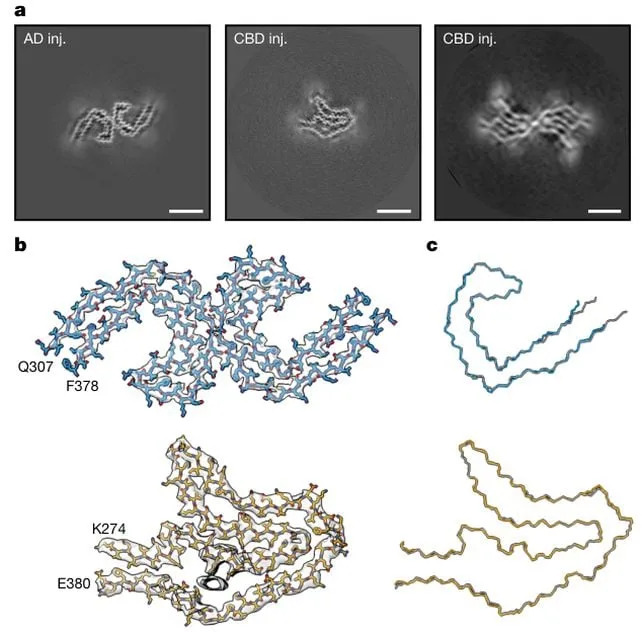
Cryo-electron microscopy reveals the structures of tau filaments that formed in the mice after injection with human Alzheimer's disease or CBD tau. Atomic models of the mouse tau are shown below on the left; on the right, they are overlaid with the corresponding tau structures from human brains, revealing their remarkably close match. (Lövestam et al.,Nature, 2026)
However, important distinctions remain from classic prion diseases. The study does not show that Alzheimer’s disease or CBD are naturally infectious between people. A defining feature of prion disorders is natural person-to-person transmissibility; no such transmission is established for these tauopathies.
Notably, mice with accumulated misfolded tau did not exhibit clear clinical symptoms during the observation window. It is uncertain whether symptoms would appear with longer follow-up, greater tau burden, or additional pathological processes. The relationship between molecular spread and clinical damage may involve additional factors.
Next Steps
Researchers aim to dissect how tau seeds enter cells, convert native tau, and traverse neural networks. The finding that wild-type mice recapitulate human tau folds suggests broadly accessible animal models can be used to probe the cellular mechanisms behind strain-specific propagation and to test interventions that might block templated seeding.
Publication: The study was reported in Nature (Lövestam et al., 2026) and was led by investigators at the MRC Laboratory of Molecular Biology.
Help us improve.