A California team transplanted millions of lab-grown human cortical neurons into mice whose cortices were largely removed, producing animals whose neural activity and behavior more closely resembled human patterns. About 4 million human neurons replaced roughly 14 million mouse neurons; the implanted cells integrated over weeks to months and improved memory and social behavior while producing a human-like sensitivity to low oxygen. The model could aid research into cerebral palsy, intellectual disability and epileptic encephalopathies, but the authors built ethical limits into the work and stress it is not a human brain in a mouse.
Millions of Human Neurons Grafted Into Mouse Brains Could Yield Better Models of Brain Disorders
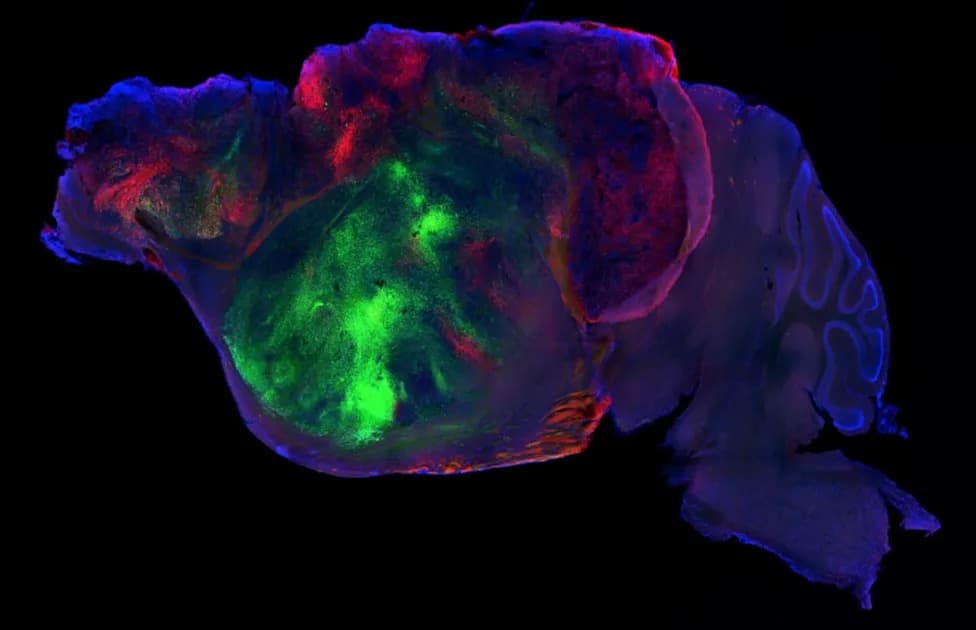
Photo Credit:Image© 2026 by Kaganovsky, K., et al. is licensed underCC BY 4.0
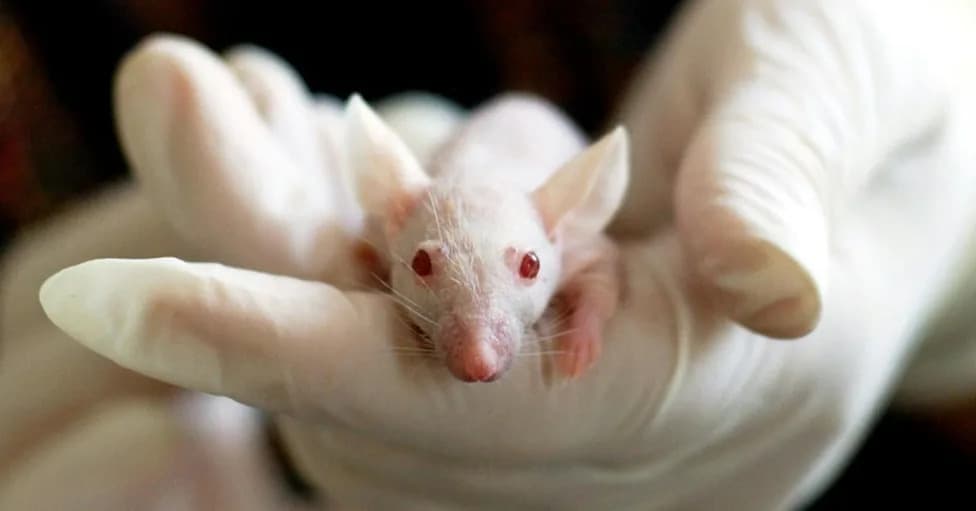
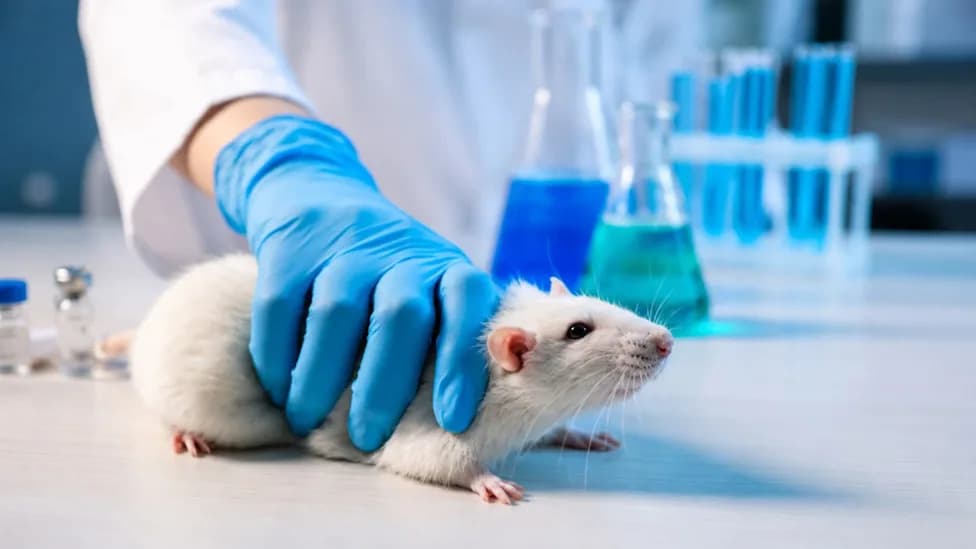
Researchers in California have developed a novel mouse model by replacing much of a mouse's cerebral cortex with millions of lab-grown human cortical neurons. Published in Nature and reported by NPR, the study led by Sergiu Pașcă at Stanford suggests these chimeric animals may better reproduce aspects of human neural development and disease than conventional mouse models.
How the Model Was Made
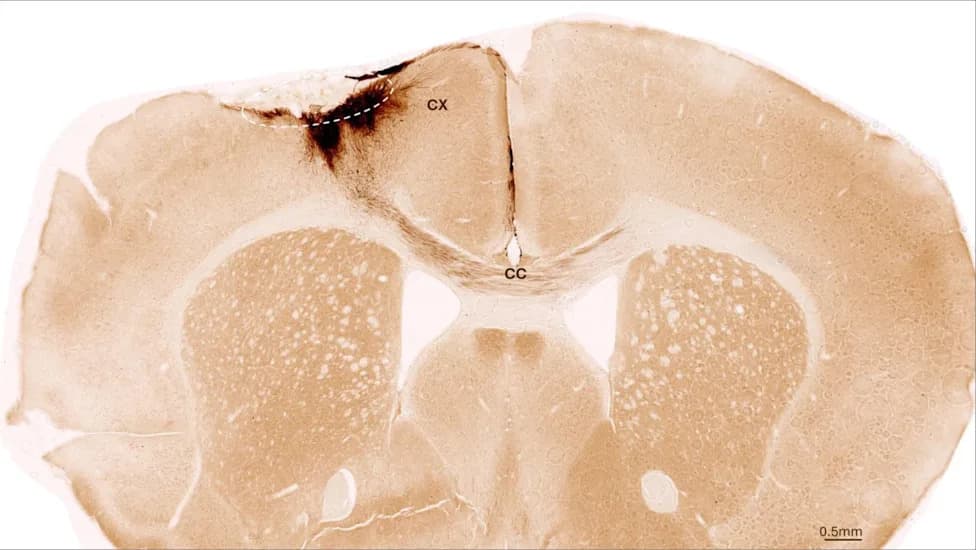
The team engineered mice that lack much of their cortex and transplanted roughly 4 million human cortical neurons into the vacant regions that originally contained about 14 million mouse neurons. Because human neurons mature far more slowly than mouse neurons, removing the host cortex gives the implanted human cells time to integrate before the host brain completes its wiring.
Main Findings
Over weeks to months the implanted human cells expanded, formed connections, and appeared to contribute to behavior. Compared with cortex-depleted controls, mice receiving human neurons performed better on memory and social-behavior tests. They also displayed a human-like vulnerability to oxygen deprivation, a response that standard mice do not show and that could make this model useful for studying hypoxia-related conditions.
Potential Applications
Scientists say this approach could improve preclinical studies of disorders linked to disrupted brain development or injury, including cerebral palsy, intellectual disability, and epileptic encephalopathies. Because many treatments that succeed in standard animal tests fail in humans, a model that better reflects human neuronal behavior could help design safer, more effective therapies.
Limitations And Ethical Safeguards
The researchers emphasize important caveats: the implanted neurons did not form a typical layered human cortex, and the experiment was halted before the human cells reached later developmental stages some associate with higher cognitive features. Investigators built ethical limits into the study from the outset. As Nita Farahany (Duke) — an external ethics board member for the project — noted, the team set deliberate boundaries, including stopping the study before further maturation of human neurons.
“This is not going to replace all the models we had before, but it's going to provide us access to other aspects of human brain function that would be very difficult to study otherwise,”
“Surprisingly, the animal can adapt. It's incredible to see that,”
Broader Implications
As human neurons survive longer and form more complex circuits, ethical concerns increase—especially if similar techniques are applied to larger or longer-lived animals such as pigs or non-human primates. Institutions and regulators may need clearer guidance on acceptable practices. The study also underscores the urgency to improve animal models amid growing evidence that environmental threats such as PFAS, air pollution and microplastics can affect brain health—areas where standard models may fall short.
Conclusion: The work offers a promising new tool for investigating human-relevant neural processes and disorders, while raising important ethical questions that demand careful oversight as research scales up.
Help us improve.