The Senate Permanent Subcommittee on Investigations report “Tethered to Terrorism” finds that 84% of 846 wallets linked to Iran transacted mainly in Tether’s USDT, according to blockchain analysis of OFAC and Israeli-designated wallets from June 2021–Aug 2026. The report says two sanctioned smugglers moved over $603 million in USDT through a network tied to Hezbollah, the Houthis and Iranian banks, and that the network facilitated drone and military equipment trades. Senator Richard Blumenthal has asked federal prosecutors and the Treasury to investigate Tether’s AML and sanctions compliance; Tether says it has helped freeze hundreds of millions of dollars and cooperates with authorities.
Senate Report: 84% Of Iran-Linked Crypto Wallets Used Tether’s USDT — Blumenthal Calls It A “Superhighway” For Sanctions Evasion
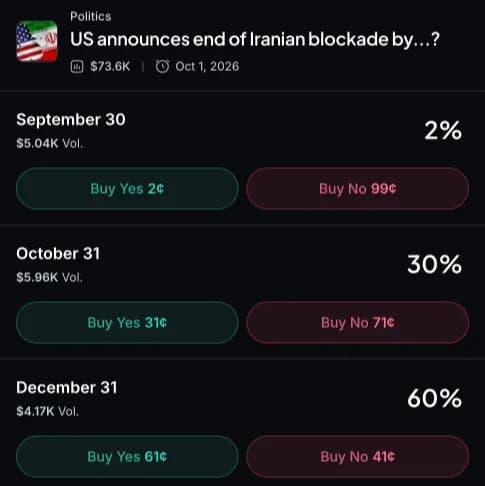
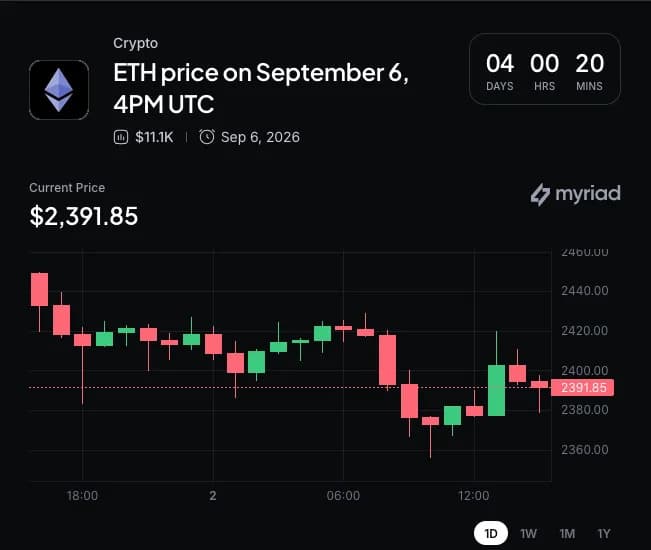
Myriad: U.S. announces end of Iranian blockade by...? Click to make your prediction.
A Senate subcommittee report titled “Tethered to Terrorism” concludes that a large majority of cryptocurrency wallets linked to Iran and its regional proxies relied primarily on Tether’s USDT stablecoin, raising fresh questions about how digital assets are used to evade sanctions.
The analysis, prepared by Democratic staff for the Senate Permanent Subcommittee on Investigations where Sen. Richard Blumenthal (D‑CT) is the ranking member, examined blockchain records for 846 wallets identified by the U.S. Treasury’s Office of Foreign Assets Control (OFAC) and Israel’s National Bureau for Counter Terror Financing between June 2021 and August 2026. Overall, the report finds that 84% of those wallets transacted exclusively or almost exclusively in USDT. The figure reflects variation between data sets: 87% of the 757 wallets designated by the Israeli bureau primarily used USDT, while 57% of the 101 wallets designated by OFAC did so.
Scale And Network
The subcommittee highlights two sanctioned Iranian oil smugglers, Alireza Derakhshan and Arash Estaki Alivand, who allegedly moved more than $603 million in USDT from 2021 to 2025 through a network the report says reached Hezbollah, the Houthis and Iranian financial institutions. Investigators also say there is evidence this same network was used to buy and sell drones and other military equipment.
Compliance Concerns
The report states that, before 2024, Tether did not "comprehensively and consistently freeze" wallets that counter‑terrorism agencies had designated. In one documented case the subcommittee cites, $34.6 million continued to circulate through wallets after they had been designated. The report notes Tether describes its compliance with OFAC as "voluntary" and says the company follows OFAC "guidelines," a distinction the subcommittee contrasts with the legally binding obligations that apply to regulated banks.
Senator Blumenthal has asked federal law enforcement to investigate. According to the report, he wrote to Treasury Secretary Scott Bessent and Attorney General Todd Blanche requesting formal inquiries into Tether’s anti‑money‑laundering (AML) and sanctions practices. The report also flags potential conflicts of interest tied to Cantor Fitzgerald, which it says owns roughly 5% of Tether and holds a significant share of its assets.
Tether’s Response
Tether issued a statement the same day the subcommittee released its findings, emphasizing cooperation with law enforcement. The company said actions involving USDT helped freeze roughly $550 million across wallets U.S. authorities linked to Iran’s central bank in 2026 — including more than $344 million in April and over $130 million in July — and that, across all cases, it has assisted in freezing more than $4.9 billion while working with more than 340 agencies in 67 countries.
“Public blockchains provide authorities with a level of visibility into the movement of funds that simply does not exist with cash,” said Tether CEO Paolo Ardoino in the company statement. The statement did not directly address the subcommittee’s specific findings.
Regulatory Context
The report comes amid broader U.S. regulatory scrutiny: In May, FinCEN warned about Iran’s use of stablecoins for activities including “minting and moving between large volume stablecoin issuers,” and in August the U.S. Treasury expanded its authority to sanction foreign persons operating in Iran’s digital asset sector.
Implications
The subcommittee frames USDT as a favored vehicle for sanctions evasion and other illicit finance, while Tether points to its cooperation and the traceability of public blockchains. The dispute underscores tensions over how to hold crypto issuers accountable, how enforcement should mirror traditional financial rules, and how policymakers should respond as digital assets are increasingly implicated in geopolitical conflicts.
Help us improve.