UC San Diego researchers report that catestatin (CST), a naturally occurring human peptide, reduced both amyloid and tau accumulation, lowered brain inflammation, and improved cognition and motor skills in mouse models. Unlike many existing approaches, CST appears to act across multiple disease pathways and may also influence brain energy metabolism. The results are preclinical; human safety, dosing and efficacy must be established before clinical testing.
Human Peptide Catestatin (CST) Shows Promise in Mouse Models of Alzheimer’s
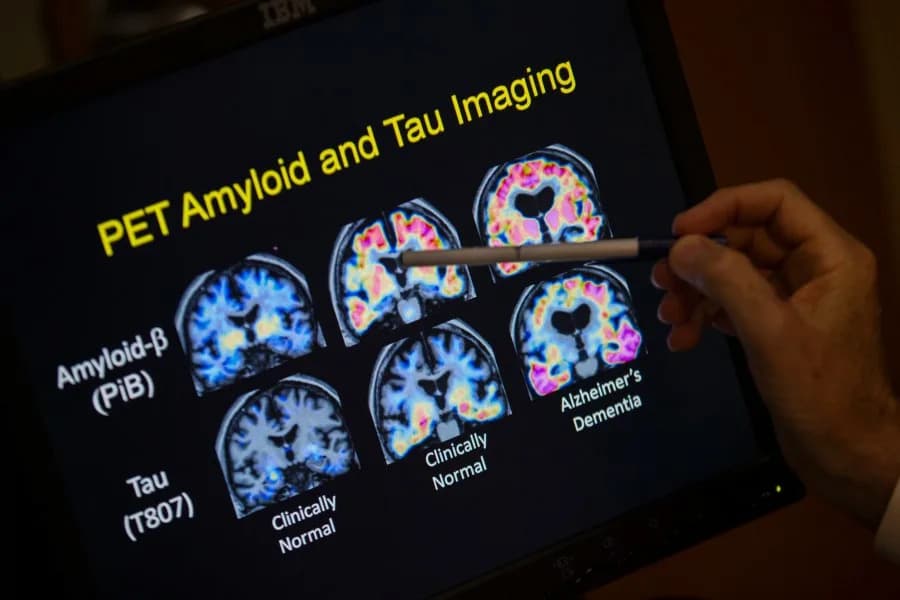
Researchers at the UC San Diego School of Medicine have identified a naturally occurring human peptide, catestatin (CST), that may offer a new strategy against Alzheimer’s disease and related neurodegenerative disorders.
What the Study Found
In experiments described in the journal Molecular Therapy, investigators administered CST to mice that displayed symptoms consistent with neurodegeneration. Treated animals showed a reduction in the accumulation of two hallmark proteins—amyloid and tau—along with decreased brain inflammation. The mice also demonstrated measurable improvements in cognitive tests and motor coordination assessments.
Why This Matters
Most current therapies target either amyloid or tau pathology, but CST appeared to influence both proteinopathies and other disease-linked pathways. The research team, led by senior author Sushil K. Mahata, suggests that peptide-based treatments like CST could act across multiple mechanisms of neurodegeneration to shift the brain toward a healthier state.
"Our findings show that CST can act across several of these disease-associated pathways and shift the brain toward a healthier state," said senior author Sushil K. Mahata. "More broadly, the study suggests that peptide-based therapies may offer a new approach to treating complex neurodegenerative diseases."
Potential Mechanisms and Next Steps
The researchers are also exploring whether CST affects how the brain produces and uses energy, which could improve neuronal resilience to degenerative processes. While the animal data are encouraging, the team cautions that it is not yet known whether CST will have the same effects in humans. Additional studies are required to determine safety, optimal dosing, delivery method and clinical effectiveness before CST could be evaluated in human trials.
Limitations
Findings are limited to preclinical mouse models and do not guarantee human benefit. Translational challenges—differences in biology between mice and people, potential side effects, and appropriate dosing—remain to be addressed in rigorous follow-up studies.
Bottom line: Catestatin is an intriguing candidate that appears to act on multiple Alzheimer’s-related pathways in mice, but substantial further research is needed before it can be considered a human therapy.
Help us improve.