The US has removed Syria from the ITAR list of countries automatically denied US defence exports, enabling arms transfers to be reviewed on a case-by-case basis. The Secretary of State approved the new defence trade policy on August 19, 2026, and directed the change be codified in the Federal Register. Officials frame the move as part of the Trump administration's easing of restrictions, amid efforts by Syria's new leadership to repair ties and seek sanctions relief.
US Removes Syria From Arms-Export Ban, Allows Case-by-Case Weapons Sales
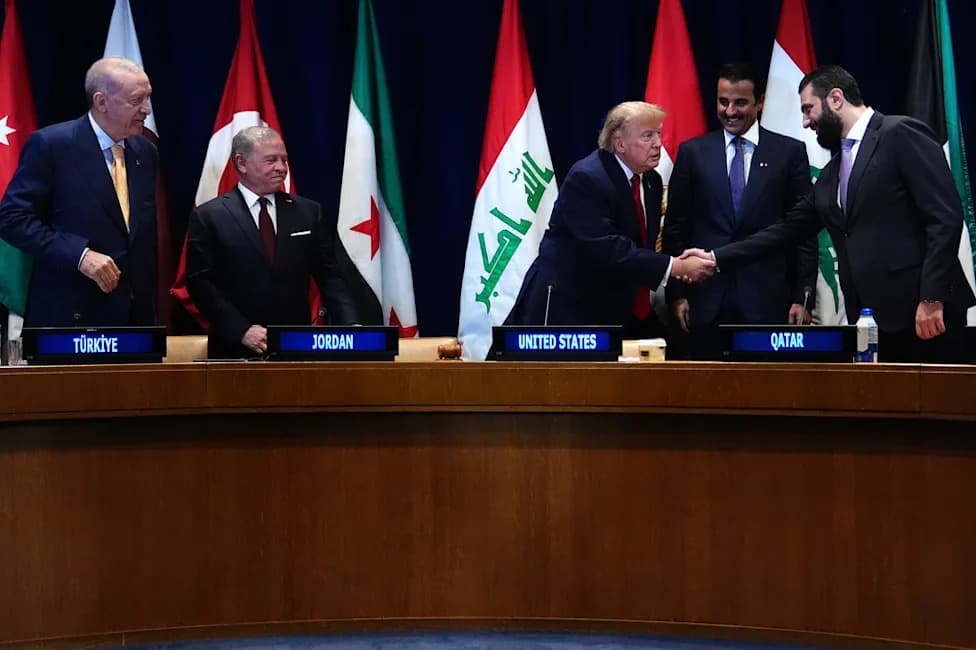
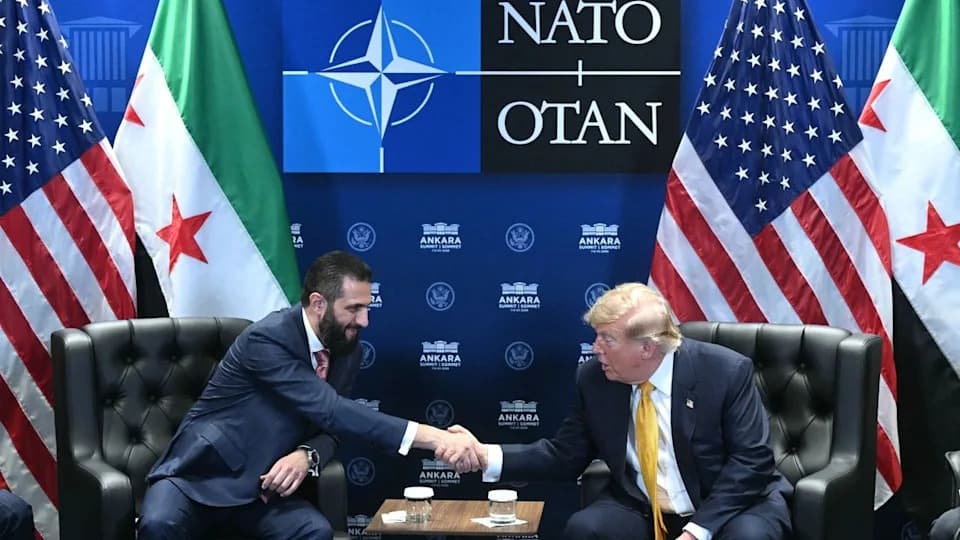
President Donald Trump shakes hands with Syria's President Ahmed al-Sharaa at a multilateral meeting with the Gulf Cooperation Council during the United Nations General Assembly on Tuesday, September 22, 2026, at the UN headquarters [Julia Demaree Nikhinson/AP Photo]
The United States has removed Syria from the list of countries automatically barred from purchasing or importing US defence equipment, a move that opens the door to case-by-case reviews of arms transfers to Damascus.
The US Department of State said it amended the International Traffic in Arms Regulations (ITAR) to delete Syria from the group of countries for which blanket denials of defence exports and services apply. The change allows individual licence applications for defence articles and services destined for, or originating in, Syria to be considered.
On August 19, 2026, the Secretary of State approved a new defence trade policy for Syria that permits the review of defence articles and defence service transfers to Syria on a case-by-case licensing basis, the Federal Register entry said.
The Federal Register notice said the Secretary directed the Department to codify the decision by publishing an amendment to ITAR that removes Syria from the list of countries for which US policy is to deny licences and other approvals for defence exports and imports.
Context
Officials describe the move as part of the Trump administration's broader rollback of restrictions that were imposed during decades of the al-Assad family's rule. The article cited reports that former President Bashar al-Assad was ousted by rebels in December 2024 and that Ahmed al-Sharaa is now Syria's president.
President Ahmed al-Sharaa, described in the report as a former fighter once aligned with the al-Nusra Front, has prioritized restoring relations with the United States and pursuing relief from economic sanctions that he says hinder Syria's recovery after years of civil war.
Other recent steps cited in the announcement include the removal of Syria's designation as a "state sponsor of terrorism" in August (announced by Secretary of State Marco Rubio) and a February statement from US officials that the United States intends to eventually reopen its embassy in Damascus, which has been closed since 2012.
What This Means
The ITAR amendment does not guarantee arms sales to Syria; it changes the legal framework so that licence applications can be evaluated individually. Each transfer would still require a licence and would be subject to review under US law and foreign policy considerations.
Observers say the decision signals a significant shift in US policy toward Syria and could have diplomatic and regional security implications, depending on how licence requests are handled going forward.
Help us improve.