President Trump’s three‑day state visit with Xi Jinping mixed ceremony with criticism, as some Republicans questioned the lavish welcome. Rising gas and grocery prices, the ongoing Iran war and a Sept. 16 Fed rate hike have driven public concern and pushed Trump’s approval to a career low in recent polls. Several GOP lawmakers and candidates are distancing themselves from the administration over the conflict and its economic fallout as the Nov. 3 midterms approach.
Rising Prices, Slipping Approval, Lingering War: Trump Faces Domestic Backlash After Xi Visit
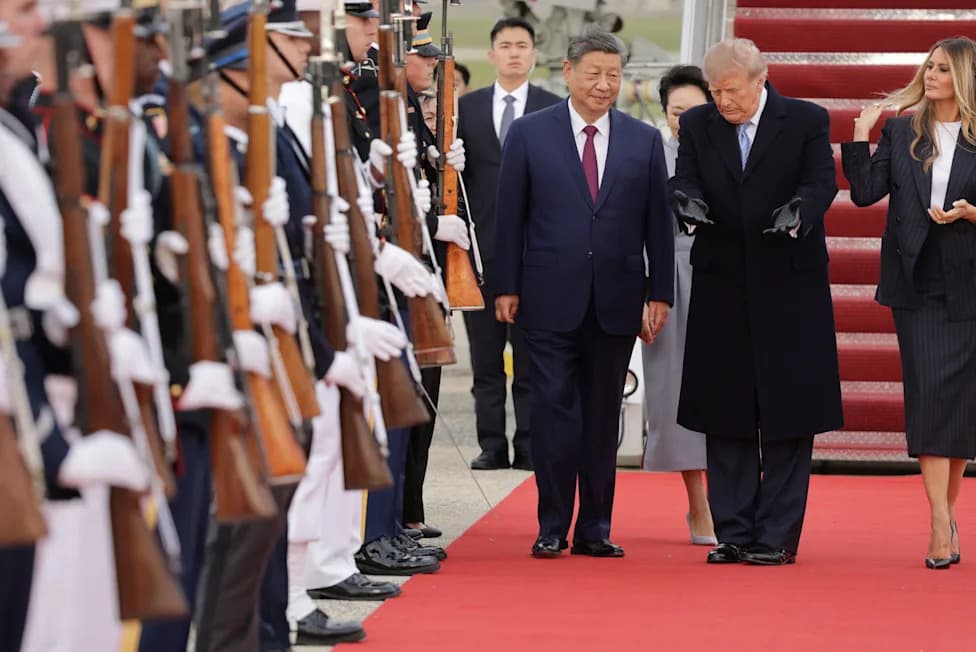
President Donald Trump shows the way to Chinese President Xi Jinping as he arrives ahead of a state visit at Joint Base Andrews, Md. on Sept. 23, 2026.(Jonathan Ernst, REUTERS)
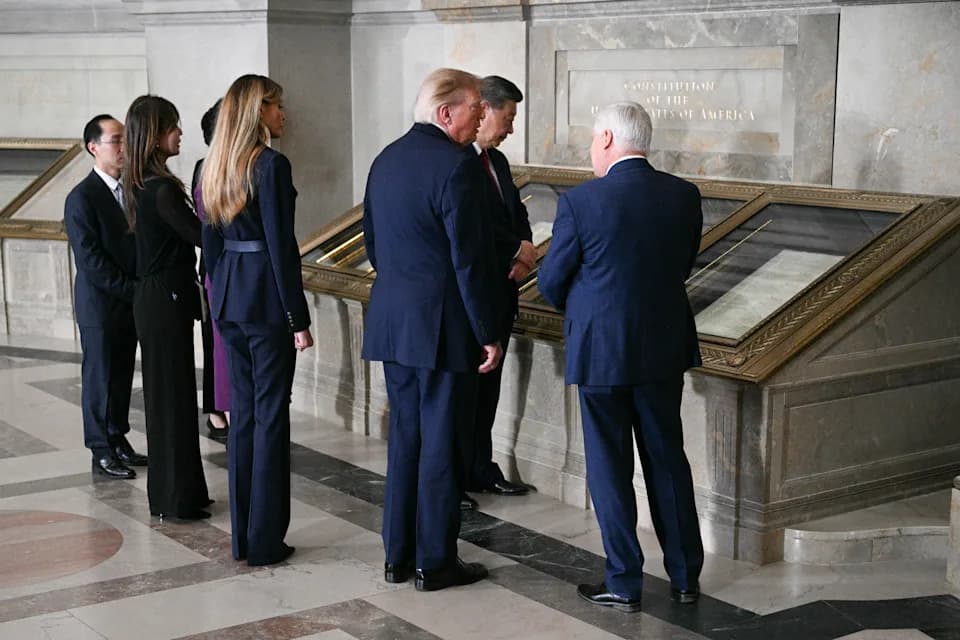
WASHINGTON — President Donald Trump’s three-day state visit with Chinese President Xi Jinping combined ceremony and diplomacy: a red‑carpet arrival, a guided tour of the National Archives and a state dinner that featured yellow squash velouté and sesame‑crusted sea bass.
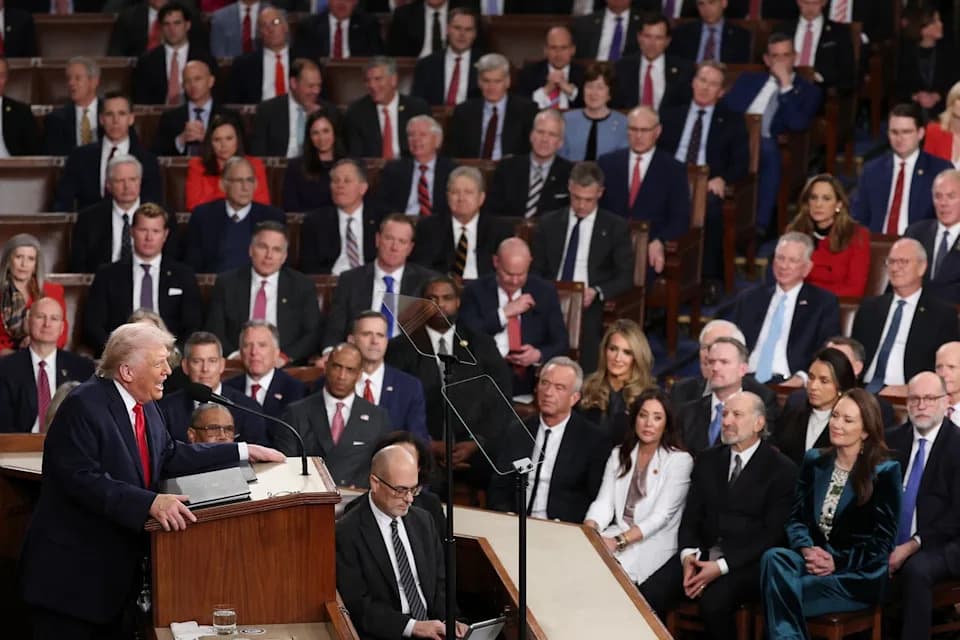
But the pomp drew sharp criticism from within his own party. "Quite frankly, had the White House asked me for advice, I would have suggested the president not invite Xi Jinping to Washington for such a lavish welcome here in the United States of America based on all of the troubling issues we have with President Xi and the Chinese Communist Party," Sen. Roger Wicker (R‑Miss.) told the Senate on Sept. 22.
Wicker is among a growing number of Republicans publicly at odds with the president. Their dissent comes as voters list the rising cost of living as a top concern ahead of the Nov. 3 midterm elections — a problem many connect to the ongoing war with Iran and recent fuel and food price increases.
Campaigning Amid Foreign Policy Focus
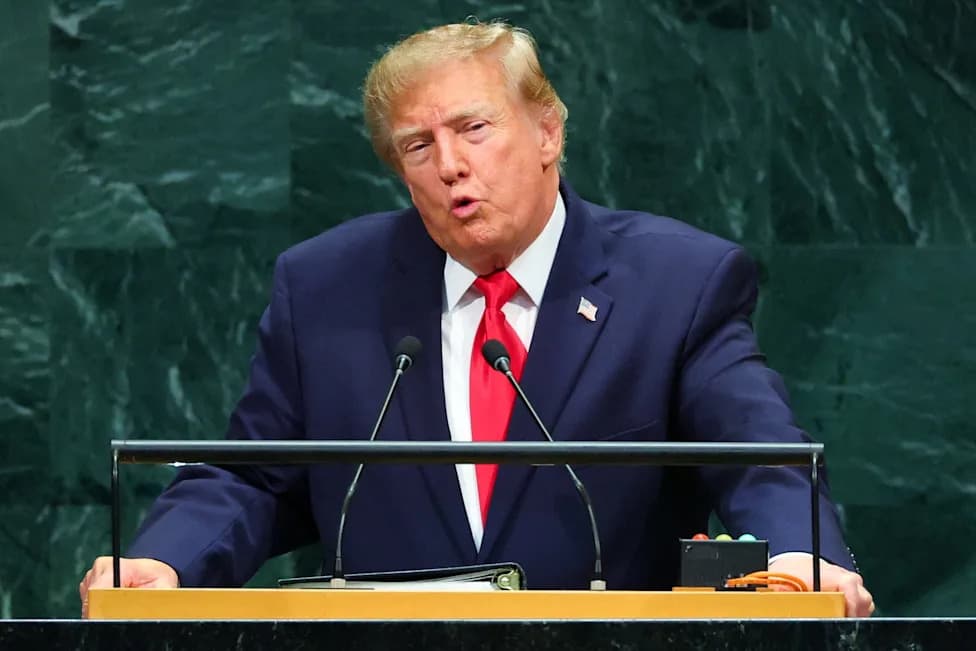
Trump has vowed an aggressive campaign push in the final month before the midterms in about three dozen competitive races, saying at a Sept. 2 Rose Garden dinner that his intervention can turn tight contests. Since Labor Day, however, his schedule has been heavy on foreign policy: a Sept. 12–13 trip to Ireland that included a meeting with Taoiseach Micheál Martin and attendance at a golf event at his Doonbeg resort, followed by a speech at the United Nations on Sept. 22 where he issued stark warnings about Iran and other adversaries.
That foreign‑policy emphasis has had political consequences. Some Republican candidates have distanced themselves from the president — removing endorsements from websites or calling for an end to the Iran conflict — as voters face higher grocery, gas and utility bills.
Polls, Prices and Political Pain
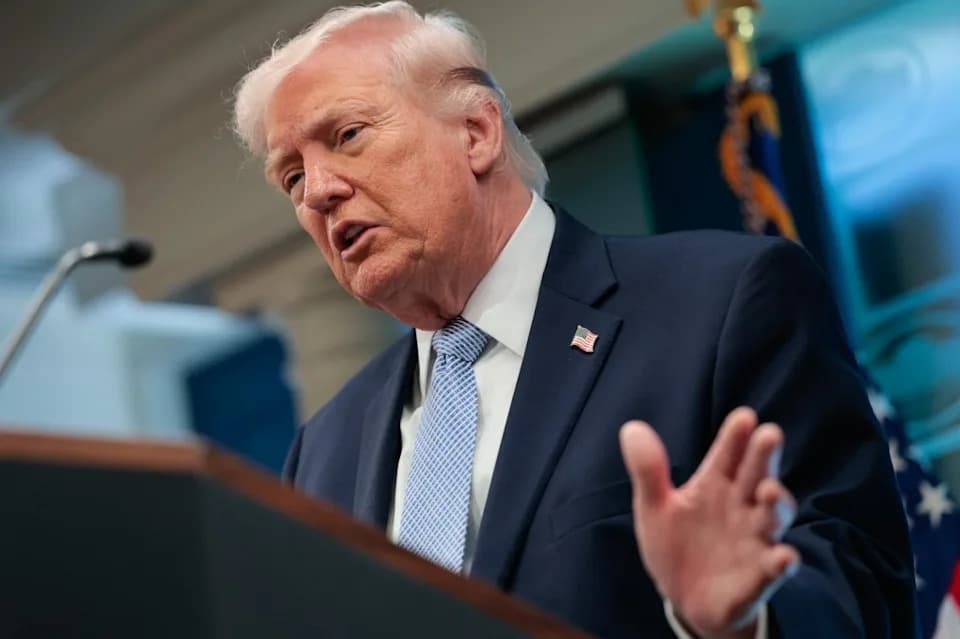
Recent polls show the political impact. A Reuters/Ipsos poll of 1,277 adults released Sept. 21 put Trump’s approval rating at 32 percent, the lowest of his career; only 17 percent approved of his handling of the cost of living. The same poll found 82 percent of respondents expected the Iran conflict to continue for an "extended period of time." Quinnipiac and Associated Press/KFF surveys similarly show broad disapproval of his handling of the economy and foreign policy among key voter groups.
"In May, he said he was focused on Iran and didn't care 'even a little bit' about the war's economic impact," said John Pitney Jr., a political scientist at Claremont McKenna College. "That hurts. The war itself hurts. People get a reminder of the cost every time they drive past a gas station."
Fuel prices have climbed with tensions in the Strait of Hormuz. According to AAA, average gas prices were $4.49 per gallon on Sept. 25 (up from $2.87 in late January), while diesel averaged $6.50 per gallon after surpassing $6 for the first time earlier in September. Diesel spikes amplify costs across the economy because of higher transportation and delivery expenses.
Republican Frictions and the Iran War
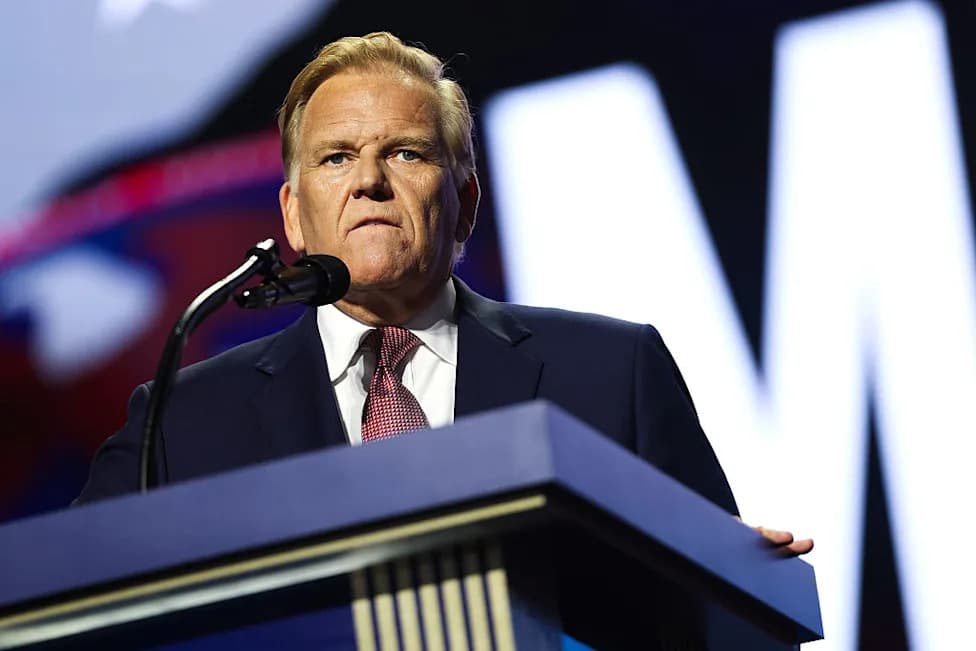
Some Republicans in Congress have openly pushed to end the war. On Sept. 24 four Senate Republicans — Lisa Murkowski (Alaska), Thom Tillis (N.C.), Rand Paul (Ky.) and Susan Collins (Maine) — voted for a resolution to end U.S. involvement, though the measure failed. At the same time, candidates such as former Rep. Mike Rogers (R‑Mich.) and Rep. Ashley Hinson (R‑Iowa) have criticized the war's economic toll while sometimes diverging on votes and rhetoric.
When critics questioned the White House welcome for Xi, Sen. Marco Rubio (R‑Fla.) — speaking at the U.N. General Assembly — responded that high‑level engagement between the world’s two largest economies and militaries is essential, calling it "irresponsible" to rule out such meetings.
Economic Headwinds: Fed, Mortgages and Messaging
Domestic economic challenges have added to the pressure. The Federal Reserve raised interest rates on Sept. 16 — the first increase since July 2023 — as officials seek to rein in inflation. Mortgage rates climbed above 7 percent, complicating housing affordability, while the Labor Department reported a notable monthly rise in the Consumer Price Index earlier in September.
Trump has argued that short‑term economic pain is worth preventing Iran from obtaining a nuclear weapon and has predicted oil prices will fall once the conflict ends. At the U.N., he combined tough foreign‑policy rhetoric with domestic policy promises — from tax changes to prescription drug negotiations — aimed at reassuring voters ahead of the midterms.
Outlook
As the campaign enters its final weeks, Trump faces a complex political landscape: foreign‑policy confrontations that command headlines and a pocketbook issue — the rising cost of living — that is directly affecting voters. How the White House balances high‑stakes diplomacy with pocketbook politics will be a crucial factor shaping voter sentiment in November.
This article originally appeared on USA TODAY.
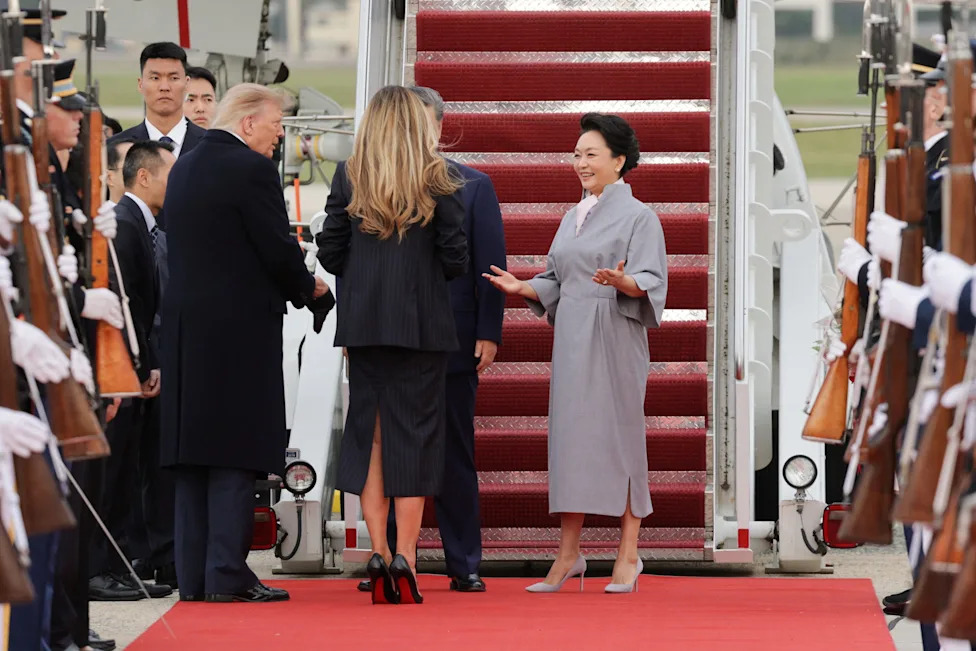
President Donald Trump and first lady Melania Trump greet Chinese President Xi Jinping and his wife Peng Liyuan as they arrive ahead of a state visit at Joint Base Andrews, Md. on Sept. 23, 2026.(Jonathan Ernst, REUTERS)
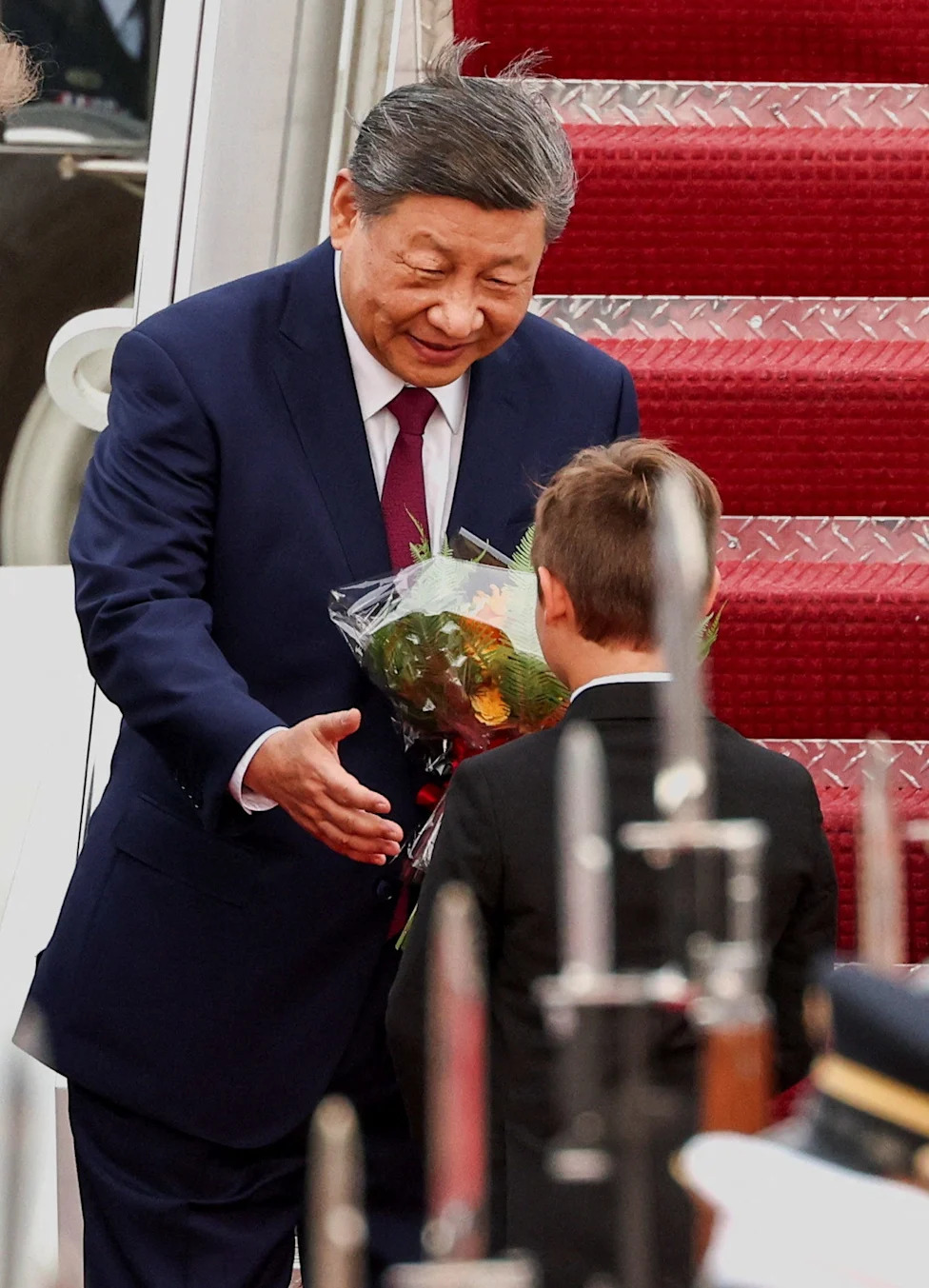
China's President Xi Jinping receives flowers upon arrival at Joint Base Andrews, Md. on Sept. 23, 2026.(Kevin Lamarque, REUTERS)
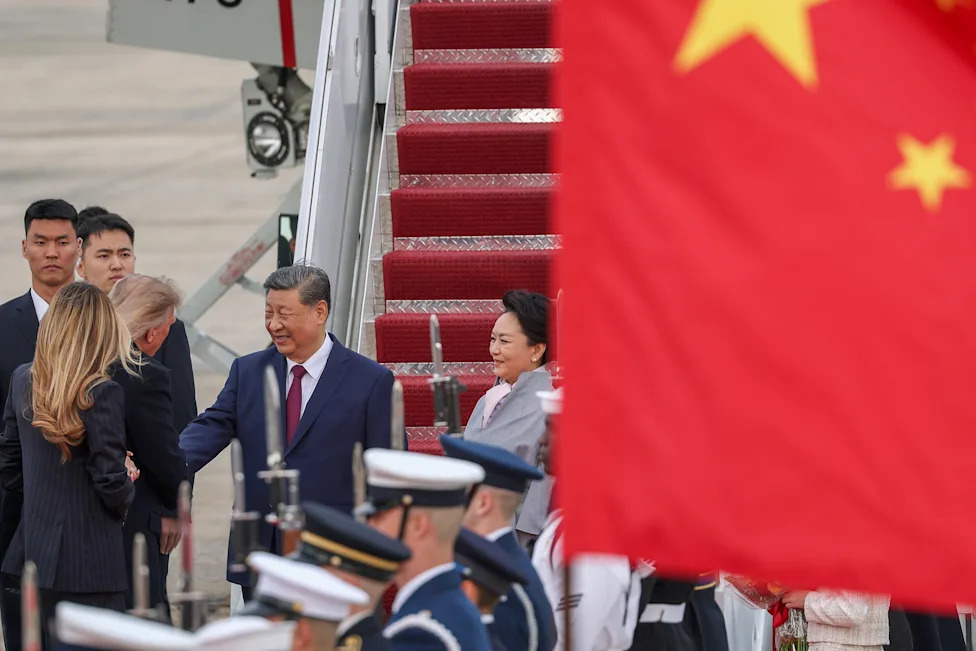
President Donald Trump greets Chinese President Xi Jinping during an arrival ceremony on September 23, 2026 at Joint Base Andrews, Md.(Win McNamee, Getty Images)
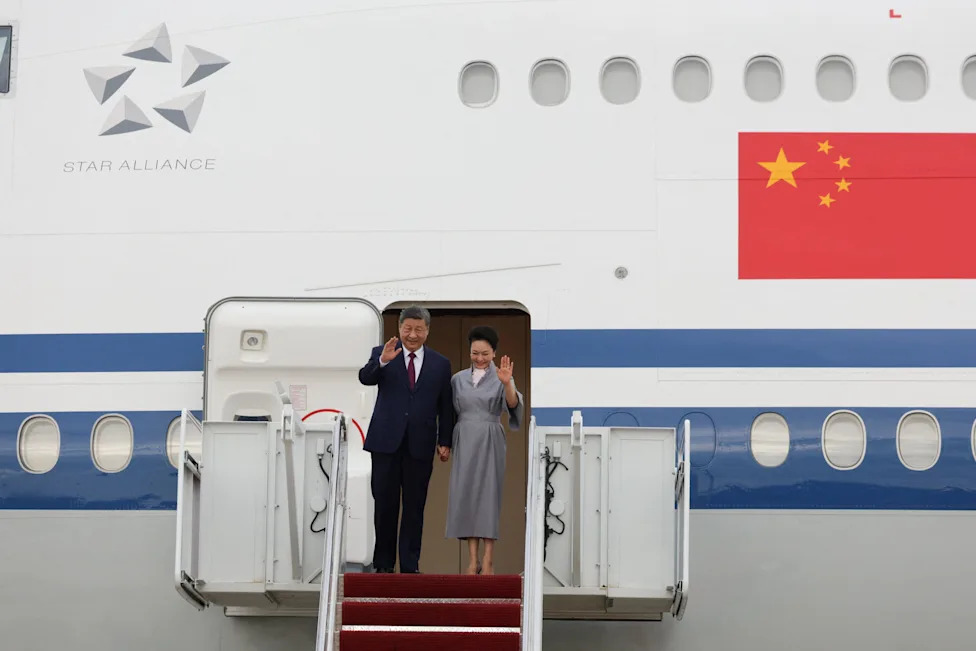
China's President Xi Jinping and his wife Peng Liyuan wave as they disembark upon their arrival ahead of a state visit at Joint Base Andrews, Md. on Sept.23, 2026.(Jonathan Ernst, REUTERS)
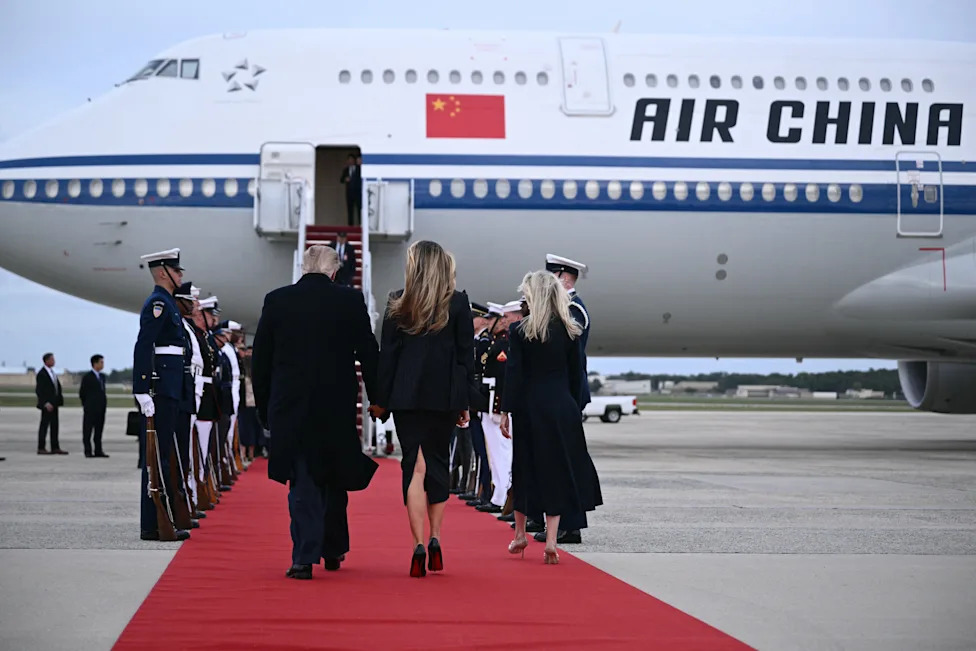
President Donald Trump and First Lady Melania Trump walk to greet Chinese President Xi Jinping at Joint Base Andrews in Maryland on Sept. 23, 2026.(BRENDAN SMIALOWSKI, AFP via Getty Images)
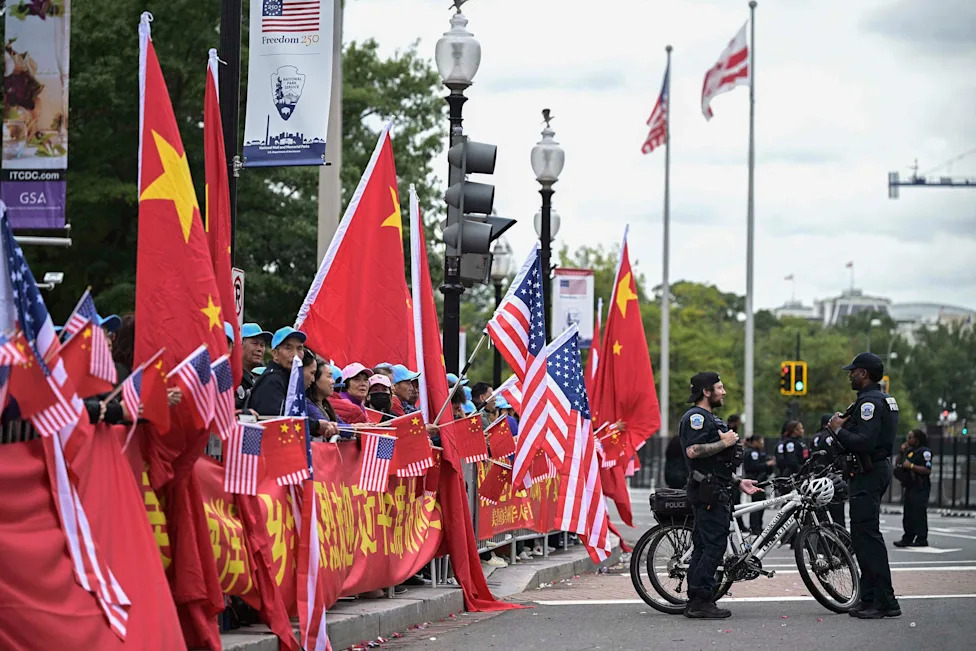
People holding Chinese and American flags are seen near DC Metropolitan Police officers patrolling outside the Waldorf Astoria hotel as streets and sidewalks in the area are closed ahead of Chinese President Xi Jinping's visit, in Washington, DC, on Sept. 23, 2026.(OLIVER CONTRERAS, AFP via Getty Images)
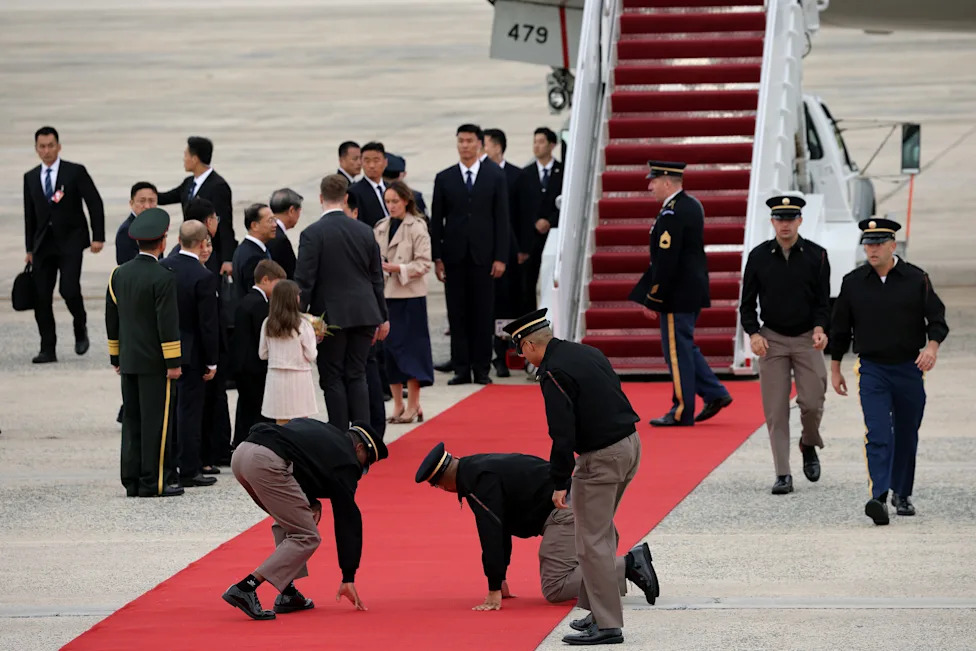
Members of the military set up a red carpet ahead of the arrival of Chinese President Xi Jinping on September 23, 2026 at Joint Base Andrews, Md. President Donald Trump is hosting President Xi for a three-day state visit to Washington, DC where the leaders are expected to discuss trade practices, artificial intelligence and furtheringÊÒstrategic stabilityÓ between their countries.(Win McNamee, Getty Images)
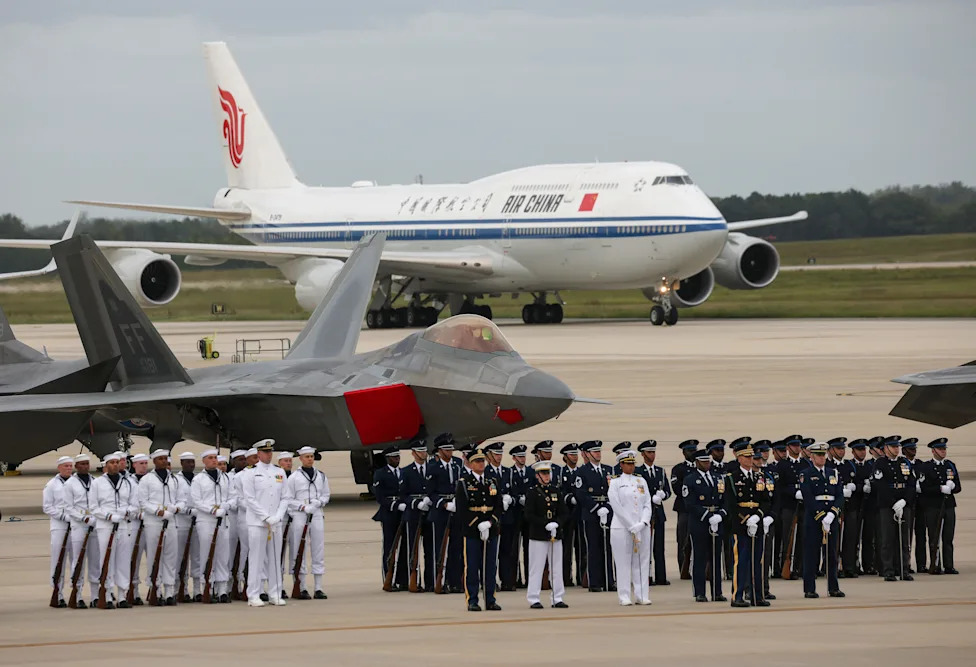
An Air China plane carrying Chinese President Xi Jinping taxis after landing on Sept. 23, 2026 at Joint Base Andrews, Md. President Donald Trump is hosting President Xi for a three-day state visit to Washington, DC, where the leaders are expected to discuss trade practices, artificial intelligence, and furtheringÊÒstrategic stabilityÓ between their countries.(Win McNamee, Getty Images)
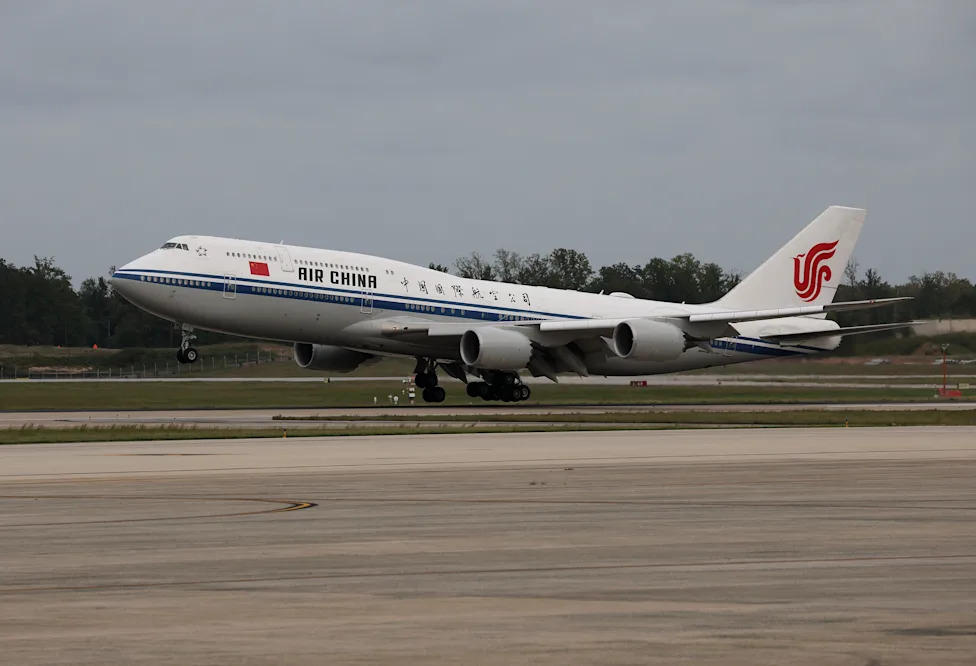
An Air China plane carrying Chinese President Xi Jinping lands on Sept. 23, 2026 at Joint Base Andrews, Md. President Donald Trump is hosting President Xi for a three-day state visit to Washington, DC, where the leaders are expected to discuss trade practices, artificial intelligence, and furtheringÊÒstrategic stabilityÓ between their countries.(Win McNamee, Getty Images)
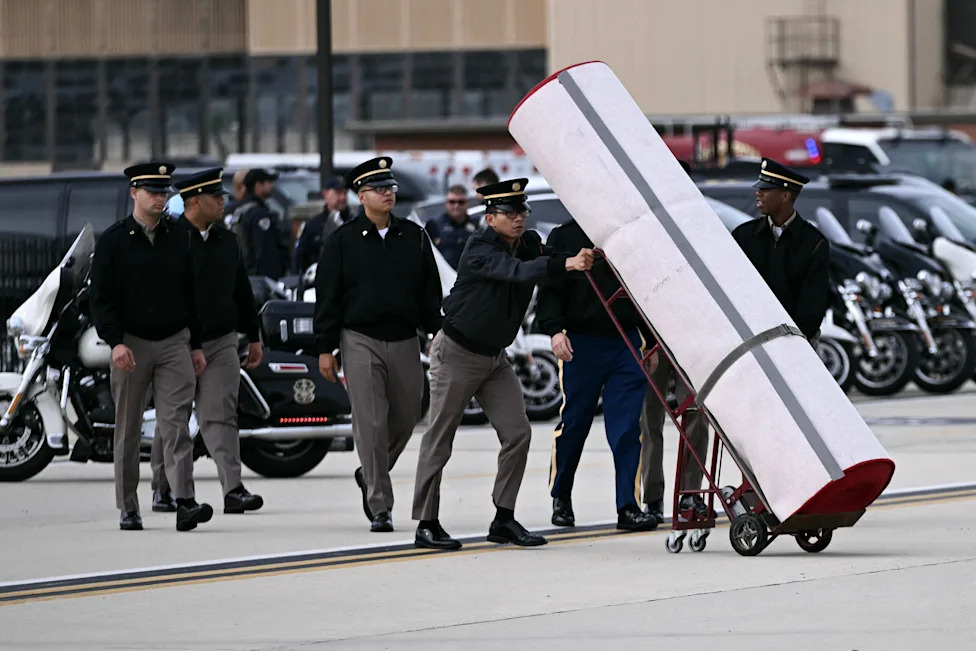
Members of the US Army moves a red carpet into position as preparations take place before US President Donald Trump greets Chinese President Xi Jinping upon his arrival at Joint Base Andrews in Md. on Sept. 23, 2026. Xi is visiting the United States from Sept. 23 to 25.(BRENDAN SMIALOWSKI, AFP via Getty Images)
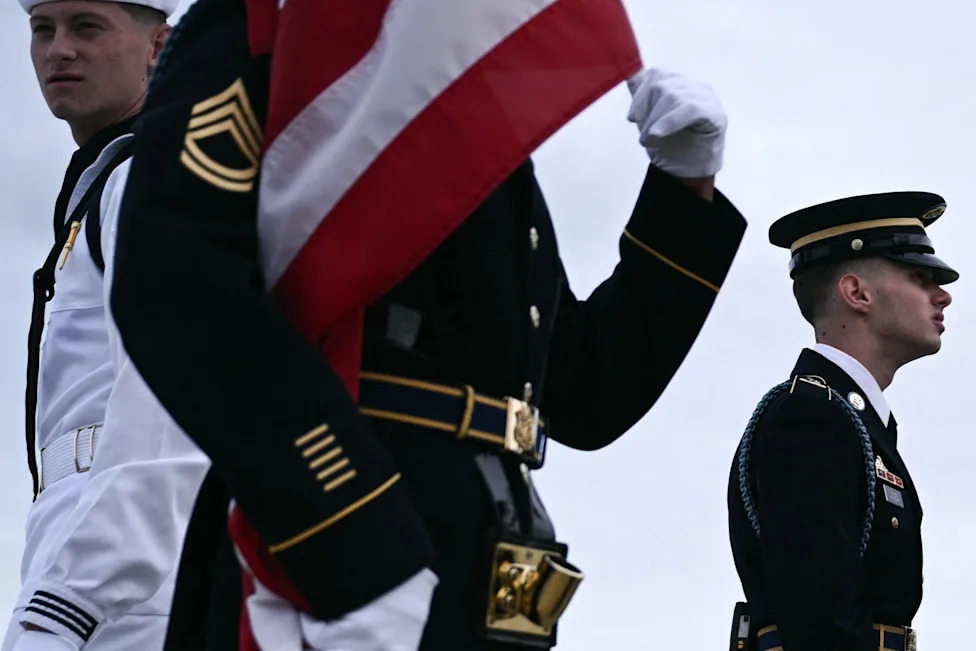
Members of the US military prepare for US President Donald Trump to greet Chinese President Xi Jinping upon his arrival at Joint Base Andrews in Md. on Sept. 23, 2026.(BRENDAN SMIALOWSKI, AFP via Getty Images)
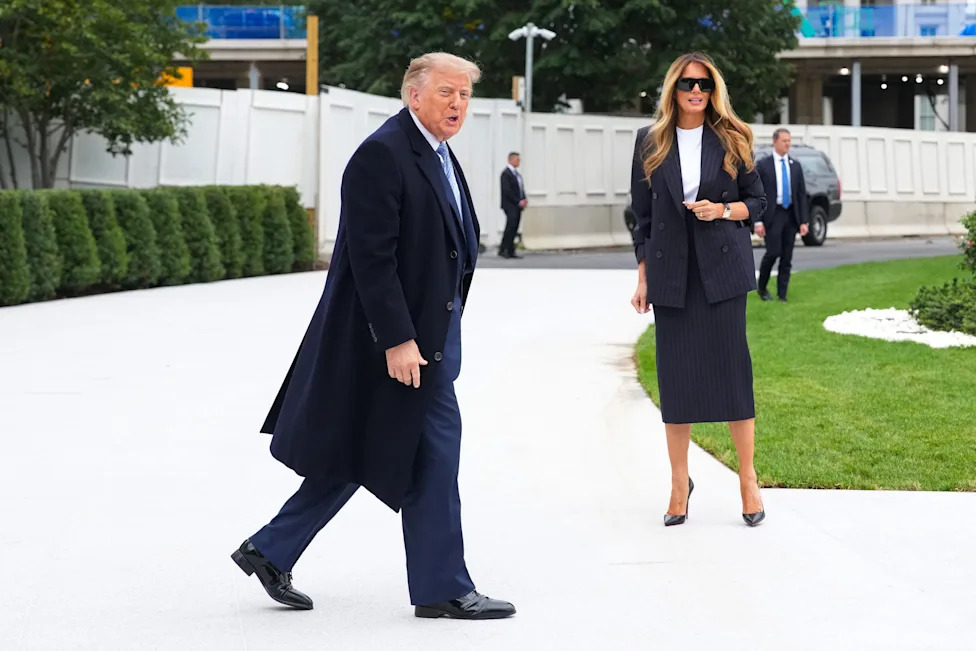
President Donald Trump speaks to members of the media as he walks to board Marine One alongside first lady Melania Trump (R) on the South Lawn of the White House on Sept. 23, 2026 in Washington, DC. Trump is traveling to Joint Base Andrews, Md. to welcome Chinese President Xi Jinping as he arrives for a visit to the United States.(Andrew Harnik, Getty Images)
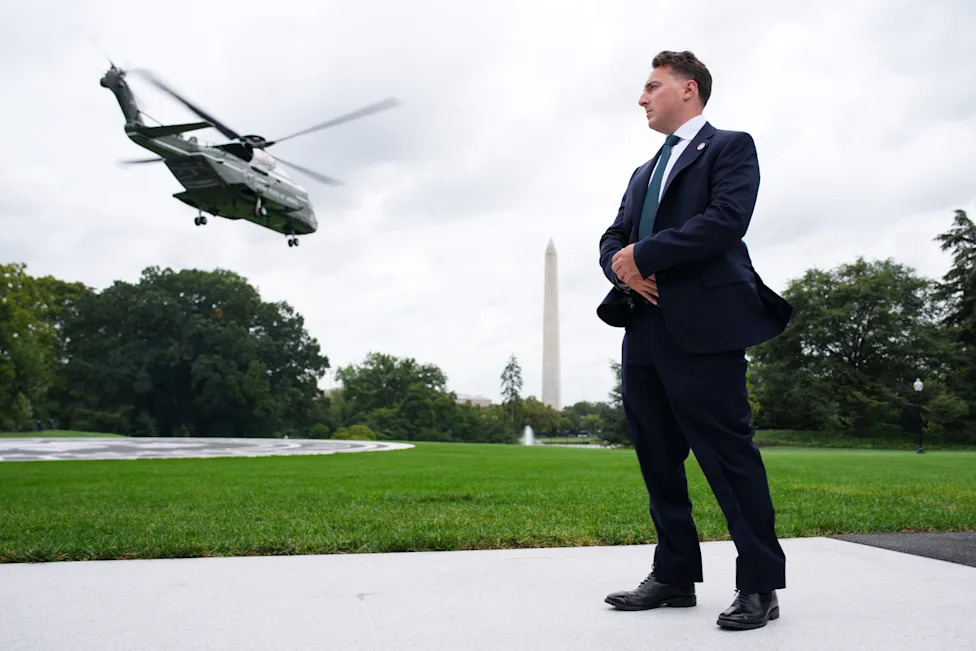
Marine One carrying President Donald Trump and first lady Melania Trump lifts off from the South Lawn of the White House on Sept. 23, 2026 in Washington, DC. Trump is traveling to Joint Base Andrews, Md. to welcome Chinese President Xi Jinping as he arrives for a visit to the United States.(Andrew Harnik, Getty Images)
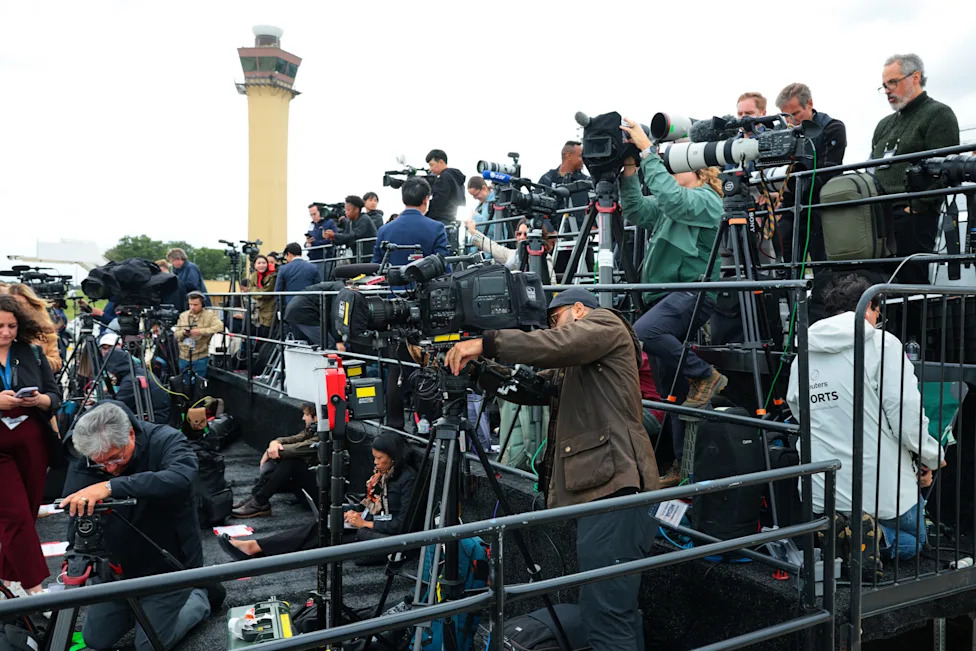
Members of the media await the arrival of Chinese President Xi Jinping on Sept.r 23, 2026 at Joint Base Andrews, Maryland. President Trump is hosting President Xi for a three-day state visit to Washington, DC where the leaders are expected to discuss trade practices, artificial intelligence and furtheringÊÒstrategic stabilityÓ between their countries.(Chip Somodevilla, Getty Images)
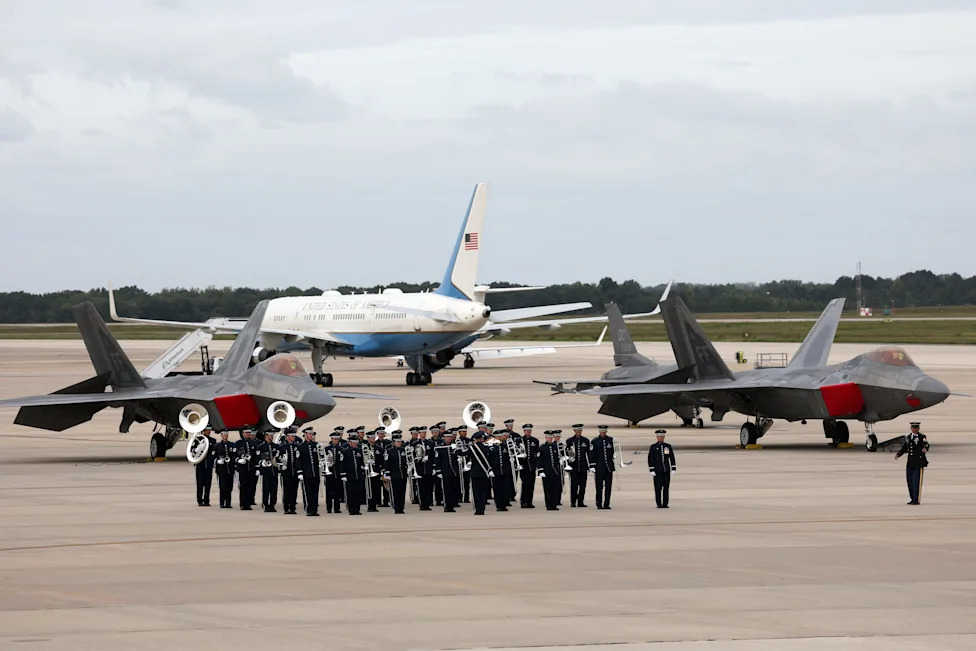
Members of the U.S. Air Force band prepare for the arrival of Chinese President Xi Jinping on Sept. 23, 2026 at Joint Base Andrews, Md. President Trump is hosting President Xi for a three-day state visit to Washington, DC where the leaders are expected to discuss trade practices, artificial intelligence and furtheringÊÒstrategic stabilityÓ between their countries.(Win McNamee, Getty Images)
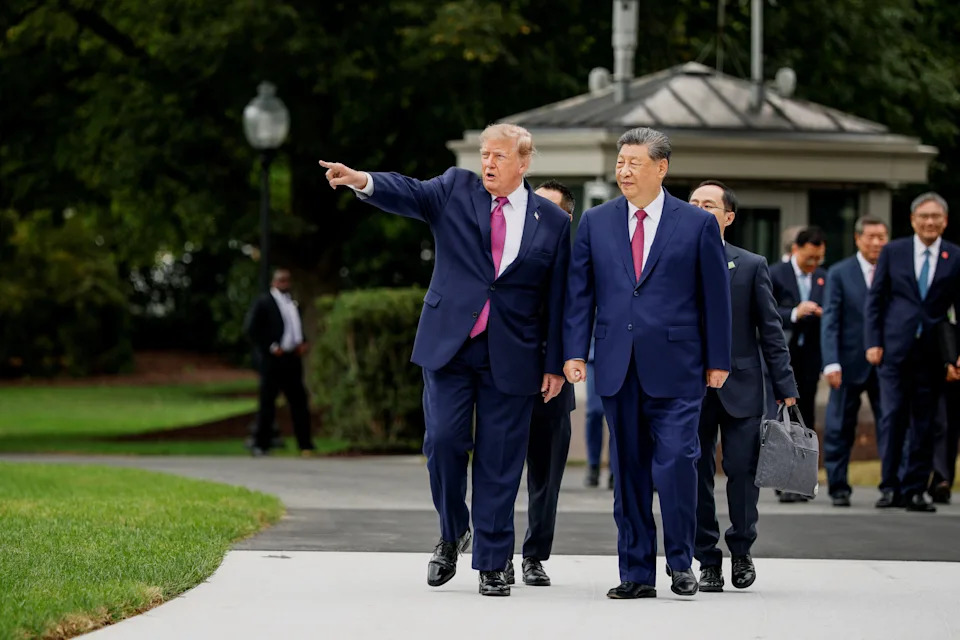
President Donald Trump and Chinese President Xi Jinping walk together at the White House in Washington, D.C., on Sept. 24, 2026.
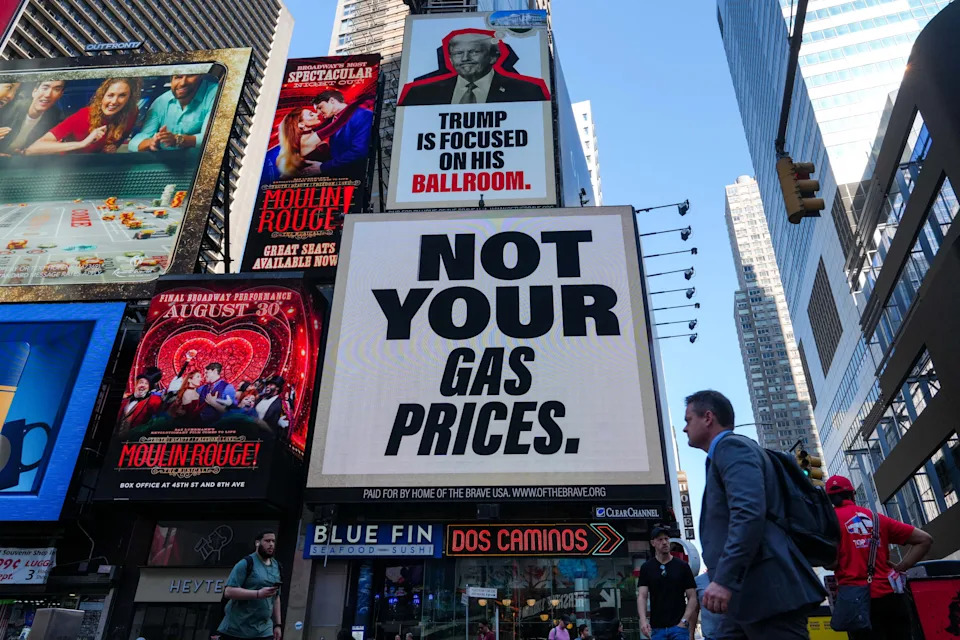
A digital billboard, paid for by Home of the Brave, about President Trump, the White House ballroom and gas prices is displayed in Times Square in New York City, on May 18, 2026.
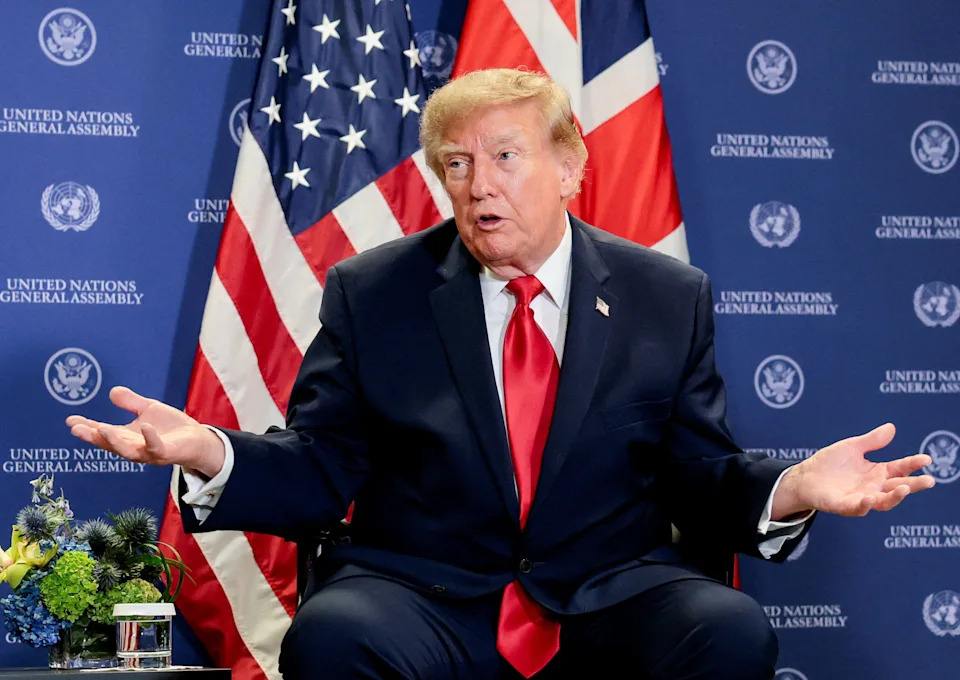
President Donald Trump participates in a bilateral meeting with Britain's Prime Minister Andy Burnham during the 81st United Nations General Assembly (UNGA) in New York City, on Sept. 22, 2026.
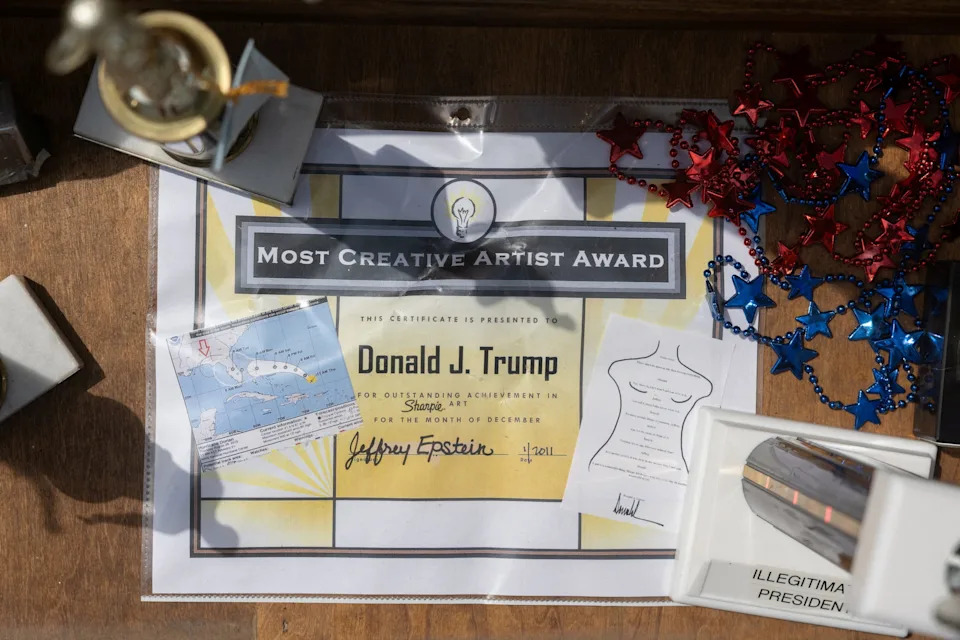
Details of an "Iran war participation trophy" installation, placed by the protest group The Secret Handshake, in New York City, on July 29, 2026.
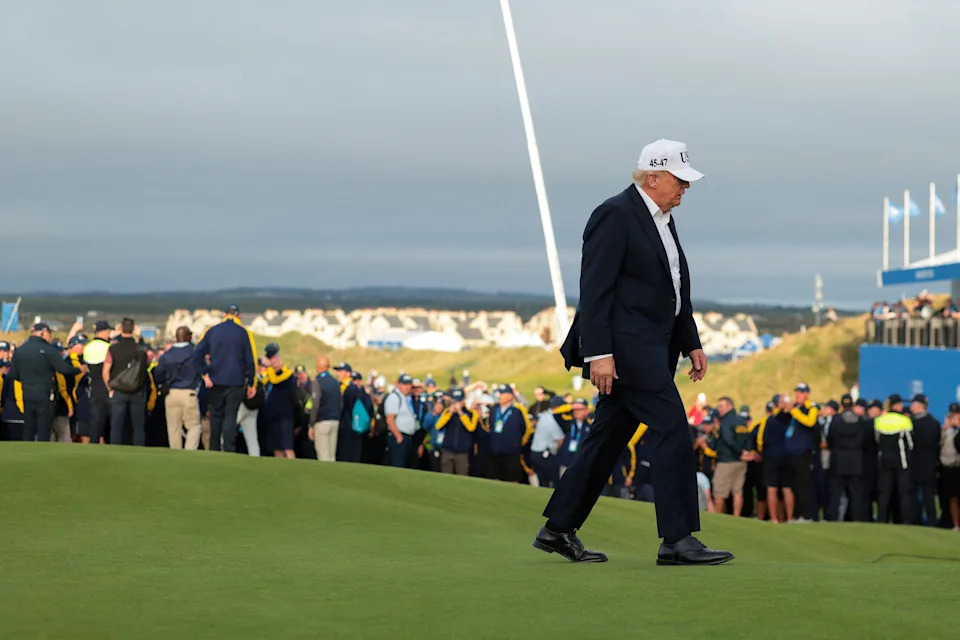
President Donald Trump attends the Amgen Irish Open at Trump International Golf Links in Doonbeg, Ireland, on Sept. 13, 2026.
Help us improve.