Recent polls put President Trump’s approval near historic lows: FiftyPlusOne reports a 34.7% approval and 62% disapproval average. Multiple national and state surveys — including Reuters/Ipsos, Emerson, Economist/YouGov and NPR/Marist — show declining support, especially among independents. Analysts warn these trends could enable Democrats to flip both the House and the Senate in 2026 if they hold through early voting.
Plummeting Trump Approval Could Spell Major Midterm Losses for Republicans
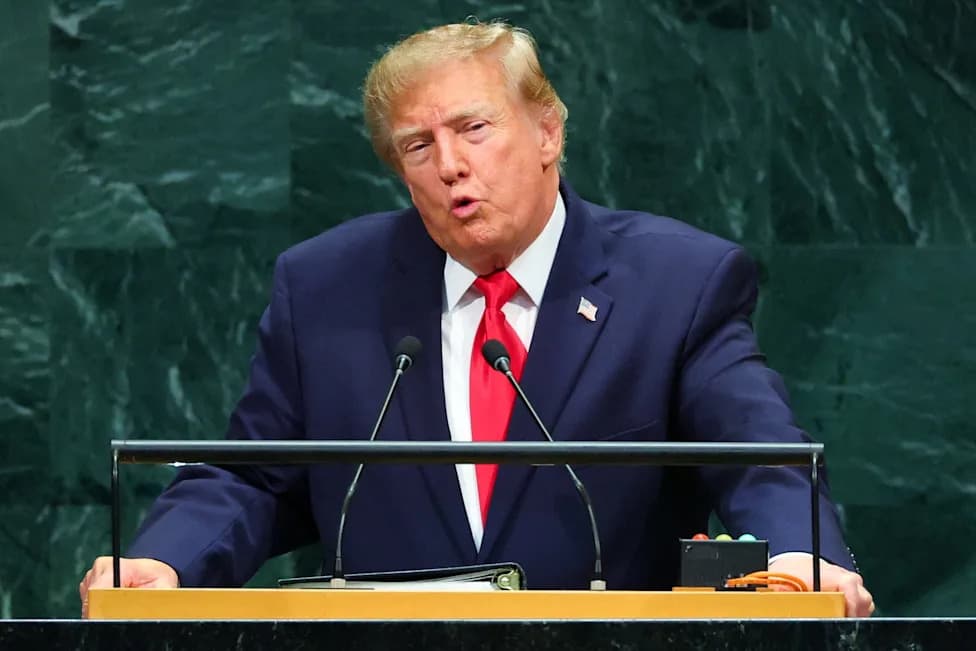
US PresidentDonald Trumpaddresses the 81st United Nations General Assembly at UN headquarters in New York City, US, September 22, 2026.Trump’s speech comes as U.S. allies are increasingly united in their conviction that America can’t be counted on as a reliable partner. Trump asked world leaders to join in isolating Iran economically, to discourage Tehran's nuclear ambitions and attacks on commercial shipping.(Mike Segar, REUTERS)
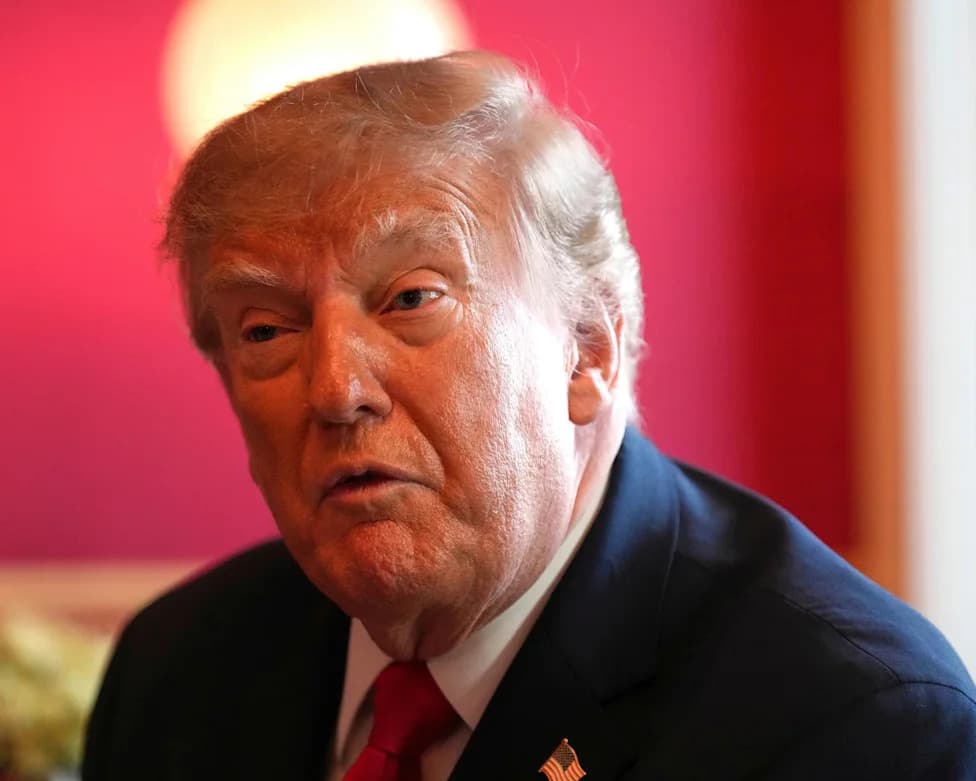
Recent national surveys show President Donald Trump's approval rating at historic lows, a trend analysts warn could produce significant Republican losses in the 2026 midterm elections. Aggregated data and multiple individual polls point to weakening support among independents and voters in key swing states — a dynamic that often influences control of Congress.
What The Polls Show
FiftyPlusOne, a polling and elections tracker that aggregates major surveys, reports an average approval rating of 34.7% for Trump and a 62% disapproval among U.S. adults, down sharply from roughly 52% approval a month into his second term. FiftyPlusOne's model projects Democrats could pick up about 25 House seats and four to five Senate seats, enough to flip control of both chambers.
"The reaction from the public is much more severe than it was during his first presidency," said G. Elliott Morris, FiftyPlusOne's head of analytics. "The wheels have just totally fallen off in the eyes of the public in the last six months."
Individual recent polls underline the slide: a Sept. 21 Reuters/Ipsos survey recorded a career-low 32% approval. The American Research Group reported 29% approval in a separate Sept. 21 survey of 1,100 respondents. An Emerson College poll (Sept. 24) put approval at 39% with nearly 58% disapproval, and an Economist/YouGov poll showed a one-week drop from 40% to 35%. Major polling averages also show negative territory overall (RealClearPolitics: 39% approve / 59.5% disapprove; NYT: 37% / 60%; Silver Bulletin: 37.6% / 59.9%).
State Races Reflect National Trend
State-level surveys suggest the national mood is affecting tight contests. A Sept. 22 Suffolk University poll in Michigan showed Democrat Abdul El-Sayed leading Republican Mike Rogers 47% to 40%, with nearly half of likely voters saying they were casting ballots to change the direction set by President Trump. In Texas, a Sept. 23 Marist poll had Democrat James Talarico ahead of Trump-endorsed Republican Ken Paxton among registered voters, 50% to 44%, with Texas voters far more likely to describe their congressional vote as a vote against Trump than in support of him.
Why Approval Is Falling
Analysts point to several factors dragging Trump's numbers: a struggling economy, high gasoline prices, trade tensions, immigration enforcement issues, and the ongoing war in Iran. Those issues appear to be persuading independent and swing voters to treat congressional ballots as a referendum on the president.
- Independent Voters Tilting Against Trump: Multiple polls show independents favor Democrats for Congress by wide margins and describe their vote as a vote against the president.
- Down-Ballot Impact: Republican candidates in tight races are increasingly describing Trump as a drag on their chances, creating a potential liability in competitive states.
What Analysts Say
Republican pollster Daron Shaw, who conducts polls with Fox News' Decision Desk, estimates Trump's approval among registered and likely voters sits in the high 30s to low 40s and warns that a sustained fall into the mid-30s would create a challenging environment for Republicans. David Paleologos of Suffolk University's Political Research Center emphasized that voters often punish the party in power when household budgets are strained.
While polls can shift and margins matter, the consistent direction across national, state and local surveys — combined with energized Democratic primary turnout and negative public assessments of the economy and foreign policy — strengthens the case that Democrats are positioned for gains unless Trump's standing improves before early voting begins in many states.
Contributors: Fernando Cervantes Jr., Susan Page, USA TODAY
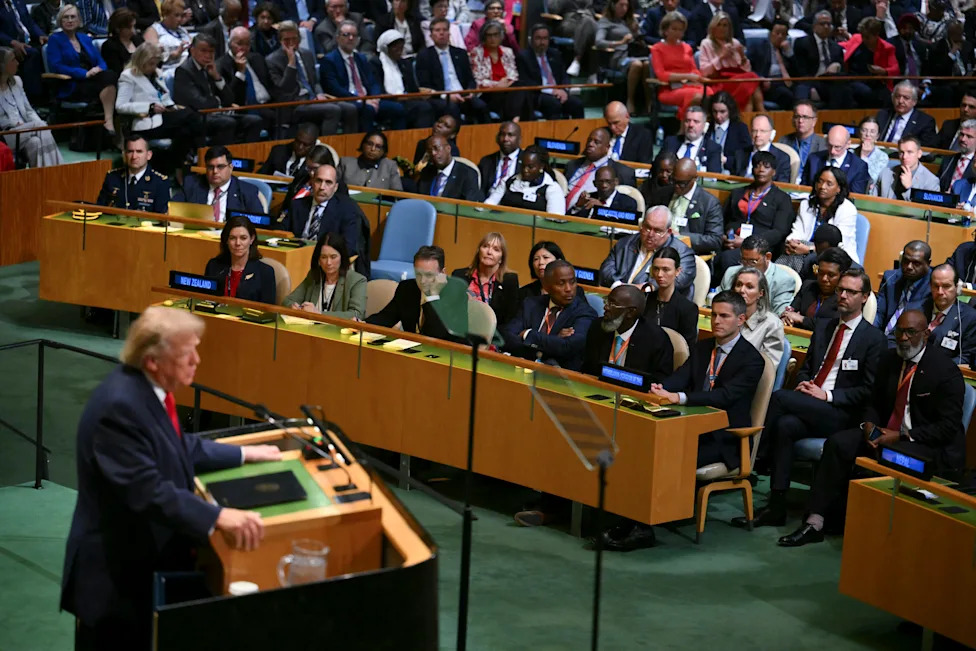
Delegates listen to US President Donald Trump address the 81st United Nations General Assembly at United Nations headquarters in New York on September 22, 2026.(ANGELA WEISS, AFP via Getty Images)
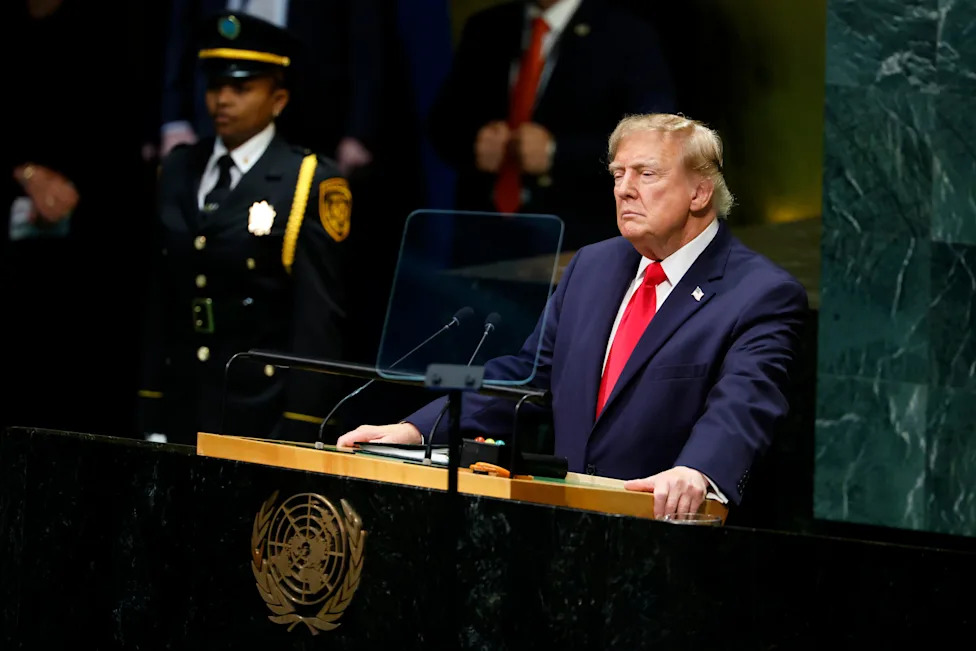
U.S. President Donald Trump speaks during the 81st session of the United Nations (U.N.) General Assembly at U.N. Headquarters on September 22, 2026 in New York City. World leaders have gathered in New York for the annual session of the United Nations General Assembly, with this year's global issues ranging from the threat of artificial intelligence to the continued wars in Ukraine and Gaza.(Chip Somodevilla, Getty Images)
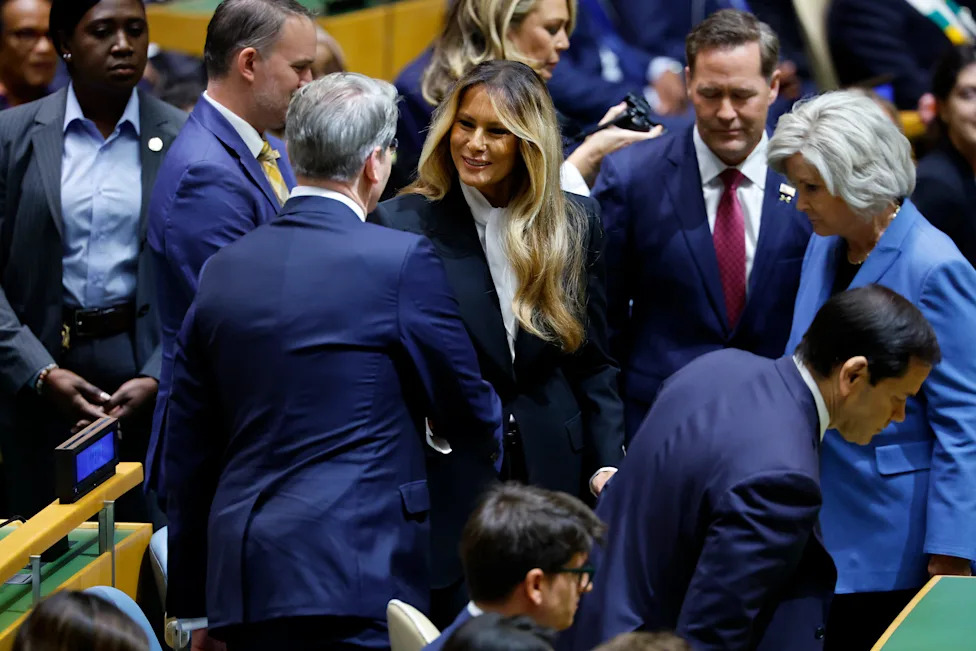
First lady Melania Trump (C) greets U.S. Treasury Secretary Scott Bessent as she arrives with U.S. Trade Representative Jamieson Greer, White House Chief of Staff Susie Wiles and U.S. Secretary of State Marco Rubio during the 81st session of the United Nations (U.N.) General Assembly at U.N. Headquarters on September 22, 2026 in New York City.(Chip Somodevilla, Getty Images)
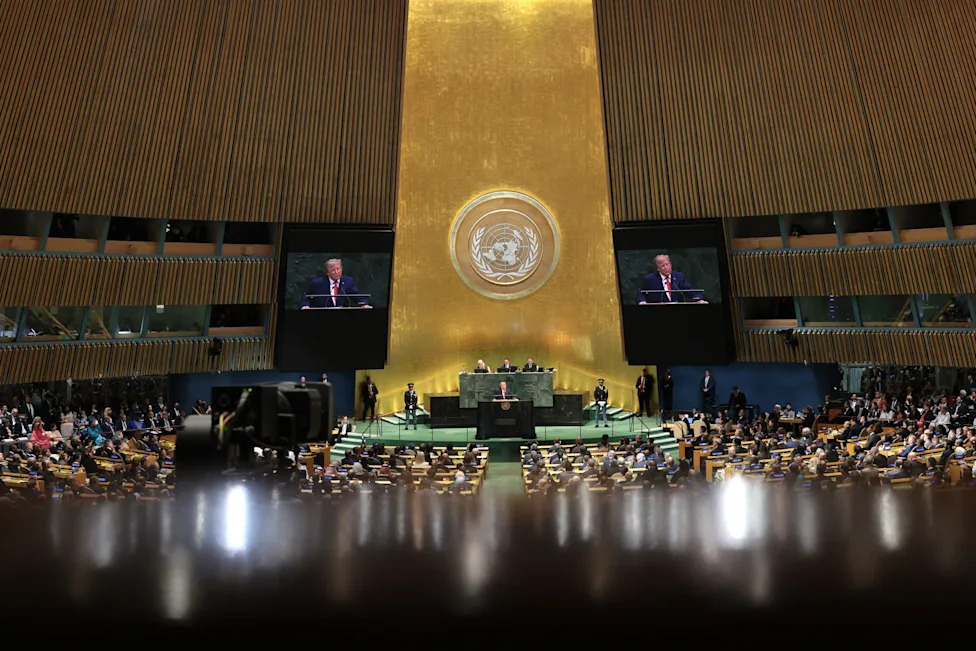
U.S. President Donald Trump speaks during the 81st session of the United Nations (U.N.) General Assembly at U.N. Headquarters on September 22, 2026 in New York City. World leaders have gathered in New York for the annual session of the United Nations General Assembly, with this year's global issues ranging from the threat of artificial intelligence to the continued wars in Ukraine and Gaza.(Michael M. Santiago, Getty Images)
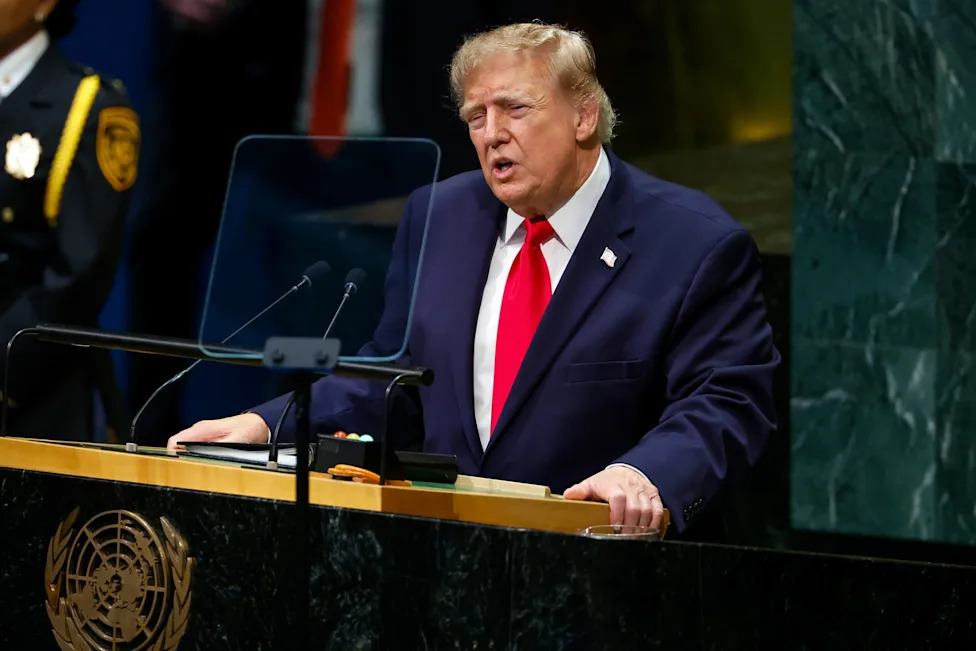
U.S. President Donald Trump speaks during the 81st session of the United Nations (U.N.) General Assembly at U.N. Headquarters on September 22, 2026 in New York City.(Chip Somodevilla, Getty Images)
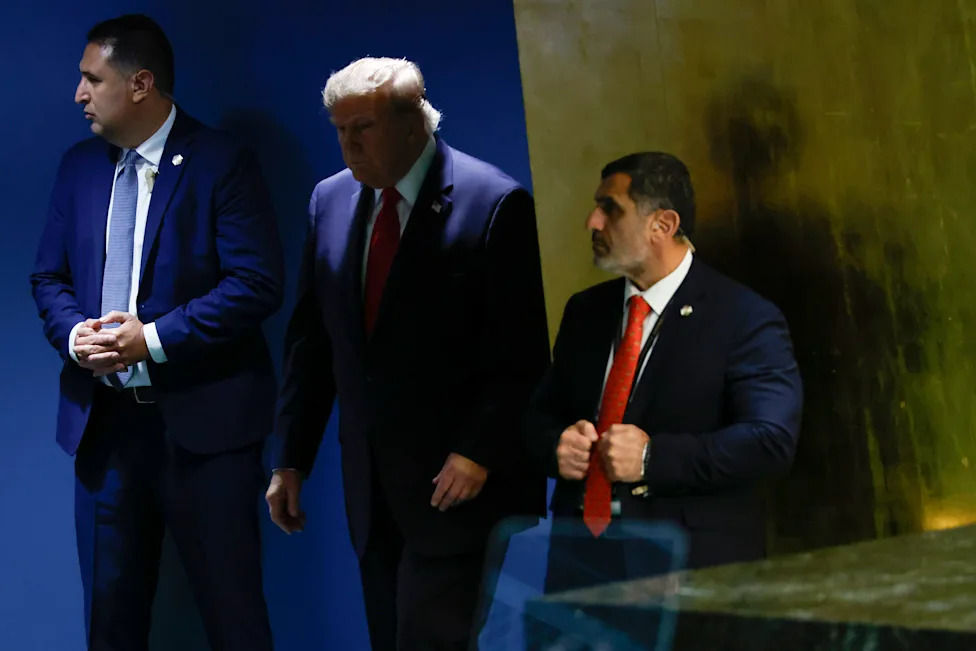
U.S. President Donald Trump arrives to speak during the 81st session of the United Nations (U.N.) General Assembly at U.N. Headquarters on September 22, 2026 in New York City. World leaders have gathered in New York for the annual session of the United Nations General Assembly, with this year's global issues ranging from the threat of artificial intelligence to the continued wars in Ukraine and Gaza.(Chip Somodevilla, Getty Images)
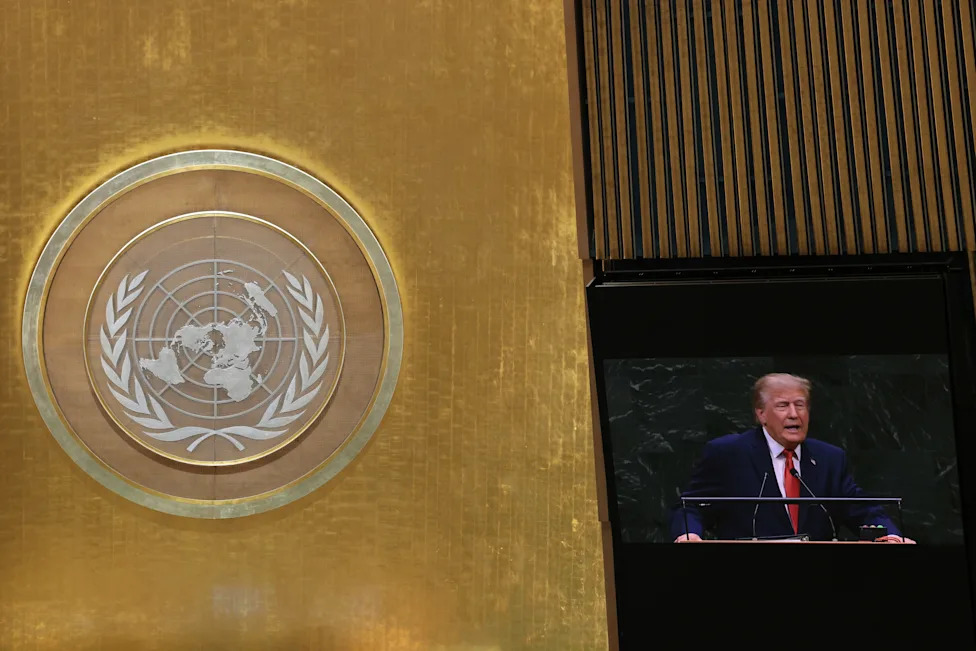
U.S. President Donald Trump speaks during the 81st session of the United Nations (U.N.) General Assembly at U.N. Headquarters on September 22, 2026 in New York City. World leaders have gathered in New York for the annual session of the United Nations General Assembly, with this year's global issues ranging from the threat of artificial intelligence to the continued wars in Ukraine and Gaza.(Michael M. Santiago, Getty Images)
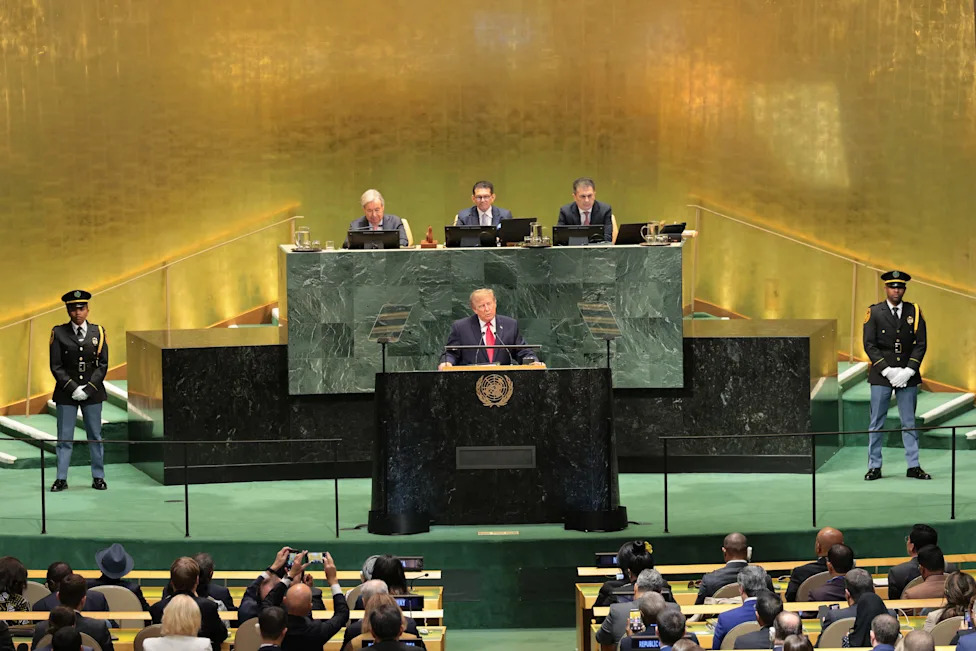
U.S. President Donald Trump speaks during the 81st session of the United Nations (U.N.) General Assembly at U.N. Headquarters on September 22, 2026 in New York City. World leaders have gathered in New York for the annual session of the United Nations General Assembly, with this year's global issues ranging from the threat of artificial intelligence to the continued wars in Ukraine and Gaza.(Michael M. Santiago, Getty Images)
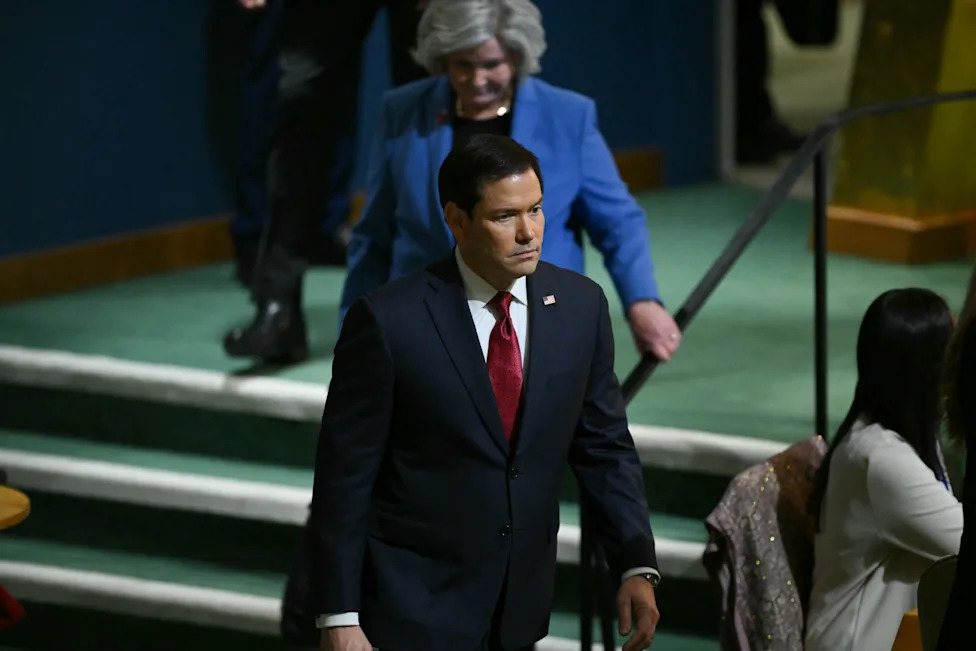
US Secretary of State Marco Rubio and White House Chief of Staff Susie Wiles arrive to hear US President Donald Trump address the 81st United Nations General Assembly at United Nations headquarters in New York on September 22, 2026.(ANGELA WEISS, AFP via Getty Images)
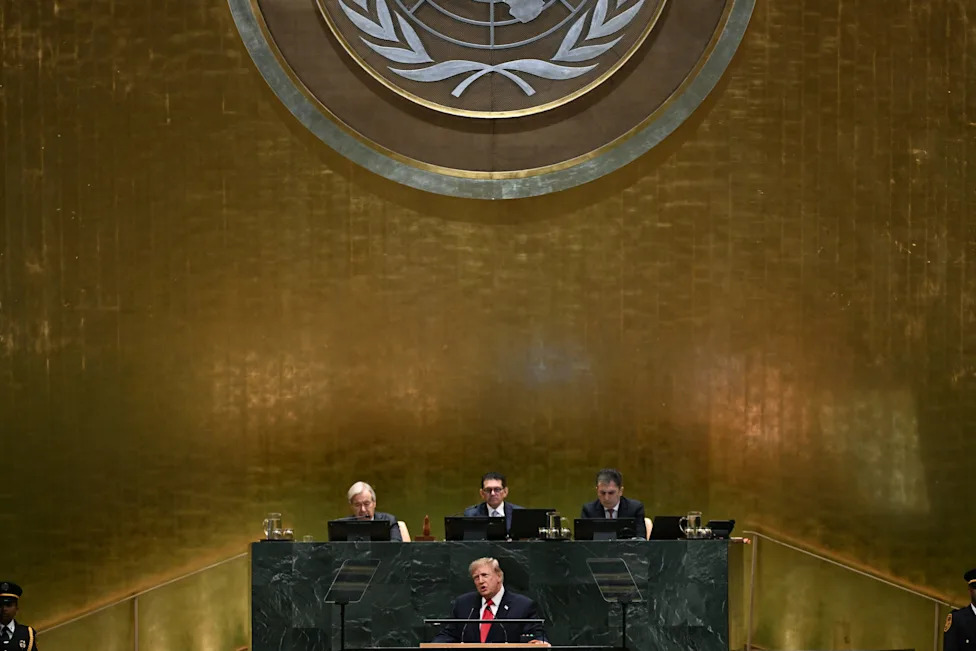
US President Donald Trump speaks during the 81st United Nations General Assembly at the United Nations Headquarters in New York, on September 22, 2026.(BRENDAN SMIALOWSKI, POOL/AFP via Getty Images)
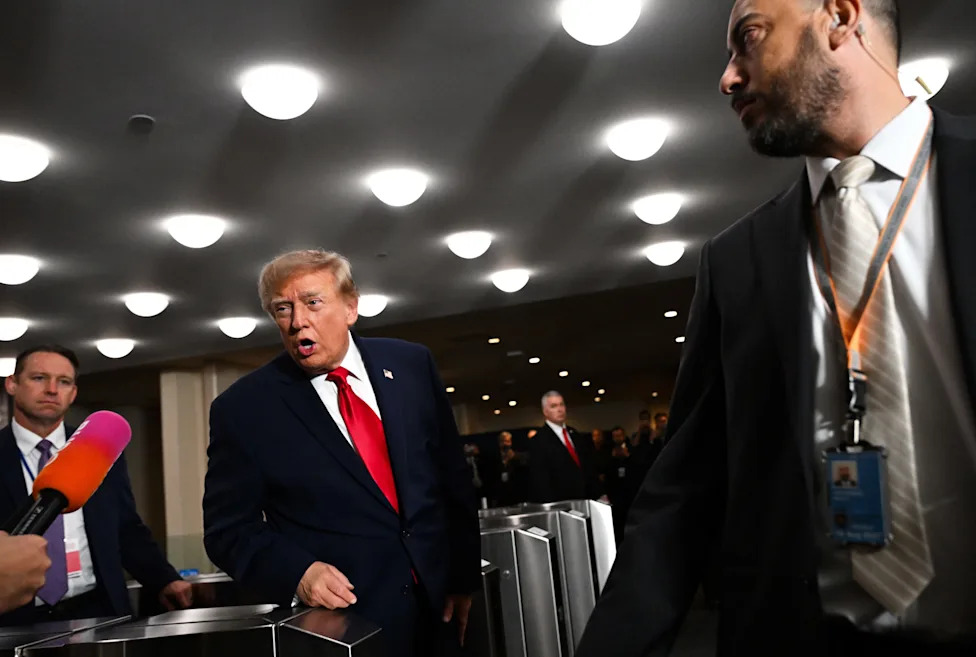
President Donald Trump speaks to media as he arrives during the 81st session of the United Nations (U.N.) General Assembly at U.N. Headquarters on September 22, 2026 in New York City. World leaders have gathered in New York for the annual session of the United Nations General Assembly, with this year's global issues ranging from the threat of artificial intelligence to the continued wars in Ukraine and Gaza.(Alexi J. Rosenfeld, Getty Images)
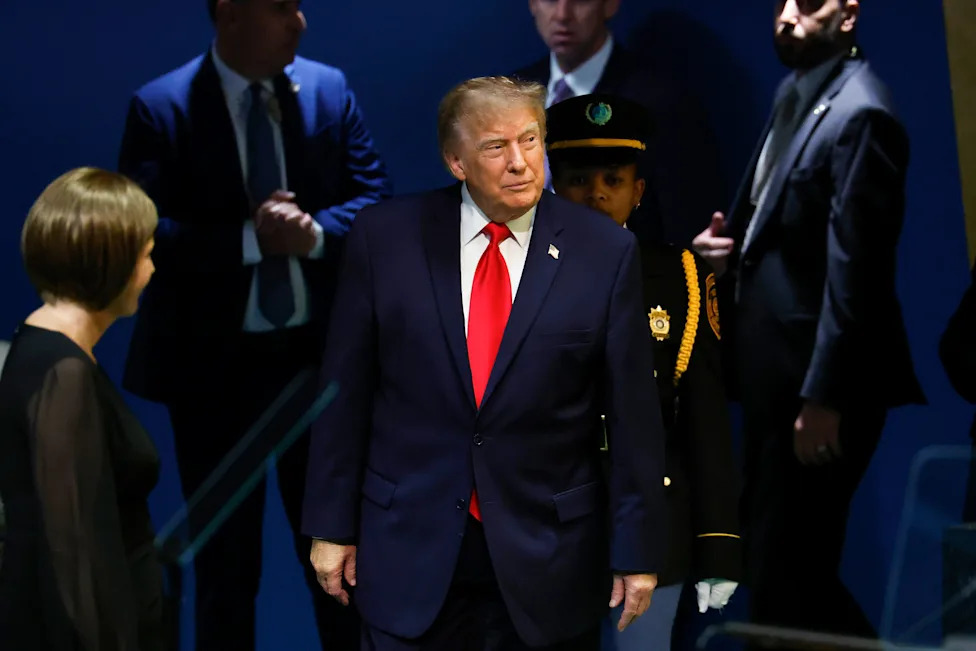
U.S. President Donald Trump (C) arrives to speak during the 81st session of the United Nations (U.N.) General Assembly at U.N. Headquarters on September 22, 2026 in New York City. World leaders have gathered in New York for the annual session of the United Nations General Assembly, with this year's global issues ranging from the threat of artificial intelligence to the continued wars in Ukraine and Gaza.(Chip Somodevilla, Getty Images)
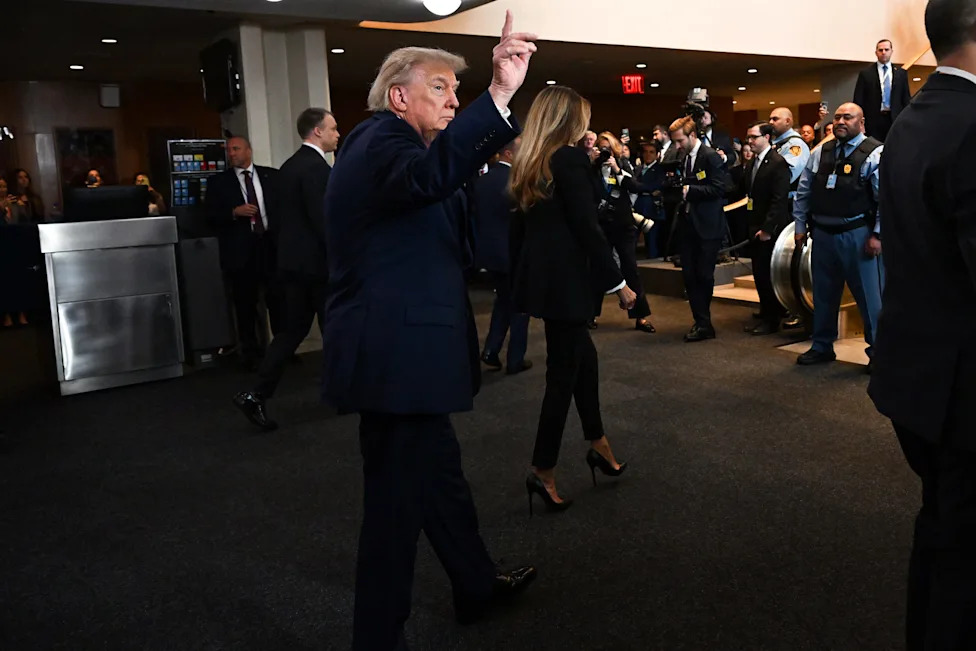
U.S. President Donald Trump and first lady Melania Trump arrive during the 81st session of the United Nations (U.N.) General Assembly at U.N. Headquarters on September 22, 2026 in New York City. World leaders have gathered in New York for the annual session of the United Nations General Assembly, with this year's global issues ranging from the threat of artificial intelligence to the continued wars in Ukraine and Gaza.(Alexi J. Rosenfeld, Getty Images)
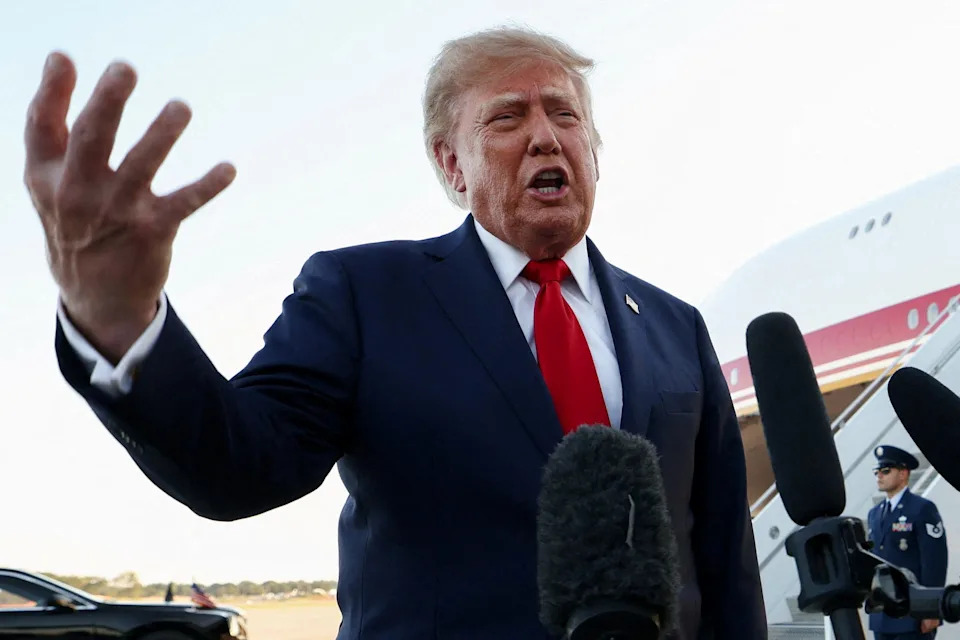
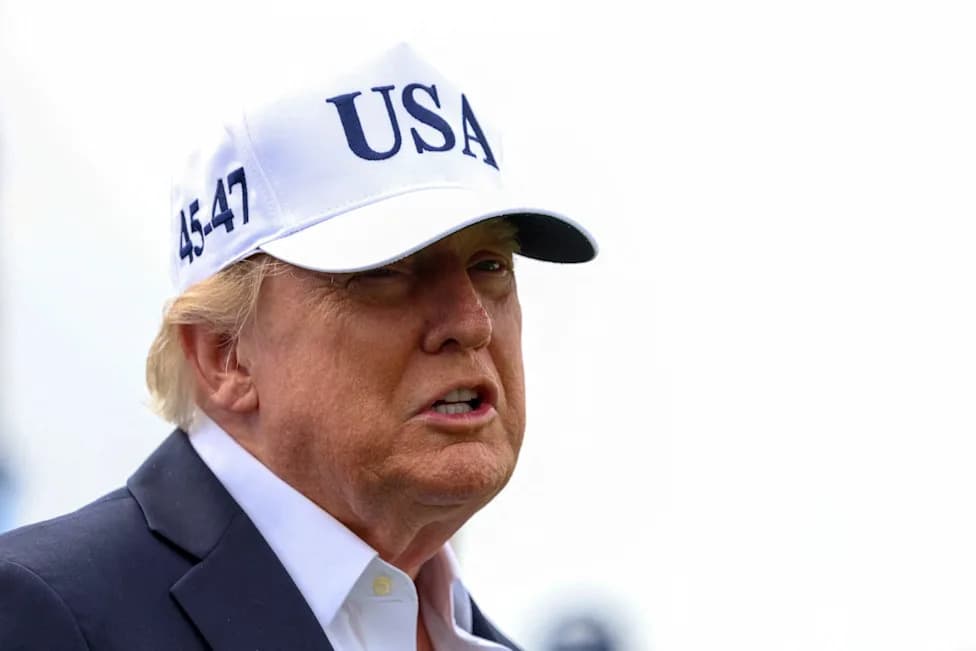
President Donald Trump speaks to reporters upon arriving at Charlotte Douglas International Airport in Charlotte, North Carolina, on Sept. 16, 2026, en route to a campaign rally for Republican Senate candidate Michael Whatley.
Help us improve.