The NBC News Decision Desk poll shows that overall approval for Trump's handling of the Iran conflict remains low nationally (31% approve), but intense Republican support has dropped: strong approval among Republicans fell 18 points to 30%, and fell 21 points among MAGA supporters. The poll of 7,105 adults (Aug. 20–Sept. 1, ±3.3 points) comes as the U.S. and Iran exchange strikes and concerns about oil disruptions and rising gas prices raise political risks ahead of the midterms.
Republican Enthusiasm for Trump's Iran Policy Falters, NBC Poll Shows
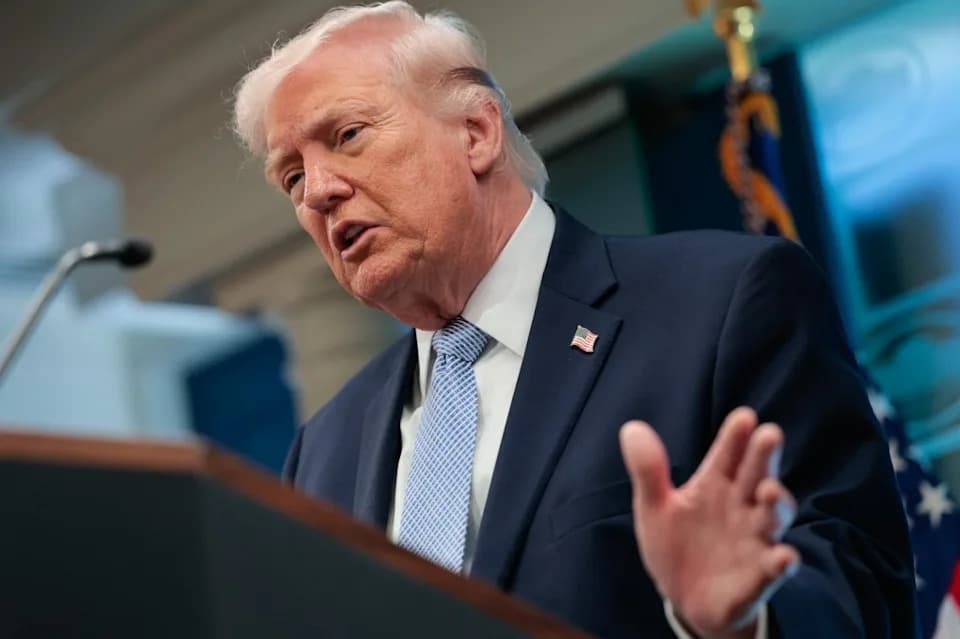
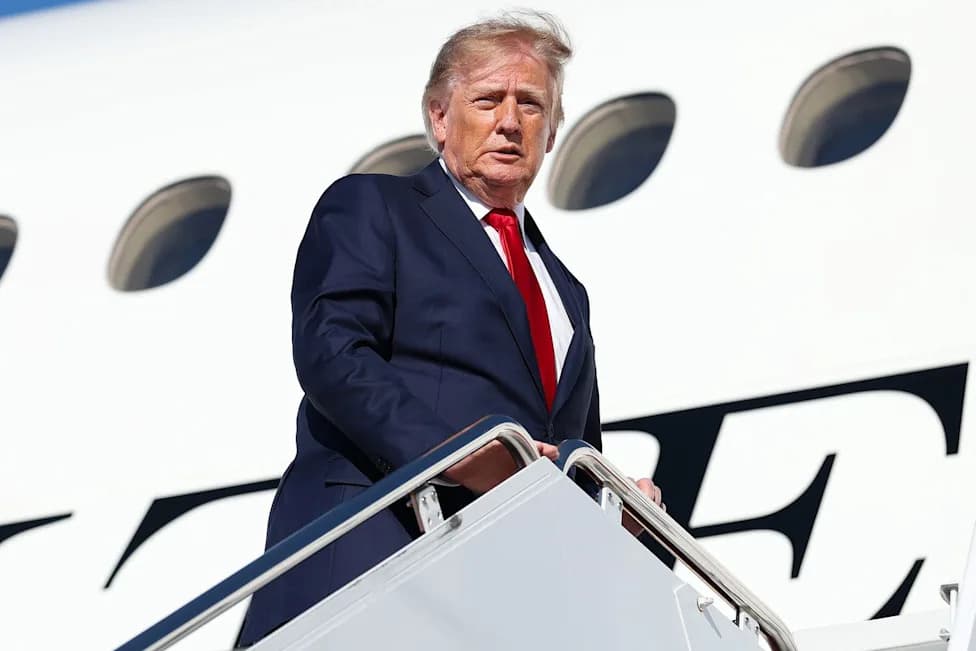
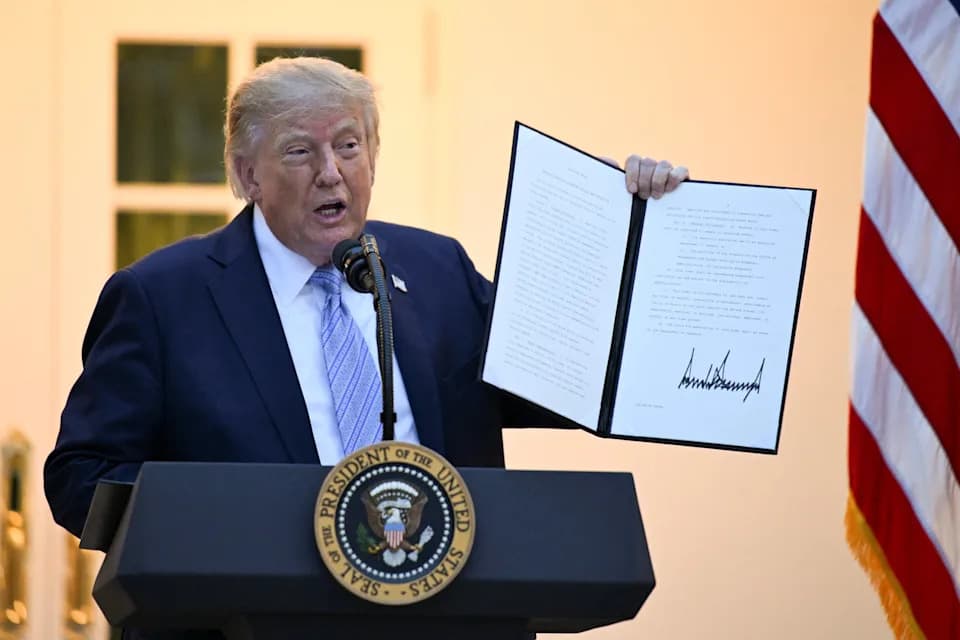
President Donald Trump speaks about the conflict in Iran in the White House on April 6 in Washington, DC.
A new NBC News Decision Desk poll finds that while overall Republican approval of President Donald Trump remains high, the intensity of that support for his handling of the Iran conflict has weakened sharply since spring — a change that could carry political implications ahead of the midterm elections.
Poll Findings
The NBC News survey reports that 31% of Americans approve of Trump's handling of the Iran conflict and 69% disapprove, essentially unchanged from spring figures. But the share of Republicans who strongly approve of his handling of the war fell 18 percentage points to 30%. Among self-identified MAGA supporters, strong approval dropped 21 points to 43%.
The trend extends to broader job approval: the share of Republicans who strongly approve of Trump's overall job performance slipped from 52% in the spring to 41% in the latest poll — the first time that figure has dipped below 50% in NBC News Decision Desk polling.
The NBC News Decision Desk poll, powered by SurveyMonkey, surveyed 7,105 adults online between August 20 and September 1 and reports a margin of error of ±3.3 percentage points.
Context And Other Polls
The Iran conflict, which began in late February, remains one of Trump's weaker issues with voters. An AP-NORC poll in June found 34% approval for Trump's handling of the situation and 65% disapproval, with 53% saying the conflict had "gone too far." A July Quinnipiac survey showed just 34% backing U.S. military action against Iran while 60% opposed it; 66% said the war had not been worth fighting.
Economic concerns amplify political risk for Republicans. Polling has documented GOP frustration over rising gasoline prices and the broader economic fallout from instability in the Gulf. An Economist/YouGov poll in late July found Republicans were less likely than Democrats to say gas prices were rising a lot, but the broader trend of energy-price anxiety remains a salient issue.
Recent Military Developments
The NBC News poll arrives amid renewed clashes between Washington and Tehran. U.S. Central Command (CENTCOM) reported that American forces struck three Iranian oil tankers after Iran's Islamic Revolutionary Guard Corps (IRGC) allegedly launched ballistic missiles at two U.S. Navy warships. CENTCOM said the vessels were linked to a network used to finance the IRGC and that the strikes aimed to impose economic costs on Tehran.
The Strait of Hormuz — through which roughly one-fifth of the world's traded oil normally passes — remains a strategic flashpoint, and any disruption there raises concerns about global energy markets and consumer prices in the United States.
Reactions And Political Implications
The White House has defended the campaign, saying military pressure and sanctions have weakened Tehran and improved U.S. security. "What matters most to the American people is having a Commander in Chief who takes bold action to keep them safe," the administration said in a previous statement.
Critics in Congress have questioned the administration's strategy. Representative Pramila Jayapal (D-Wash.) said the war "has had no clear mission, no strategy, no end goal" and criticized the lack of congressional consultation. On NBC's Meet the Press, Senator John Kennedy (R-La.) warned the conflict would "probably not" be over by the November midterms and noted the political risks for Republicans.
With Republicans defending congressional majorities, the NBC poll suggests that while surface-level support for Trump within the GOP remains strong, the depth of enthusiasm for one of the defining foreign-policy issues of his second term is softening — a dynamic campaigns on both sides are likely monitoring closely.
Help us improve.