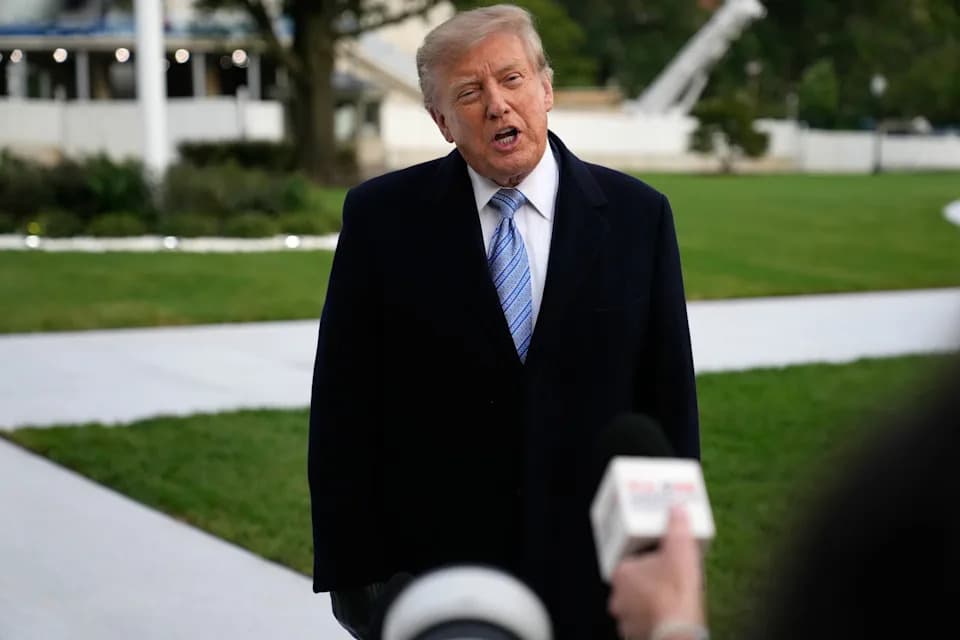
President Donald Trump posted an image on Truth Social labeling the Strait of Hormuz "Trump Strait" after Iran proposed reopening the waterway within seven days if the U.S. meets specific demands. Iran said it would resume nuclear talks and lift restrictions on the strait if Washington ends its naval blockade, waives oil sanctions and accepts a ceasefire that includes Lebanon. Saudi Arabia reported intercepting a missile fired by Iran-backed Houthis while Iraq seeks U.S. exemptions for humanitarian flights. Separately, tensions in the West Bank over access to natural springs underscore a long-standing water-access dispute affecting about 2.8 million Palestinians.
Trump Labels Strait Of Hormuz 'Trump Strait' After Iran Offers Deal; Regional Tensions Escalate
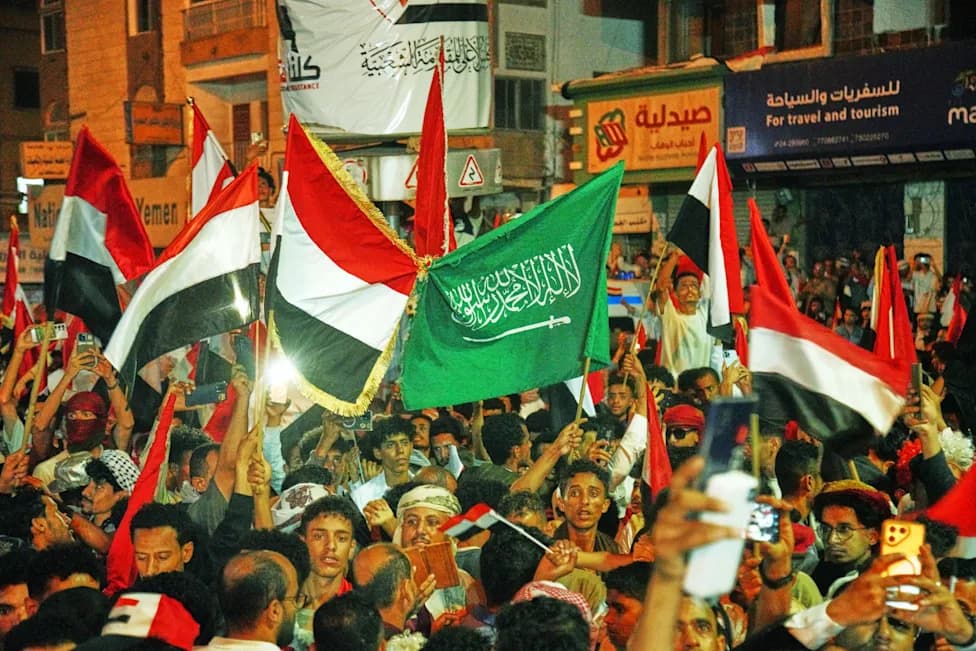
Yemenis wave national and Saudi flags as they celebrate the 64th anniversary of the September 26 Revolution in Taiz, Yemen, Friday, Sept. 25, 2026. (AP Photo/Abdulnasser Alseddik)(AP Photo/Abdulnasser Alseddik)
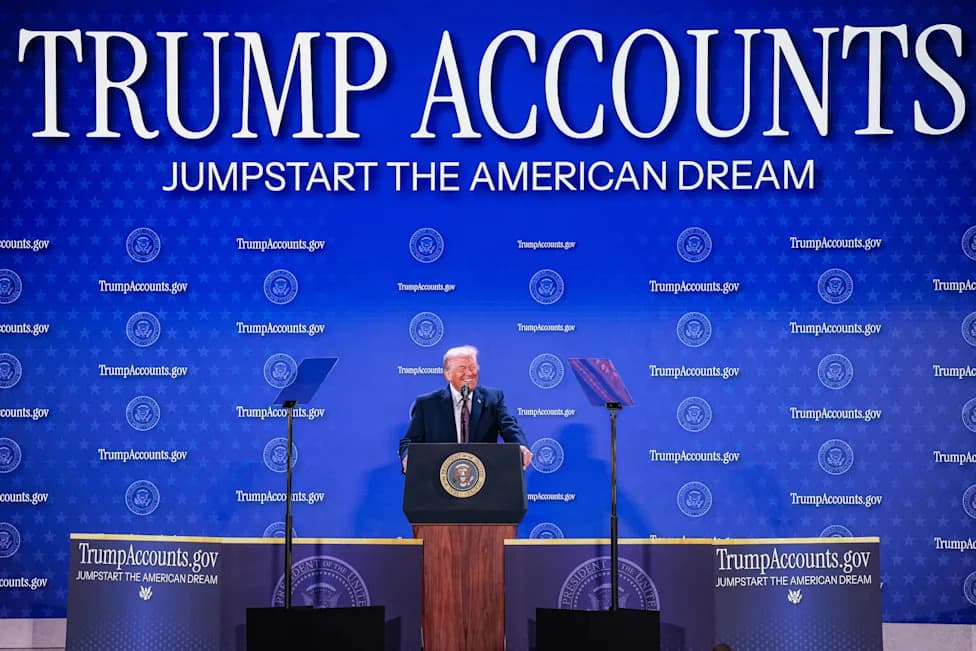
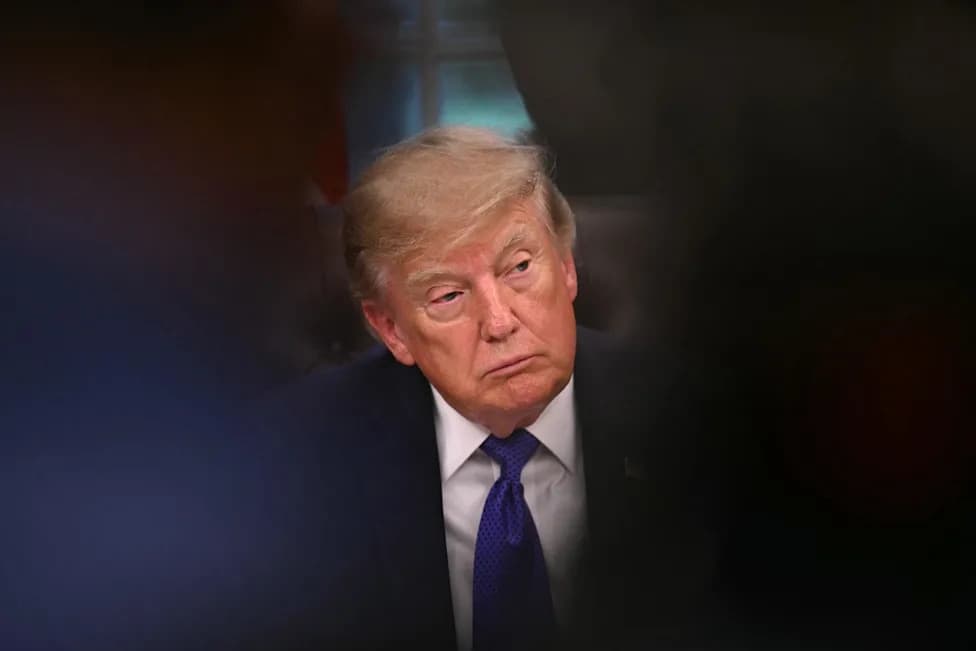
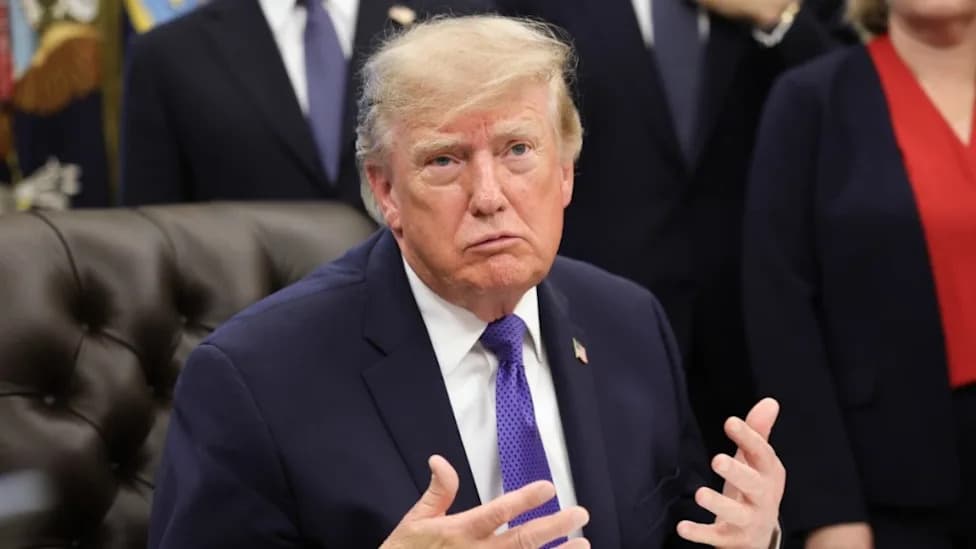
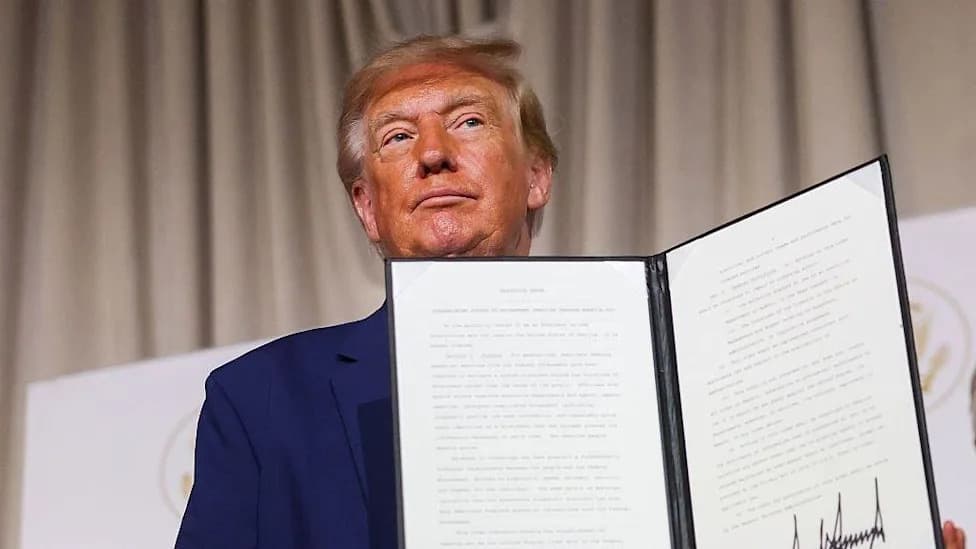
President Donald Trump posted an image on his Truth Social account early Saturday depicting the Strait of Hormuz labeled "Trump Strait," the first public sign of his response after Iran proposed reopening the waterway within a week if the United States meets several conditions.
Iran's Proposal And Diplomatic Signals
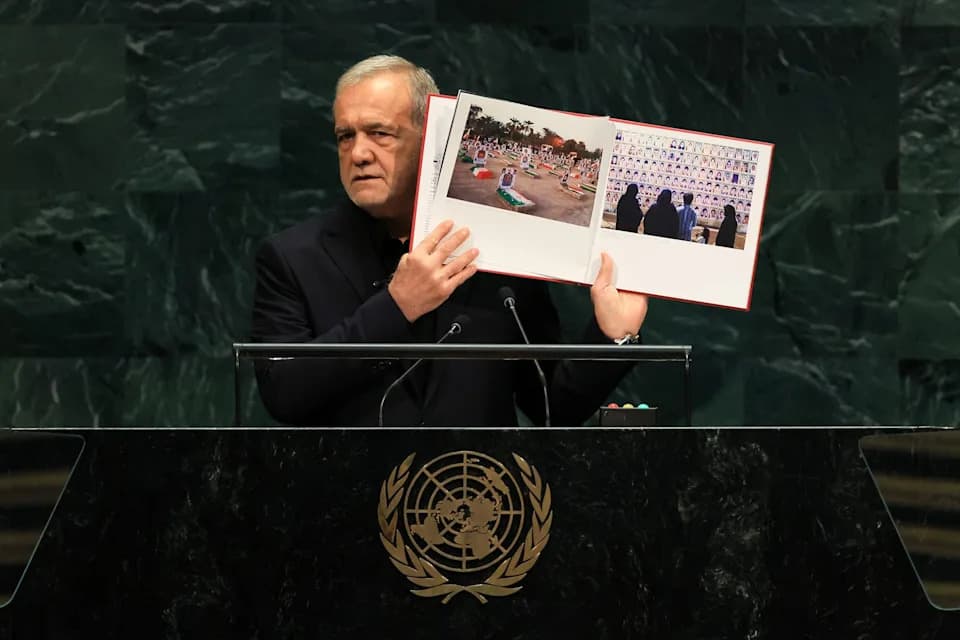
Semiofficial Iranian outlets reported that President Masoud Pezeshkian left New York for Tehran after attending the U.N. General Assembly, where he delivered a speech pushing back against Mr. Trump’s recent threat to "annihilate" the Islamic Republic and reiterated that Tehran remains open to diplomacy.
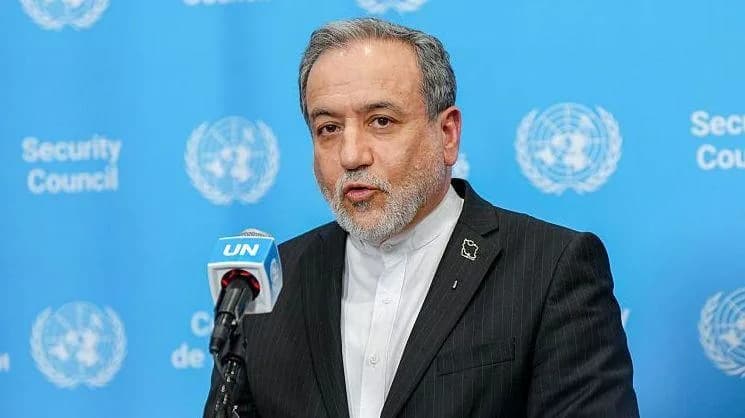
Iranian Foreign Minister Abbas Araghchi told reporters that Tehran's proposal would reopen the Strait of Hormuz and resume talks on its nuclear program within seven days if the United States lifts its naval blockade of Iranian ports, waives sanctions on Iranian oil sales and observes a ceasefire that would include Lebanon.
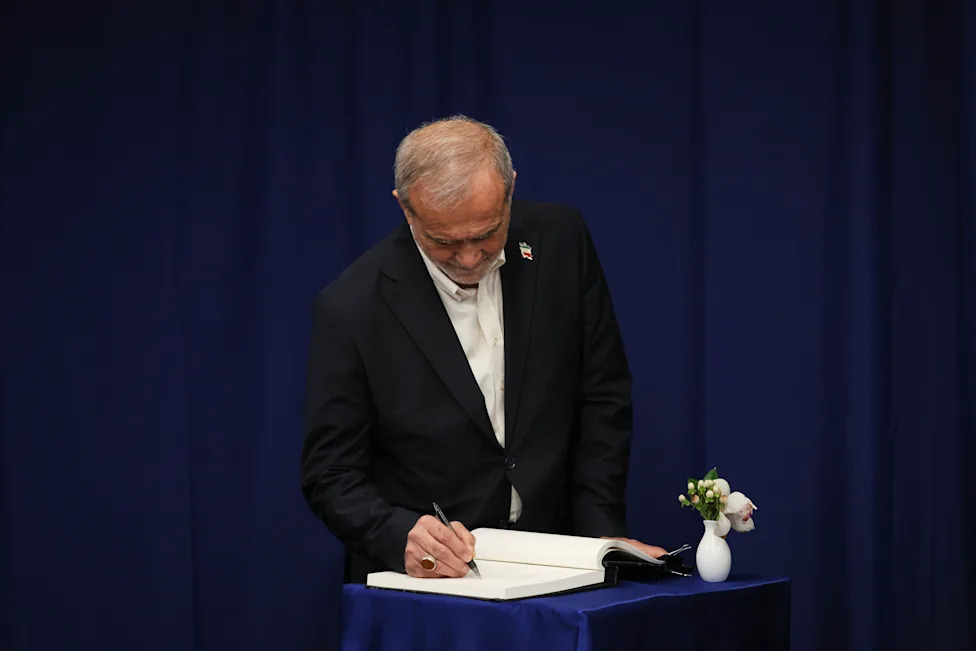
Iran's President Masoud Pezeshkian signs a book before meeting with United Nations Secretary-General Antonio Guterres at United Nations headquarters during the 81st session of the United Nations General Assembly, Friday, Sept. 25, 2026. (AP Photo/Heather Khalifa)(AP Photo/Heather Khalifa)
The White House said Friday that U.S. officials were engaged in "positive and constructive conversations with mediators" after several hours of indirect talks between U.S. and Iranian representatives earlier in the week.
Security Incidents And Regional Responses
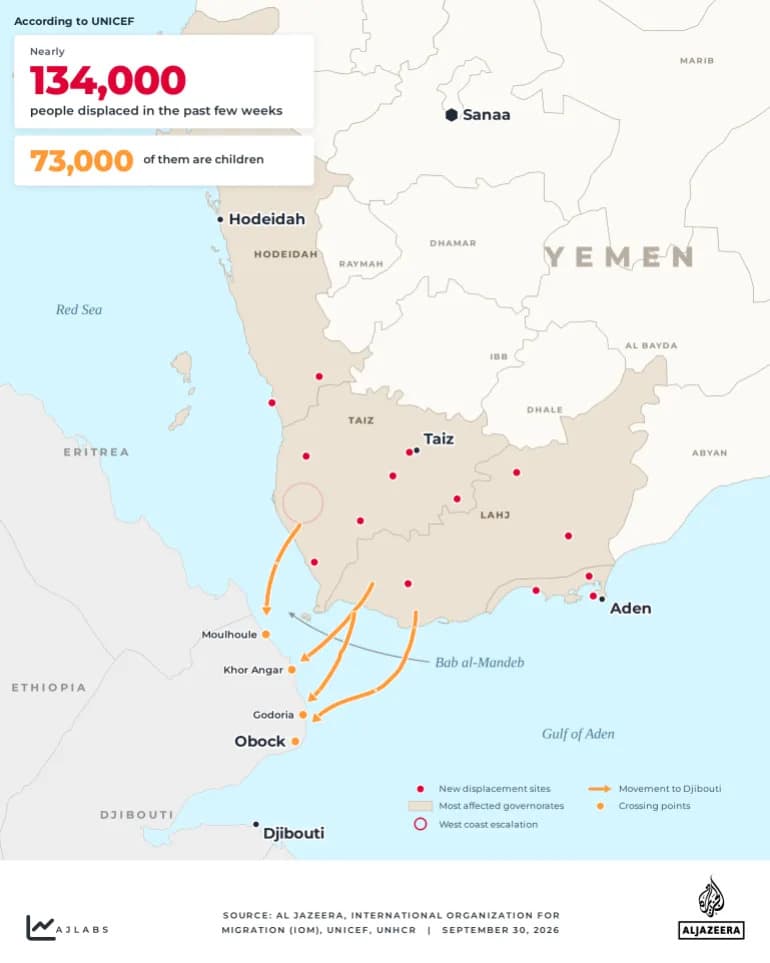
Saudi Arabia's military spokesman, Maj. Gen. Turki al-Malki, said early Saturday that Saudi forces intercepted and destroyed a ballistic missile launched by Iran-backed Houthi rebels in Yemen that was headed toward the southwestern Saudi city of Khamis Mushait. The Associated Press said it could not immediately verify the Saudi claim. There was no immediate Houthi statement claiming responsibility; such claims can sometimes take days.
The Gulf Cooperation Council condemned the Houthi strikes as a "grave escalation and threat to regional security" and urged the international community to respond.
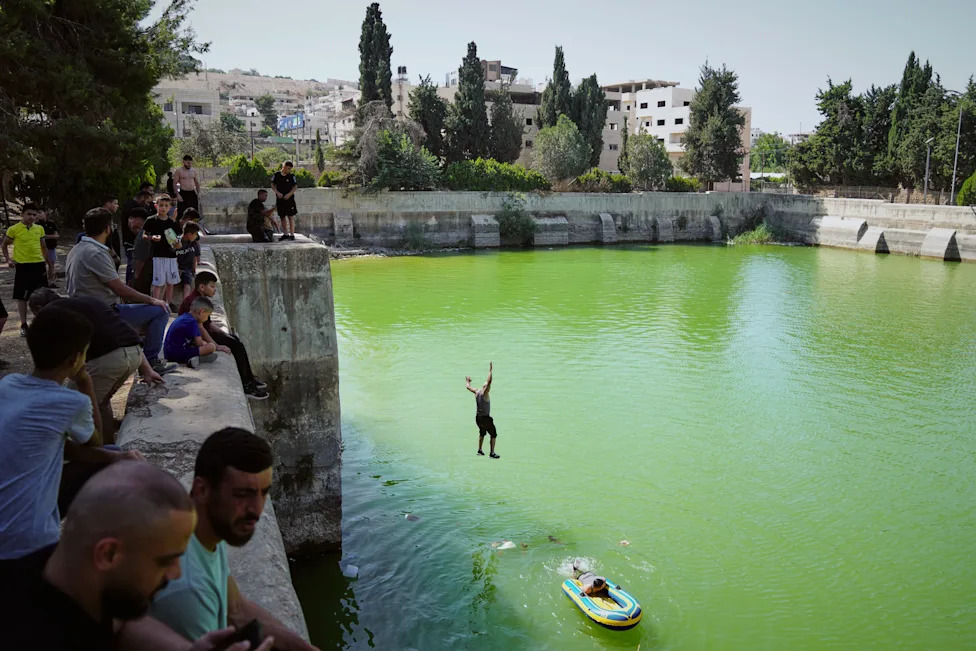
Palestinians cool off at the site of Solomon's Pools an ancient water reservoirs located south of the West Bank city of Bethlehem, on July 31, 2026. (AP Photo/Mahmoud Illean)(AP Photo/Mahmoud Illean)
Iraq Seeks Humanitarian Exemptions
Iraqi officials said they are in direct contact with the United States seeking exemptions from sanctions on Iranian airlines. Baghdad's aim is to obtain waivers for specific airports to allow flights for humanitarian reasons, including medical treatment, education and religious pilgrimages to sites such as Karbala and Najaf, which draw many pilgrims from Iran.
West Bank Water Dispute
In the occupied West Bank, Israeli settlers have intensified efforts to seize natural springs and heritage sites that are vital for drinking water, tourism and agriculture. Rights groups say the springs are increasingly inaccessible to the roughly 2.8 million Palestinians who live there.
In the Jordan Valley, settlers reportedly cut a water pipe to a Palestinian village and redirected it to a pool they named after Herod, the Roman-appointed king of Judea. Rights monitors describe the move as part of a broader campaign to claim heritage sites and expand control over scarce water resources — a long-standing point of contention dating back to 1967.
Note: This report will be updated as new developments emerge.
Help us improve.