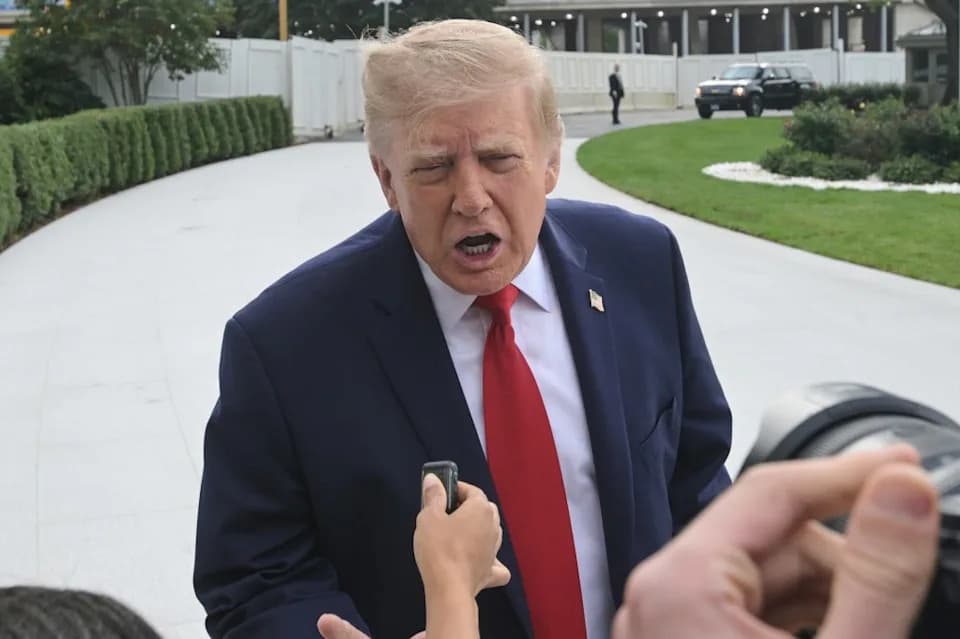
Summary: President Trump rejected Iran's mediated seven-day plan to reopen the Strait of Hormuz, saying the U.S. maintains control of the waterway. Iran warned it could strike American ships in the Indian Ocean if heavy fighting resumes, while Iranian leaders called for trust-building but vowed not to surrender. Regional fallout includes suspended flights, intercepted Houthi missiles over Saudi Arabia and surging fuel prices, and the U.S. Senate narrowly failed to pass a war-powers resolution aimed at limiting the conflict.
Trump Rejects Iran’s Seven‑Day Offer to Reopen the Strait of Hormuz; Tehran Warns It Could Strike U.S. Ships
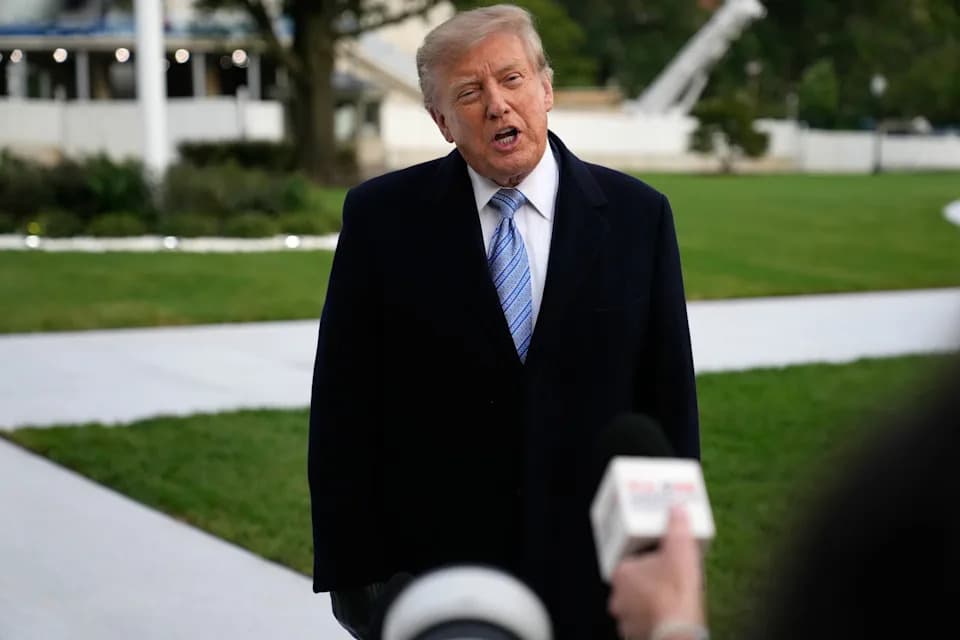
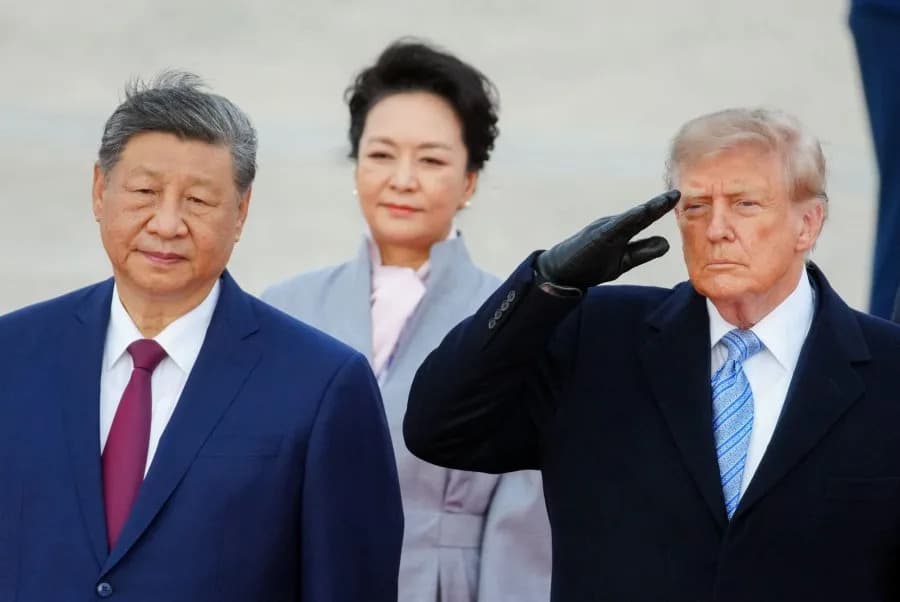
Carolyn Kaster/AP - PHOTO: President Donald Trump speaks to reporters as he arrives at the White House on Marine One, Sept. 23, 2026, after greeting China's President Xi Jinping at Joint Base Andrews.
President Donald Trump on Saturday rejected Iran's mediated proposal to reopen the strategic Strait of Hormuz within seven days, saying the United States retains "total control" of the waterway. The announcement comes amid months of escalating strikes and diplomatic efforts that have failed to halt hostilities between Washington and Tehran.
On Feb. 28, the White House said the U.S. launched "major combat operations" against Iran, describing large-scale joint U.S.-Israeli strikes on Iranian military, government and infrastructure targets. In June, delegations from both countries met to negotiate a memorandum of understanding intended to end the war; those talks collapsed as attacks continued and the Strait of Hormuz emerged as a central flashpoint.
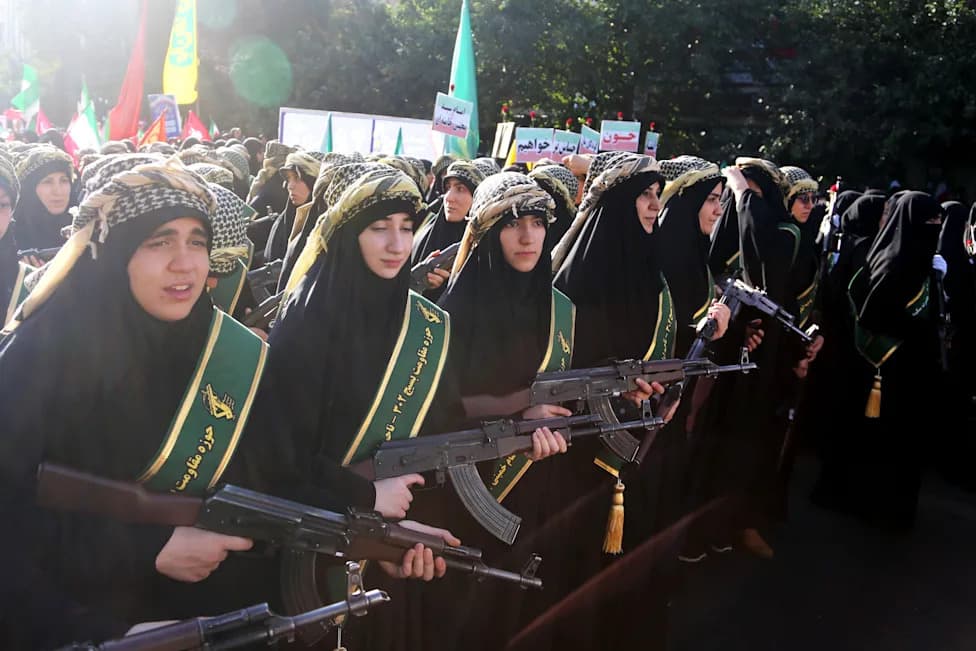
In August, President Trump warned of a "crushing economic operation" aimed at compelling Tehran to yield. Iranian officials have responded with strong rhetoric: Ali Mohammadi, deputy political commander of the Islamic Revolutionary Guard Corps Navy, told state-affiliated media that Iranian forces would target American vessels in the Indian Ocean if heavy fighting resumes. "If another war breaks out, we will undoubtedly attack and hit their vessels and destroyers even in the Indian Ocean," he said.
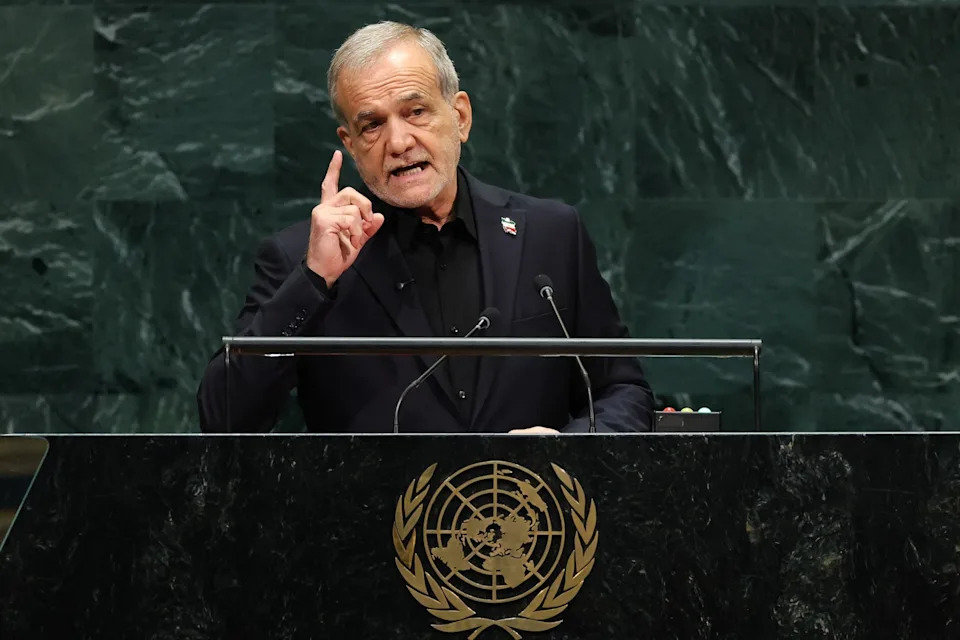
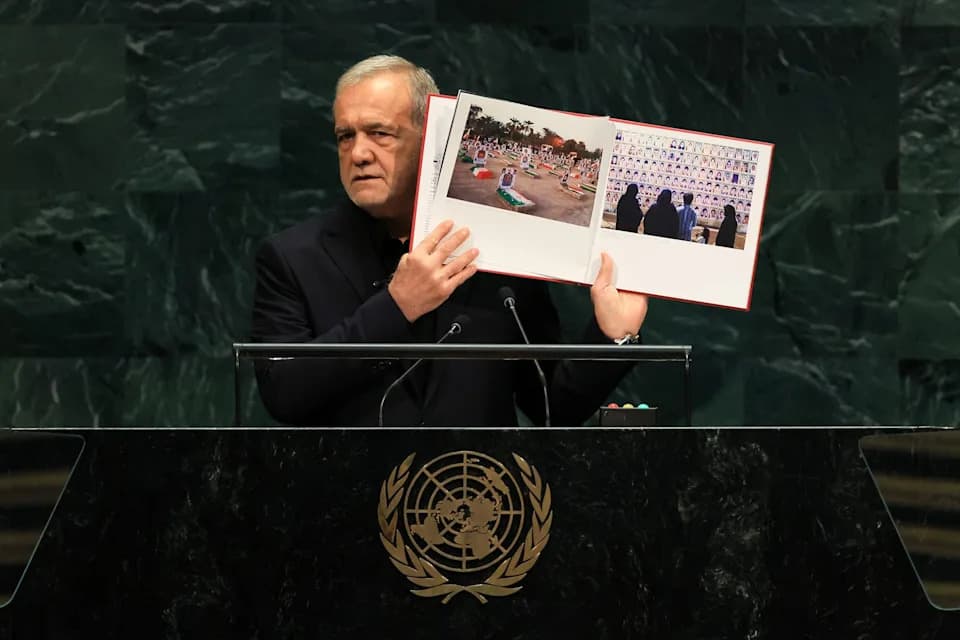
Timothy A. Clary/AFP via Getty Images - PHOTO: TOPSHOT-US-UNITED NATIONS-DIPLOMACY
Diplomatic Messages and U.N. Reactions
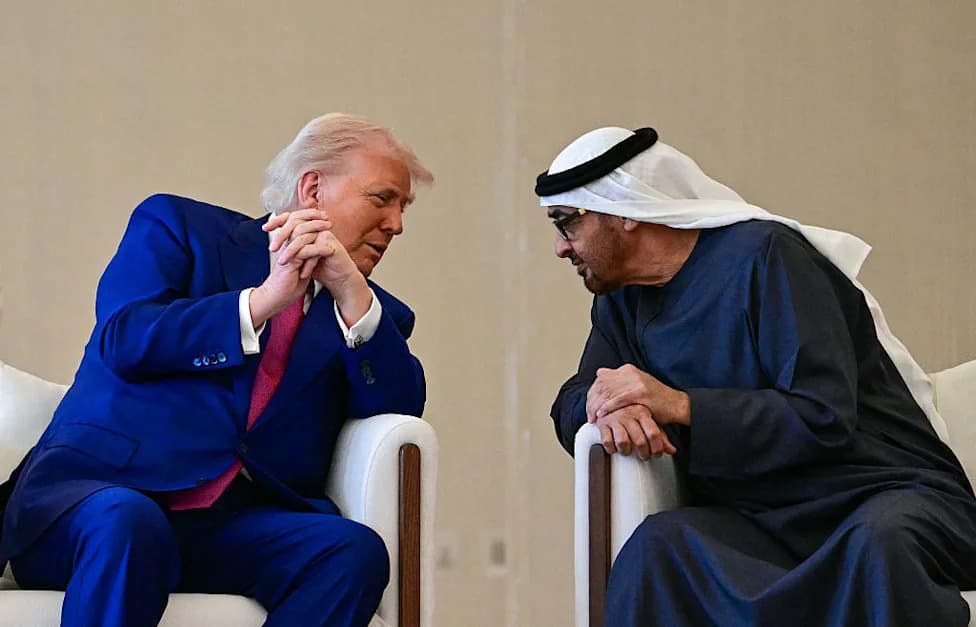
After addressing the U.N. General Assembly, Iranian President Masoud Pezeshkian described a "major atmosphere of mistrust" between Tehran and Washington but said Iran was "ready for a trust-building relationship." Pezeshkian reiterated that Iran does not want a nuclear weapon and said inspectors would be welcome, while also insisting Tehran would not surrender despite U.S. military and economic pressure.
Iran's foreign minister said the mediated plan to reopen the Strait would take seven days if the United States met unspecified conditions similar to a memorandum previously negotiated in Islamabad but later abandoned by Washington.
Regional Impact and Military Developments
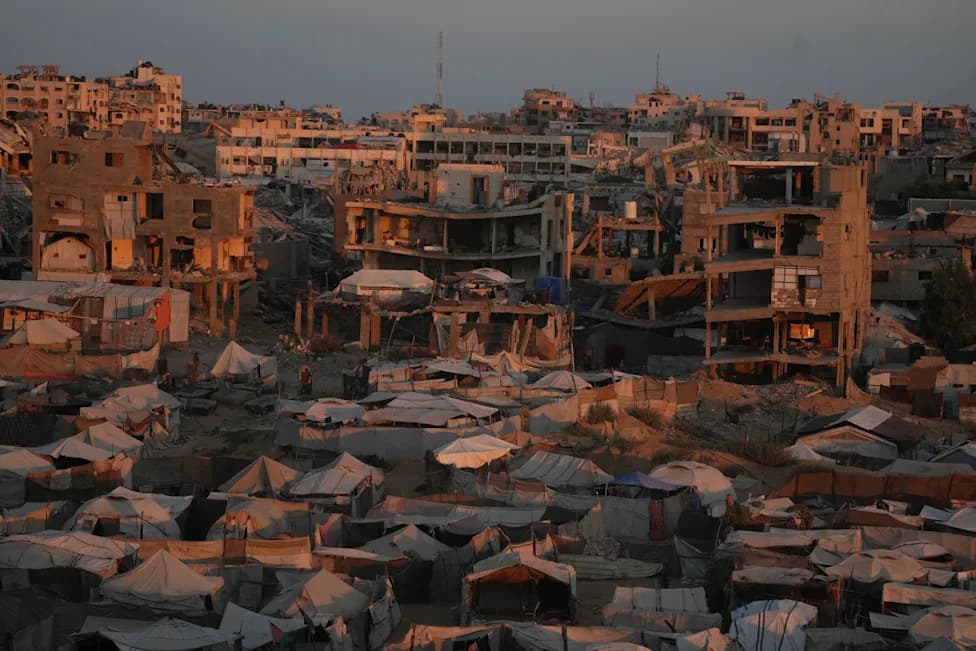
The dispute has disrupted regional travel and commerce: the United Arab Emirates temporarily suspended flights by Iranian carriers, several international airlines have halted or rerouted service to Tehran, and Iranian officials reported cancellations of some regional routes under pressure from U.S. sanctions. Fuel prices in the United States have risen markedly, adding domestic economic pressure to the geopolitical crisis.
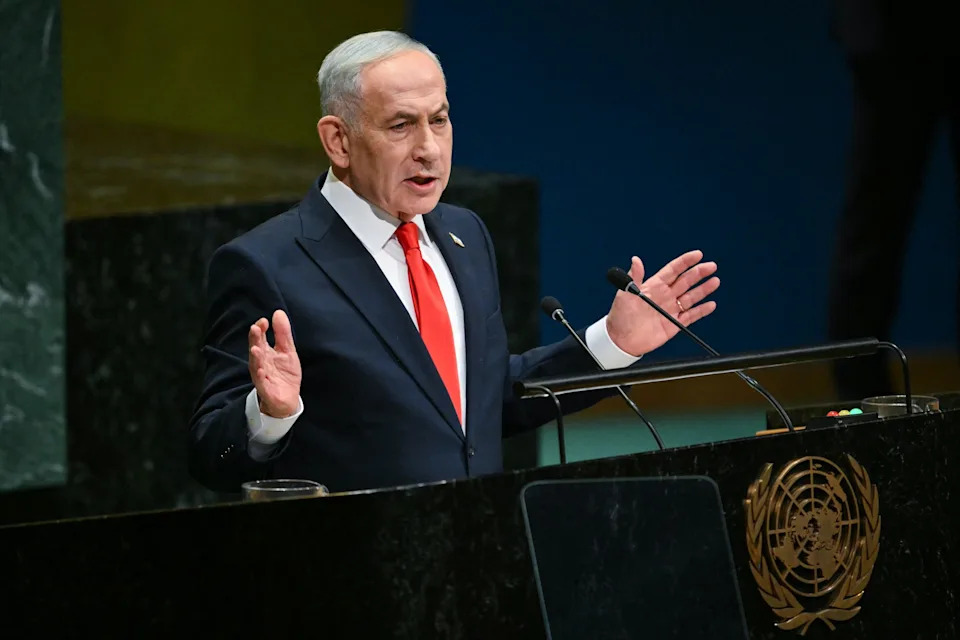
Angela Weiss/AFP via Getty Images - PHOTO: Israeli Prime Minister Benjamin Netanyahu addresses the 81st United Nations General Assembly at UN headquarters in New York City, September 24, 2026.
Meanwhile, Saudi-led coalition forces said they intercepted six Houthi ballistic missiles targeting Saudi regions; authorities briefly issued safety alerts for several cities before lifting them once the threat subsided. Iranian officials praised Pezeshkian's U.N. speech, calling it a strong defense of Iran's position.
U.S. Domestic Politics
Back in Washington, the Senate narrowly failed to adopt a House-passed war powers resolution intended to limit the executive's authority to continue hostilities, falling 49-50. A small group of Republican senators joined Democrats in supporting the measure, but the vote fell short of the majority needed to pass.
Context: The Strait of Hormuz is one of the world’s most important oil chokepoints. Disruptions there can quickly affect global energy markets and international shipping, magnifying the consequences of any diplomatic or military escalation.
Officials quoted in this update reflect statements made amid ongoing hostilities, diplomatic exchanges and regional disruptions tied to the wider U.S.–Iran confrontation.
Help us improve.