In August 2026, Abu Bilal demolished a wall he had built in October 2011 to conceal his son's library and recovered hundreds of books that were once banned under Assad-era censorship. The sealed collection—kept in western Syria while he lived in exile in Kuwait—included politically sensitive texts, Quranic ijazat, academic diplomas and personal papers and survived with little damage. Video of the demolition, filmed by his son Bilal Alloun, circulated widely and has been read as a symbol of Syria's emerging cultural openness after the reported fall of the regime in 2024. Observers caution that legal protections for free expression remain fragile and are still being shaped.
Syrian Man Smashes Wall in 2026 to Recover Hundreds of Books Once Banned Under Assad
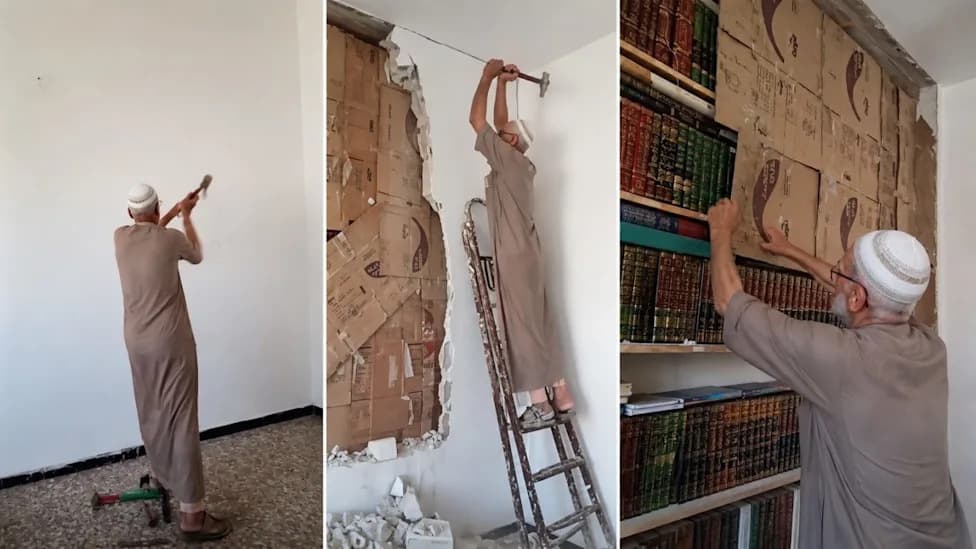
Image: r/Syria - joeshowmon
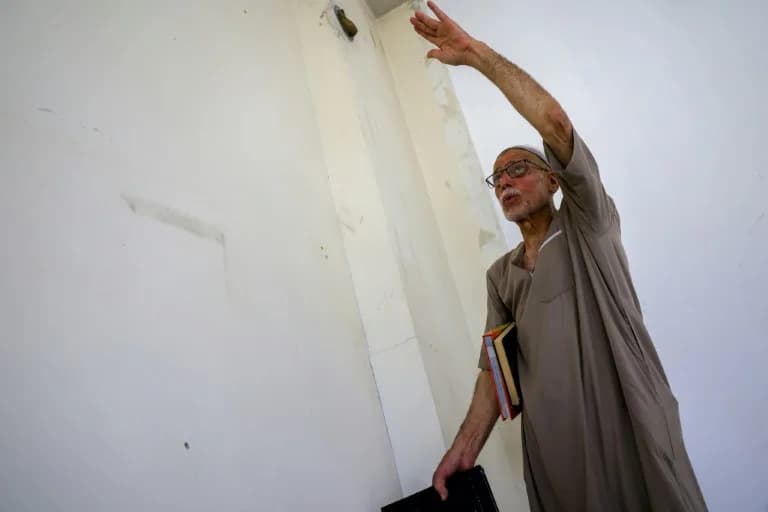
In August 2026, an elderly Syrian identified as Abu Bilal swung a hammer into a concrete barrier he had built in October 2011 and revealed a hidden library of hundreds of books—texts that once could have brought imprisonment under decades of Assad-era censorship.
The false wall was constructed inside his house in late October 2011 to hide his son's private collection as security forces tightened surveillance across Syrian cities. Reports vary on the exact city—some place the home in Damascus, others in Homs—but outlets agree the property is in western Syria. Abu Bilal stayed to finish the concealment and later went into exile in Kuwait, leaving the books sealed for 15 years.
What Was Found
Regional reporting, including accounts cited by Siasat and Al Jazeera, says the sealed cavity held hundreds of politically sensitive and religiously significant works, as well as Quranic ijazat (certificates of mastery in Quranic recitation), academic diplomas, personal papers and some cash. When Bilal Alloun—his son, a Syrian writer and activist—filmed the demolition, dust was the first thing to meet them. Remarkably, most volumes emerged largely intact with minimal moisture damage after more than a decade encased in concrete.
Why It Matters
The footage, shared widely across regional and international platforms including Al Jazeera’s NewsFeed, has been interpreted by many as emblematic of a changing intellectual climate in Syria after the Assad family's reported fall in 2024. Cultural commentator Wahid Taja, a media officer at Dar al-Fikr in Damascus, framed the moment succinctly: "We brushed the dust from the pages and returned them to their rightful place."
Context: Under Hafez al-Assad (1971–2000) and his son Bashar (who held power until the regime's reported collapse in 2024), possession of prohibited political, religious or opposition material could imperil an entire household during security raids—prompting citizens to hide books, manuscripts and notebooks at great personal risk.
Echoes and Cautions
The story echoes wartime efforts such as the underground library in Daraya, where activists sheltered thousands of volumes in a basement during bombardment and blockade. Since 2024, Al Jazeera’s culture reporting and other outlets have documented buried notebooks and hidden libraries resurfacing across Syria, with book fairs reopening and formerly banned publishers beginning to operate again.
Analysts, however, warn that the new intellectual openness remains fragile. Formal bans may have been lifted in many cases, but the legal and political frameworks that protect freedom of expression are still being defined. The rubble of the wall and the returned books are tangible symbols—but whether Syria will build lasting protections for intellectual life is an unfolding question.
Note on Reporting: Coverage varies on precise location and some details; facts presented here reflect the consensus of multiple regional outlets while noting areas of inconsistency.
Help us improve.