After more than a decade in exile, 72-year-old Mustafa Khaled Alwan dismantled a wall hiding a private library of several hundred mainly Islamist books in Homs and found the collection over 90% intact following Assad's December 2024 ouster. The volumes include works by Hassan al-Banna and Sayyid Qutb, alongside poetry and books on science and society. Alwan had secretly moved the collection into his son's house during the 2011 siege of Homs and concealed it with a false wall. The discovery highlights how previously banned literature has re-emerged amid Syria's complex political transition and ongoing reconstruction challenges.
Hidden Library in Homs Uncovered: Syrian Man Reclaims Hundreds of Islamist Texts After a Decade
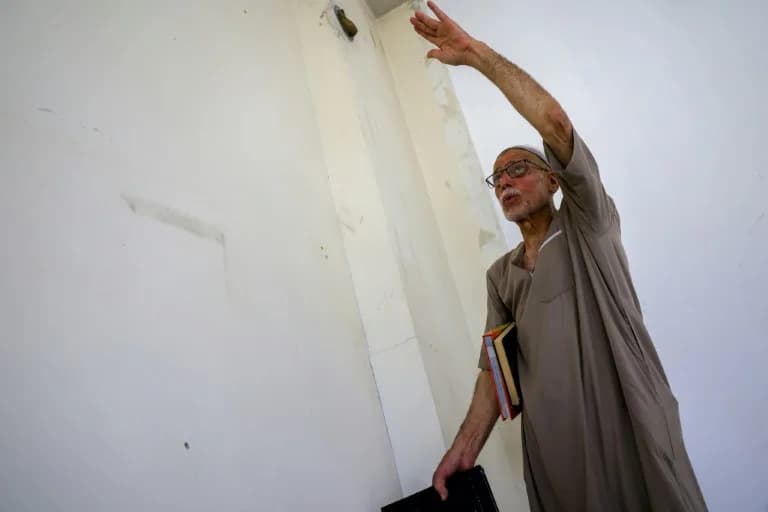
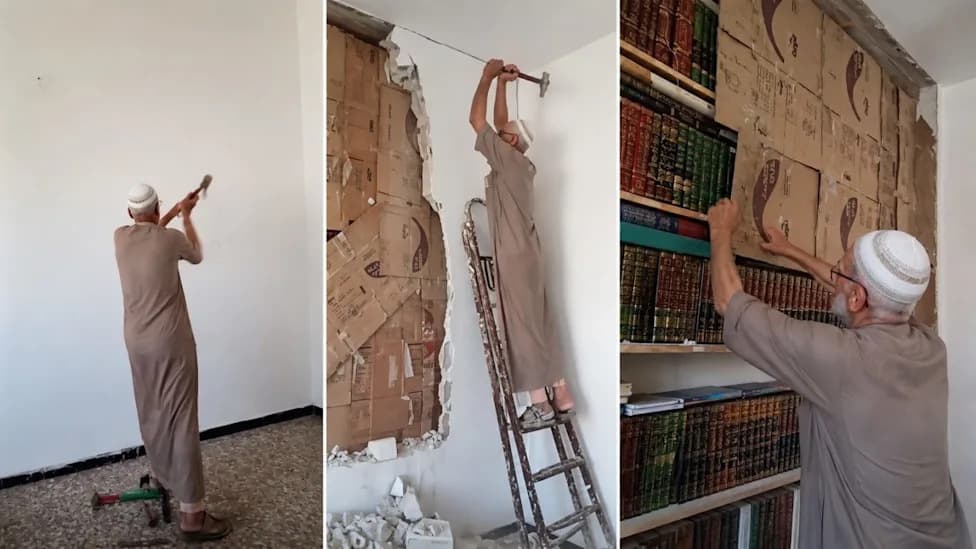
Alwan was forced to abandon his books and flee his hometown of Homs in late 2011 amid the violent crackdown on anti-Assad protests (Bakr ALKASEM)
After more than a decade away from his home, 72-year-old Mustafa Khaled Alwan tore down a wall he had built to conceal a private library and discovered hundreds of mainly Islamist books more than 90% intact following Bashar al-Assad's December 2024 ouster.
A Catalogue of Risk and Resilience
Alwan, a sympathiser of the Muslim Brotherhood, said he was overjoyed to reclaim works by Hassan al-Banna, the Brotherhood's founder, and Sayyid Qutb, whose writings continue to influence a wide spectrum of Islamist movements. His collection also includes Islamic teachings, poetry and books on science and social topics, assembled slowly over many years.
"This library is very precious to me, I filled it up slowly," Alwan told reporters in Homs.
Why the Library Was Hidden
Under the Assads, Islamist dissent was harshly suppressed — most notoriously during the 1982 Hama massacre, where estimates of the death toll range from 10,000 to 40,000. As protests erupted in 2011 and Homs faced a brutal siege, Alwan feared for the safety of the collection. He moved the books into a house he had secretly bought for his son in the Bayada neighbourhood and, with help from some revolutionaries, built a false wall to conceal them.
Alwan fled Homs by the end of 2011 because of the siege, leaving the library behind. On returning after Assad's ouster in December 2024, he found the home badly damaged and fire-scarred inside. When he dismantled the concealment wall, he discovered the collection was more than 90 percent intact and was able to move it back to his residence.
Broader Implications
With Assad gone, many previously banned titles — from accounts of prison torture to radical theological works — have resurfaced in public life and bookstores. Syria's new Islamist authorities, led by President Ahmed al-Sharaa, himself a former jihadist, face the delicate challenge of trying to reunify a country fractured by years of war. Homs remains heavily damaged, and sectarian tensions, including attacks targeting the Alawite minority, continue to complicate reconstruction and reconciliation.
For Alwan, the recovery of the library was a personal victory amid widespread devastation: "The sweetest moment of my life was finding the library in excellent condition," he said. "We hope the new government will live up to its responsibility regarding the sacrifices made in Syria."
Help us improve.