Nations expanding nuclear capacity face a core challenge: safely storing radioactive waste for millennia. Deep geological repositories—isolating waste in stable rock with engineered barriers—are now technically mature and progressing in countries such as Canada, Finland, Sweden and Japan. Political opposition, public trust and legal hurdles remain major barriers, exemplified by the stalled Yucca Mountain project in the U.S. Governments must plan secure, long-term waste management alongside any expansion of nuclear power.
Solving Nuclear Power’s Biggest Problem: The Global Race To Store Radioactive Waste Safely
The Race to Solve Nuclear Energy’s Biggest Problem
Nuclear power is regaining favor as governments seek to diversify energy supplies and cut dependence on fossil fuels. Yet one persistent challenge remains: the safe, permanent disposal of radioactive waste. While nuclear generation produces far less physical waste than many other energy sources, what it does produce—especially high-level spent fuel—is among the most hazardous and requires secure isolation for millennia.
How Waste Is Classified And Why High-Level Matters
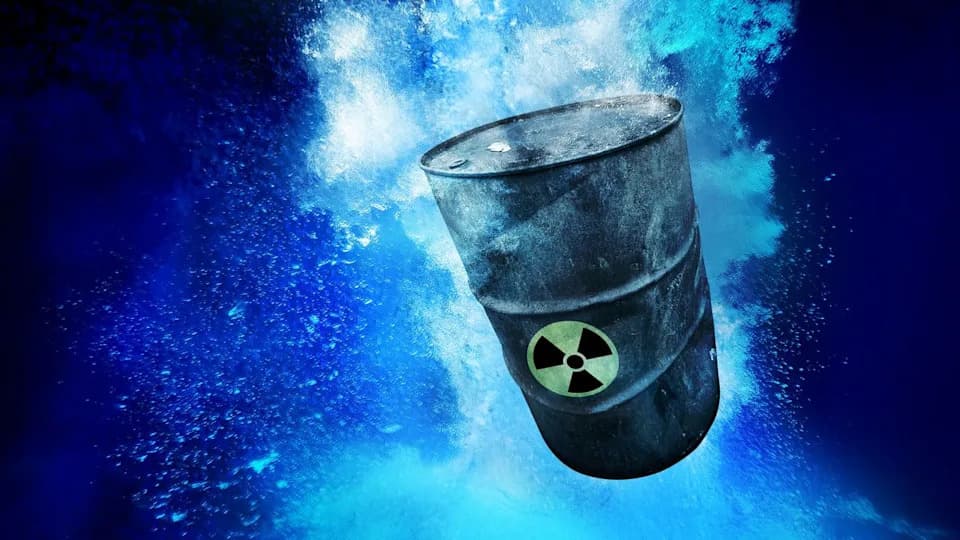
Radioactive waste is commonly grouped into low-, intermediate- and high-level categories. Most materials from plants (tools, clothing and lightly contaminated items) are low-level and account for a small share of radioactivity. By contrast, high-level waste—mainly spent fuel—represents roughly 3% of the waste volume but contains about 95% of the radioactivity and therefore poses the greatest long-term challenge.
Deep Geological Repositories: The Leading Technical Solution
Decades of research have made deep geological repositories the leading technical option for long-term storage. These facilities isolate waste deep underground in stable rock formations so that radioactivity decays in place without posing risk to people or ecosystems.
Canada’s Demonstrator
In Oakville, Ontario, the Nuclear Waste Management Organisation (NWMO) operates a warehouse demonstrator that simulates emplacement procedures. Autonomous equipment stacks large bentonite clay blocks (reported as 8,000 kg blocks) into narrow tunnel sections while crushed clay fills gaps around copper-coated steel canisters that would hold spent fuel. The assemblies would be sealed with additional clay and concrete and then isolated thousands of metres underground where natural and engineered barriers work together to contain radionuclides for millennia.
NWMO plans a full-scale repository near Ignace—about 1,600 km northwest of the test site—buried roughly 750 metres in the hard rock of the Canadian Shield. If completed around 2040, it is expected to store nearly six million bundles of spent fuel produced by Canada’s four reactors over their lifetimes.
Engineering For Extreme Scenarios
Canisters are engineered to survive extreme conditions. Designs and tests aim to ensure resistance to crushing forces equivalent to several kilometres of water pressure and to withstand long-term geological stresses, including scenarios such as glaciation. The multi-barrier approach—metal canister, corrosion-resistant coating, bentonite buffer and stable host rock—reduces the probability of radionuclide release to negligible levels over the timescales required.
International Progress—and Political Hurdles
Countries including Finland, Sweden and Japan have advanced deep repository programs and are among the first to move from research and demonstration to construction and licensing. Technical challenges have largely been addressed; the main remaining obstacles are political, legal and social: local opposition, questions about intergenerational consent, and concerns about potential contamination.
The United States began exploring deep disposal in the 1980s and designated Yucca Mountain in Nevada as its candidate site, submitting the first licence application for a geological repository. Yucca Mountain has faced technical scrutiny (seismicity, volcanic features, and its relation to the water table) and entrenched political opposition; in 2007, Nevada’s Senate leader effectively stalled the project. Although the Department of Energy has studied alternative locations, Yucca Mountain currently remains the only legislatively approved permanent option, even as the U.S. accumulates roughly 95,000 metric tonnes of spent fuel requiring long-term management.
Where The Field Is Headed
Multiple countries expect to open deep underground repositories over the next few decades, and research continues into alternative approaches (advanced recycling, interim storage innovations, and small modular reactor fuel cycles). Still, for nations expanding nuclear fleets, integrating long-term waste disposal plans—technical, regulatory and social—into new nuclear programs is essential to ensure public safety and environmental protection.
Bottom line: Deep geological disposal is technically mature and becoming operational in several countries, but political consent and credible long-term governance remain the decisive hurdles to solving nuclear power’s most persistent legacy.
Help us improve.